Summary. We left our home in New Berlin, Wisconsin (near Milwaukee) on March 10, 2026, and returned on June 11, 2026, 3 months later. We drove west to California, staying in 7 Marriott Hotels along the way. We stayed at an Airbnb for 80 days, and spent another 8 nights in hotels on our trip home. We spent two nights in a hotel on our flight from San Francisco to Portland, Oregon, bringing the total to 17 hotel stays. We drove 7,527.3 miles (12,144 kilometers).
Expenses. Our total trip cost was $21,505. Major expenses include Airbnb $8,670, hotels $3,508, gas/petrol $1,164, and 15 Benicia-Martinez Bridge tolls near our Airbnb for several trips to Napa, California, $136.00.
Recommendation. If you have not made a trip across America, I would urge you to experience the wonders and scenic beauty of this country. The length and breadth of this country are amazing in every respect, with magnificent scenery and a diverse population. However, if you plan a trip through the northern states, avoid driving the northern route during the winter months unless you have snow tires and chains. I also recommend that you do not do any nighttime driving, and if you are tired, it is just too dangerous to keep going, so for heaven’s sake, just STOP. Driving in the summer months has its challenges, too. Summer is the time for road repairs. Dual highways at high speeds often become two-way roads with barriers, turning the once-safe highway into a dual-road challenge. School holidays are a busy time, so make hotel reservations early.
Amusing Situation. We were driving east on a dual-carriageway interstate. Due to road construction, we were directed to the westbound lane, which had been divided to accommodate vehicles traveling in both directions. The GPS knew that we were in the wrong lane and flashed repeatedly to use the other lane. So caring.
Frustrations. I am not sure what goes through drivers’ minds that they feel comfortable driving in the fast lane at under the speed limit, frustrating motorists, and nothing will get them to give up their cherished place.
Entertainment. If you are traveling with young children, tell them to count the 18-wheeler trucks from FedEx, Walmart, and Amazon. You will soon determine a clear winner.
Subaru Forester. Our trouble-free trip would not have been possible without our 2024 Subaru Forester. It carried my wife and I with a ton of luggage and never missed a beat the entire journey.
What is it like to be back home after 3 months away? I found it strange to get back into my old ritual. I am not sure if it is my age, but I needed to remember how my day was spent: when I woke, when I went for our walks, just to get back into the same old rhythm again.
Weather Postscript, July 12, 2026. Within hours of returning from our wonderful trip, a storm hit our hometown. In the month since we have been home, I have been amazed by the hostile weather across the country and can only be very grateful that we did not encounter anything like it on our drive. California and Nevada were gripped by a dangerous early-July “Heat Dome”. Forecasters tracked triple-digit highs and extreme heat warnings. Las Vegas and Nevada hit temperatures as high as 111°F. In Utah and Wyoming, extreme heat warnings began July 10. High temperatures exceeded 100°F, with heat indices up to 110°F. In South Dakota, the eastern portion of the state saw record-challenging high temperatures. Late June brought rounds of severe weather, including flash flooding, wind gusts of 30 to 45 mph, and cloud-to-ground lightning. In Minnesota, a major severe weather event hit the region on June 29. The air mass produced intense humidity (dew points in the 80s °F), resulting in heavy rainfall, flash flooding, and isolated severe winds. And in Wisconsin, we were aware of this weather event and sent a text message to our friends who were later impacted. On June 11, Wisconsin—alongside neighboring Midwestern states—was struck by a deadly severe-weather outbreak. The storm produced multiple tornadoes and widespread damaging wind events. I trust that you understand our good fortune in not encountering any of these weather conditions during our three months of wonderful drives across this amazing country.
Composting. While staying at our Airbnb in Martinez and visiting our daughter in Moraga, we found that both cities in Contra Costa County, California, provide weekly trash, recycling, and composting collection and processing services. Where we live in New Berlin, Wisconsin, trash and recycling are collected, but composting is not part of our ritual. However, we collect food scraps within our condominium complex, and they are processed to ultimately nurture our gardens.
Opinion. If you are going to vote for a person running for Congress, ask them how much of this magnificent country they have seen, and I am not talking about flying into a variety of cities, but seeing it from the ground through travel. Being familiar with New York City and Mar-a-Lago does not provide in-depth knowledge of the country’s vastness and diversity. Being very knowledgeable about one county, region, or state does not provide the breadth of knowledge required to make informed decisions. It would also be highly advantageous if these potential politicians had engaged in international travel to better understand other societies and their cultures. Politicians cannot afford to be myopic, so be careful who you vote for.
Travel Motivation. Our motivation for this trip was to be available to enjoy the company of our daughter, her husband, and our 18-year-old twins, Olivia and Isabel. The girls graduated from high school at the end of March and enrolled at universities beginning in August 2026. Isabel was involved with her local theater company, providing sound and lighting services. Their high school put on a musical, “Hades Town,” which we attended twice, each time with a different cast. Isabel was responsible for the lighting and sound at their school play. It may not be a kind comment to make, but we also attended a musical by the local university, and without question, the high school musical was far more professional and entertaining. Olivia is studying art history at university, and we had the pleasure of seeing, and in some instances, enjoying and appreciating her creative work.
The family purchased a new home in Napa, California, a 30-minute drive north of our Airbnb. We visited Napa on several occasions, enjoying their home and some of the local businesses.
Planning. In early March 2026, we asked AI (Artificial Intelligence) to plan a route from our home in New Berlin, Wisconsin, to Martinez, California (in the East Bay near San Francisco). We requested the journey to begin on March 10, 2026. The request included not wanting to drive more than 5-6 hours a day and staying at Marriott Hotels. We requested places to stop and sightsee along the way. Then, too, we requested a southerly route to avoid snow and ice on the northern drive. We made the same request for the return trip, but this time using the northern route since we would be driving three months later, starting June 3, 2026, and would not have issues with snow and ice.
Driving the westerly southern route, we passed through Wisconsin, Illinois, Missouri, Oklahoma, Texas, New Mexico, Arizona, and California.
On the easterly northern drive home, we traveled through California, Nevada, Utah, Wyoming, South Dakota, Minnesota, and Wisconsin.
GPS. We found this an invaluable tool. We were warned that we would lose the signal in some of the very rural parts of the country. We did not find this to be an issue at all. We made several trips from our Airbnb to our daughter’s home in Morago, using a GPS request to avoid interstates, so we drove only scenic residential roads. It was fascinating that we would not always use the same route, as the GPS routed us to avoid the very congested roads. I plan to write to the GPS developers to request three additional features. 1. Show the State that we are driving in. 2. Show the time zone. 3. Show the altitude as we go up and down mountain passes.
Reminiscing. Prior to retirement, I owned my own business and visited clients and prospects in several Midwestern states. Each night, I would pore over maps to plan exactly how I would drive, make copious notes, and have them placed on the driver’s seat when I left home at 6:00 am. Often, I might need instructions on how to get back home as well. When I see how easy travel is with a GPS, I can only admire the progress of technology.
I should add that we were incredibly blessed with fantastic weather. After we left our home, our community experienced flooding, tornadoes, and generally unpleasant weather as we made our way west.
This was not our first long-distance drive. Some 30 years ago, we drove with our son and daughter to San Francisco, south to Los Angeles, and home along the famous Route 66. On another occasion, we drove with my parents and South African friends to Disney in Florida, north to New York City, and back to Wisconsin. During the time we owned our timeshare in Florida, we would drive for 2-days and stop in Atlanta, Georgia, for an overnight stay. Flying has made travel easier, but you miss the excitement and joy of seeing the beauty and variety in this magnificent country.
Understanding that we drove 7,527 miles (12,144 kilometers), my overall impression is that we should be in awe at the investment in the infrastructure made by local, county, state, and federal government, with the most magnificent roads, providing 1- and 2-way single roads, 2-3-4-5 dual-lane highways, and interstate freeways, and naturally the local county and city roads. If that is not sufficient to appreciate the investment, then the magnificent and ever-changing scenery with majestic mountain passes, desert, farmland, a kaleidoscope of color and vegetation, and in places, the most awesome trees.
The visit to so many places reveals the diversity of our population in this beautiful country. We had the pleasure of meeting several who have made America home. We were fortunate to attend a South African expatriate gathering for lunch in Danville, California, attended by about 40 people who shared their experiences of making America home.
In every report, alas, there must be a negative. Thanks to Donald Trump and his Iran war and tariffs on imports, the gas/petrol price we paid broke all the records that we were previously used to. Each state had a different price, with California having the highest due to its state gas tax. Grocery shopping also held many expensive surprises for us. According to Professor Robert Reich, gas prices are higher in California because giant oil corporations like Chevron have more monopoly power there than in other states, which allows them to charge higher prices and earn a fatter return. Chevron has grown into one of the world’s largest corporations.
Airbnb Martinez March May 2026
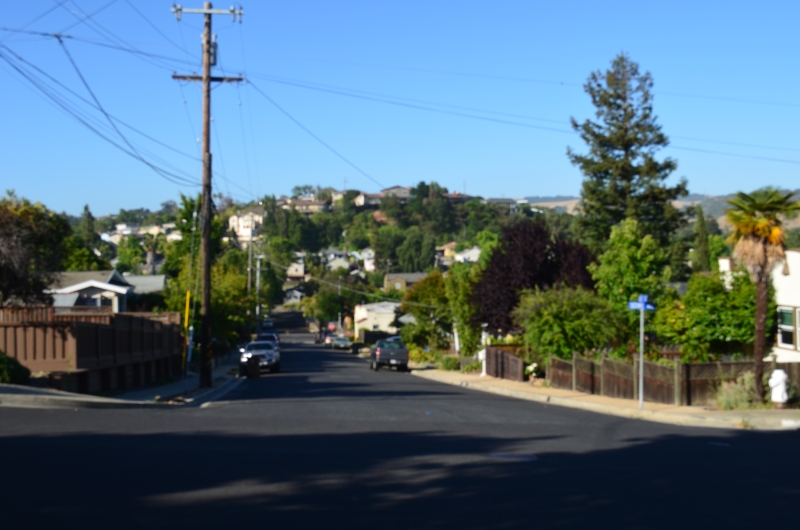

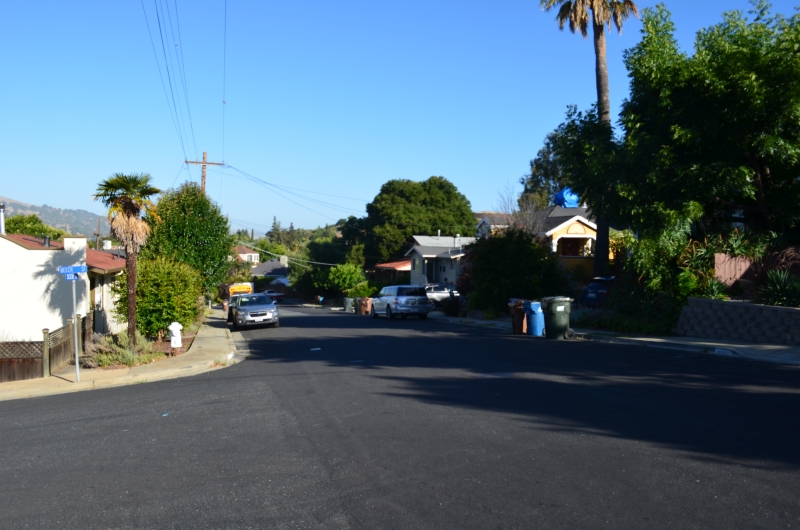
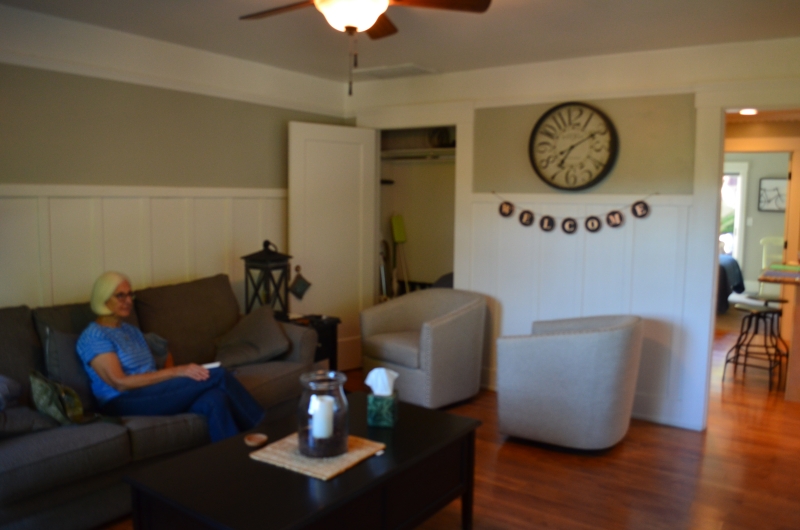


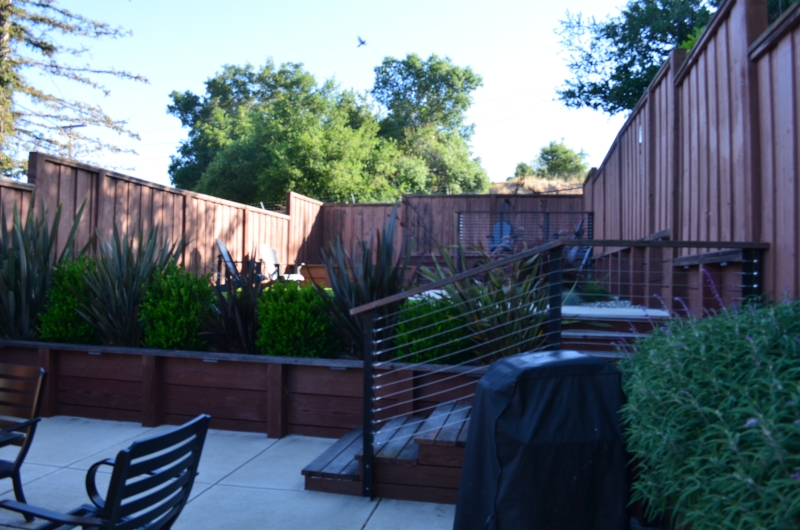

Airbnb. Our 80-day stay at the Airbnb in Martinez, California, on the East Bay near San Francisco, was an enjoyable treat. I wrote this as a tribute to the owner, but I was limited to fewer than 500 words.
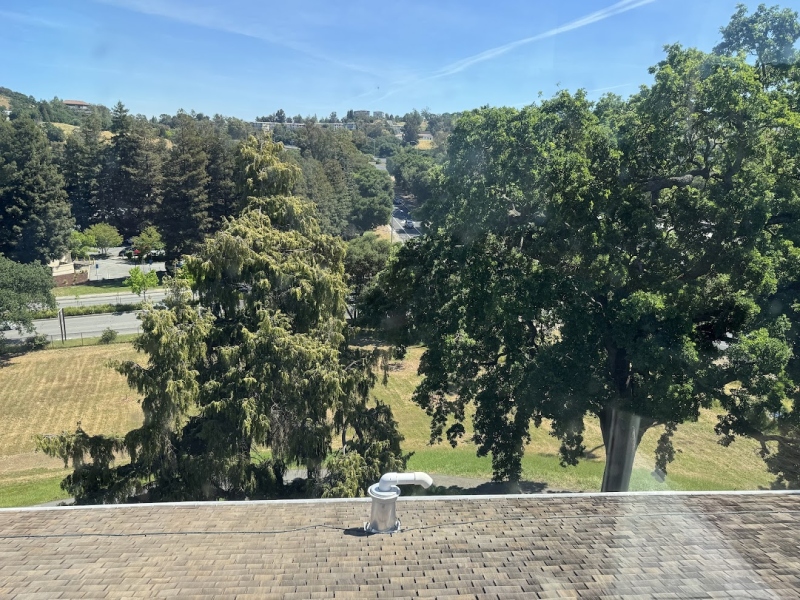
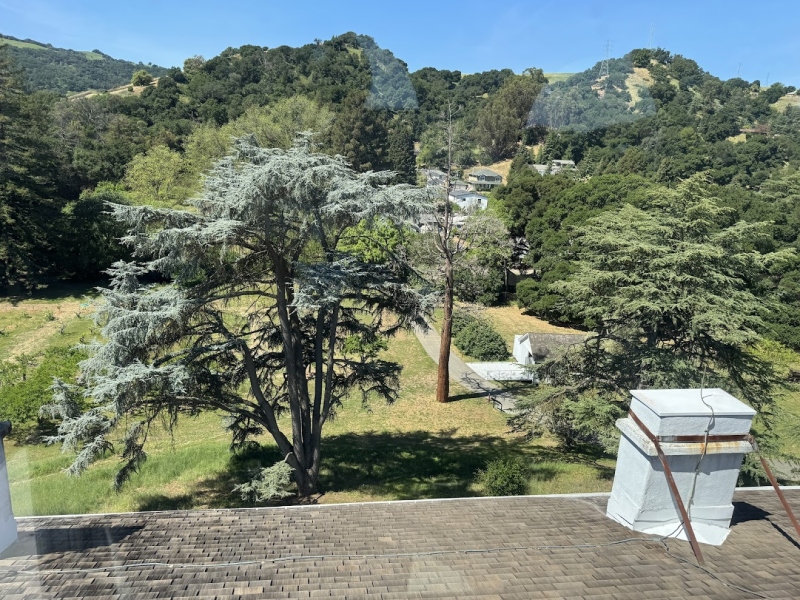
Our well-appointed and spotlessly clean Airbnb is situated in a quiet, friendly neighborhood on a hill at an elevation of 120 feet, facing south, with a magnificent view, in Martinez, California. We enjoyed our stay for 2 ½ months. We parked in the driveway, climbed a dozen steps to the portal with a small table and two chairs, and entered the lounge, which has a coffee table and two side tables, seats 5, and features a lovely new large-screen TV. The kitchen, with a cozy dinette, boasts a high table and 4 high chairs. The kitchen comes equipped with crockery and cutlery, pots and pans, a large refrigerator/freezer, a dishwasher, a gas stove, and small appliances, including a toaster and a coffee maker. This leads to a laundry room with a washer/dryer, alongside a guest toilet. Next, into the bedroom, with access to the enclosed yard, a walk-in dressing room, and an ensuite bathroom with a bathtub/shower, plus, naturally, another toilet. There is even a scale to verify that you have overeaten! The lovely, secluded yard boasts shrubs and a variety of plants, a table with a warmer for winter, seating 6, and 6 Adirondack chairs spread across the upper levels. The chirping birds are entertaining to watch. We took the liberty of watering the plants to keep them healthy. Naturally, there is a Char-Broil barbecue.
Martinez Neighborhood April 7, 2026


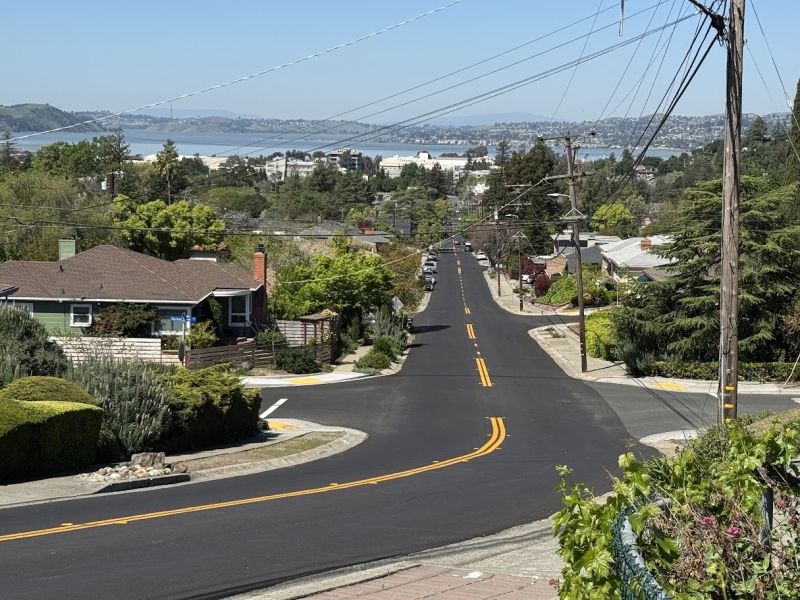

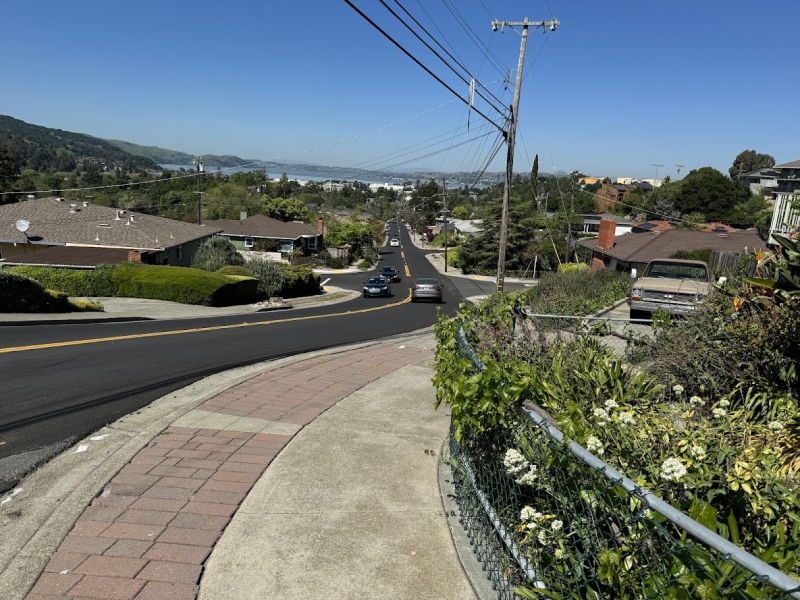
Walking around the neighborhood, we chatted with some friendly people nearby. Take a one-hour walk to the downtown area, which has restaurants, banks, and other businesses. There are several parks to enjoy. Do not miss walking around the Waterfront Marina, with much to see and enjoy, including a kids’ playground, bocce courts, ships, yachts, and tugboats. The homes are a veritable variety of architecture, large and small, both old and new, many with magnificent gardens in this diverse multicultural community. Be careful, as some of the pavements are uneven and you may trip. Walking an hour in the opposite direction takes you to grocery stores, hospitals, and emergency clinics. We visited some of the local attractions, such as the John Muir home, his historic scenic walk, and Martinez Historical Center. You are a 30-minute drive from Napa, and crossing the Benicia-Martinez Bridge costs $8.50, but only for northbound travel; the return trip is free. We used this toll bridge to visit Napa, enjoying a day drive to Yosemite National Park, John Muir Reserve, and Point Reyes Station. Naturally, we did many 30-minute drives to Moraga to visit our daughter and her family. The Airbnb location is ideal for sightseeing, with San Francisco nearby. Jason and Amy, the owners, were exceptionally responsive to our needs and great communicators. It was delightful to live in this Martinez community for a vacation. However, sadly, we will miss this delightful visit and remember it with fondness. Overall, we highly recommend this Airbnb after experiencing a very enjoyable stay.
Marriott Hotels. On this trip, we stayed in 17 hotels, all but one of which were Marriott hotels. We stayed in an American Inn in Elko, Nevada, where we could not get a Marriott reservation. The Fairfield in South Dakota cost us $5.59 because we used accumulated points to stay there. As a lifetime Marriott Bonvoy Elite Member since April 1987 (which is remarkable since I only relocated to Wisconsin from South Africa at Christmas 1986), I currently have an additional 48,951 points towards our next stay. As you might imagine, since we were going to California for 3 months, our Subaru Forester was fully loaded. At each stop at the Marriott, we knew we had to park outside and asked the same question, “Will our vehicle be safe with some of our luggage visible in the car?” The receptionist always assured us that the hotel grounds were safe and that we should not encounter any problems. We did not. Many of the hotels were protected by cameras, and in some cases, they had a night watchman on duty. They had the required legal signs stating that the hotel is not responsible for any theft or damage to cars parked on the premises. At a few of the hotels, we had to pay for parking outside on the premises. At the Marriott in South Lake Tahoe, we had to pay for valet parking. At the Fairfield Hotel in Northfield, Minnesota, the only available parking was in the hotel’s underground parking garage, and it was free. However, when you took the sharp turn to drive under the hotel, I was amused to see that a few motorists could not make it and left scrapes on the wall as they drove below.
The fighting birds are entertaining at our Airbnb on May 1, 2026 (1 minute 8 seconds)
Observation. Vehicles in California are quite different from those we encounter in Wisconsin. Naturally, Tesla leads the pack, but we also saw Ferraris, Maseratis, Porsches, Rolls-Royces, Lamborghinis, and other luxury imported cars.
Tuesday, March 10, 2026, St. Louis, Missouri
For the first day of our travel, it took us 5 hours to cover the 366 miles (590 kilometers) from our home to St. Louis. As luck would have it, we left a major storm behind and experienced great weather on the drive.
During my time running my own company, I represented a St. Louis-based software company and consequently made many trips there. This time was different, and I decided to visit the 630-foot Gateway Arch.
Gateway Arch, March 10, 2026
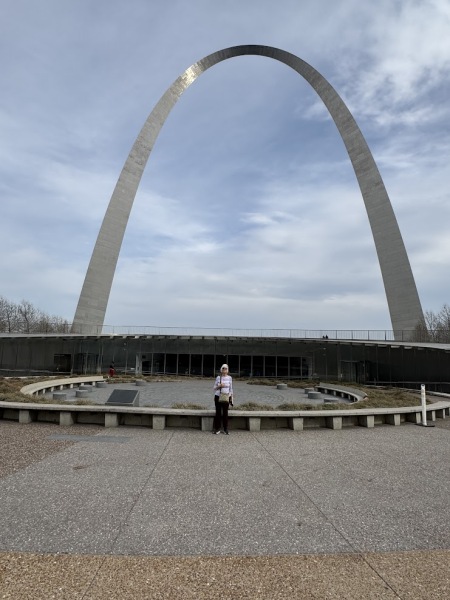


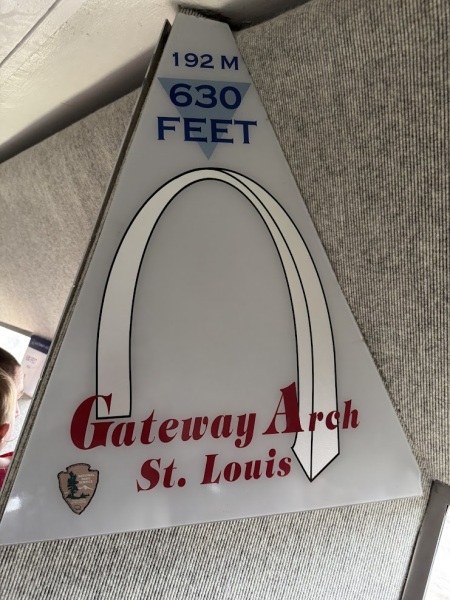
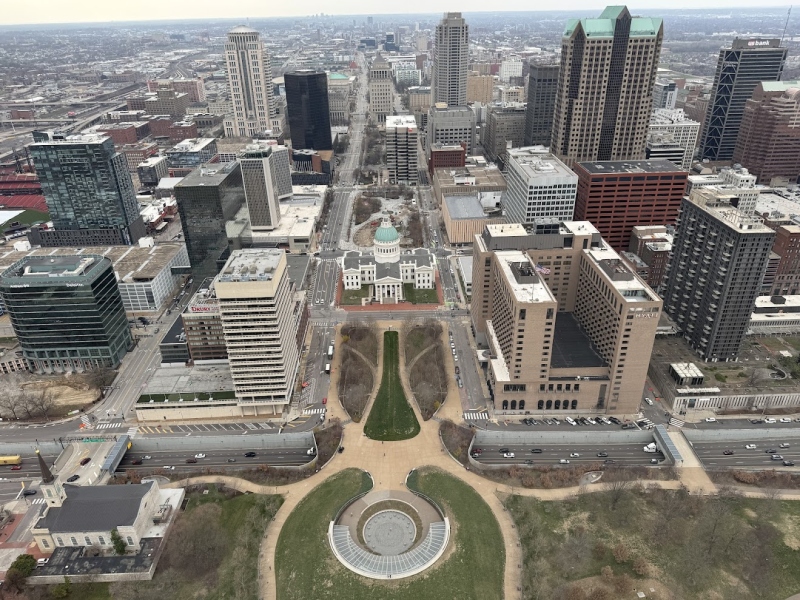
Gateway Arch National Park commemorates President Jefferson’s vision of a continental nation, the individuals and cultural groups who helped shape its history, and St. Louis’ role in westward expansion.
We took a 4-minute ride to the top of the Arch, 630 feet (192 meters) high, and a 3-minute ride down again. As you can see from the photographs, the view of the city is amazing, especially seeing the Mississippi River. Several views are from the surrounding commercial area. The arch was built beginning February 12, 1963, and completed October 28, 1965, at a total cost of $13 million.
While watching the TV program Smithsonian Channel, Aerial America, Dazzling Destinations, I learned the following:
The Gateway Arch is an architectural wonder, one that has made St. Louis one of the most recognizable cities in the world. One glance at this arch, on the banks of the Mississippi River, and everyone knows this is St. Louis. In the 1930s, during the Depression, unemployment rates in St. Louis were high. So, city officials began lobbying Washington for federal funds under the New Deal. Thanks to that effort, the city of St. Louis secured funding to build a new riverfront park and memorial dedicated to President Thomas Jefferson and his leading role in America’s westward expansion.
The man tapped to design the new memorial was Finnish-American architect Eero Saarinen, whose monumental arch would symbolize western expansion and distinguish the St. Louis skyline. The arch took over two years and nearly 900 tons of stainless steel to build, making it one of the largest steel orders in U.S. history. And on October 28th, 1965, thousands of St. Louis residents gathered below as a team of daring steelworkers welded the final section of the arch into place. Today, two and a half million visitors ride innovative trams to the top every year for a chance to peer out of its tiny, angled windows and gaze across the mighty Mississippi River that flows below. A river that has been romanticized for generations and whose source was an irresistible mystery to many Americans, including the explorer Henry Rowe Schoolcraft. In 1832, Schoolcraft traveled upstream into Minnesota, where he assembled an expedition to finally find the source of the Mississippi.
Wednesday, March 11, 2026, Oklahoma City, Oklahoma
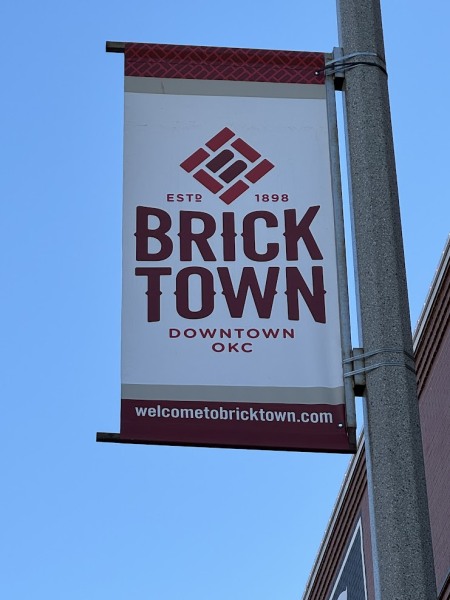
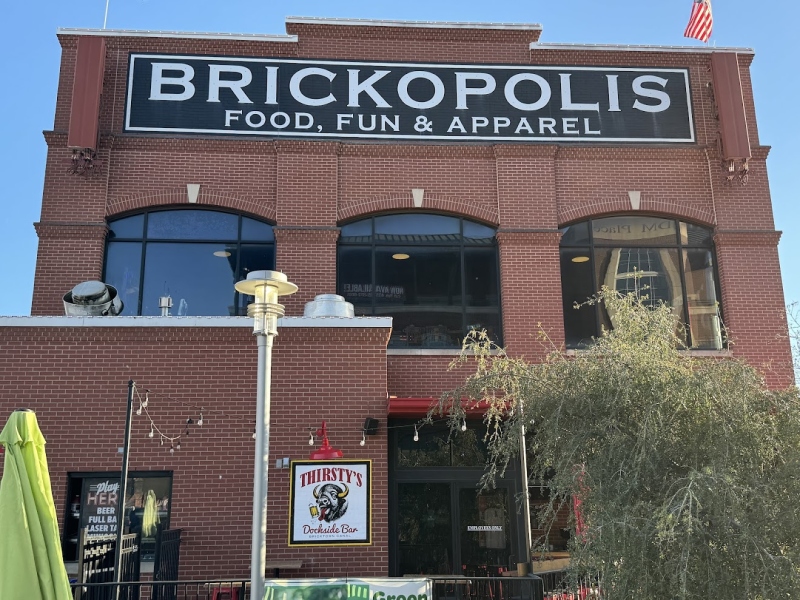
Our drive from St. Louis to Oklahoma City took us 7¼ hours to cover the 500 miles (805 kilometers).
Oklahoma Brick Town, March 11, 2026

Thursday, March 12, 2026.
Alfred P. Murrah Federal Building, March 12, 2026
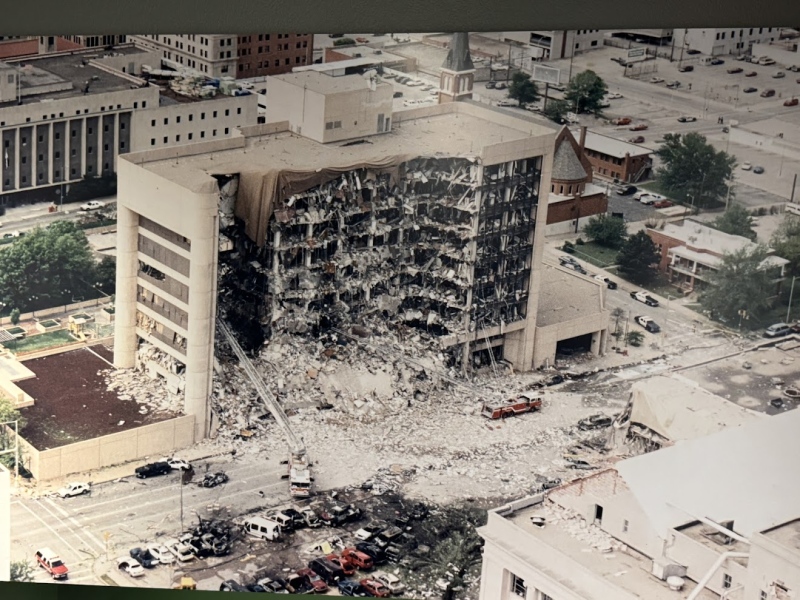


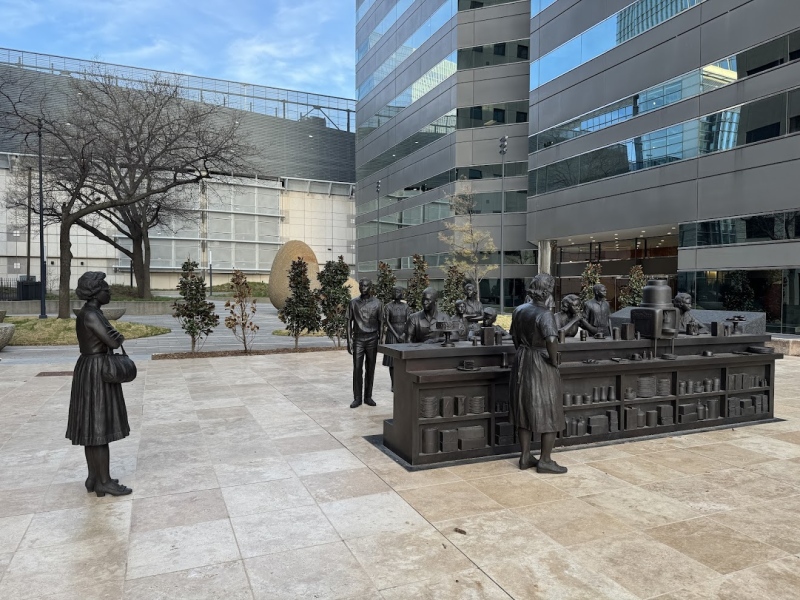
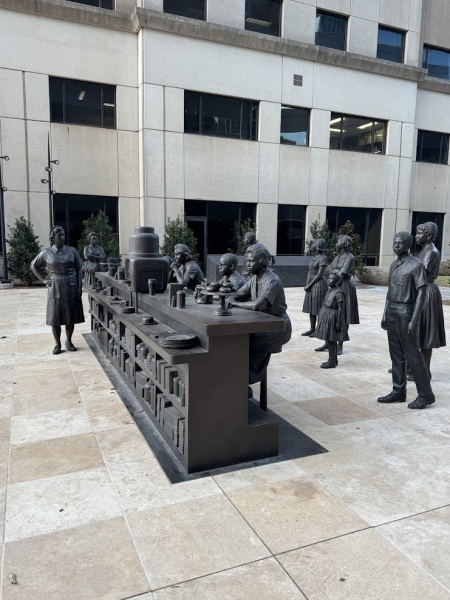
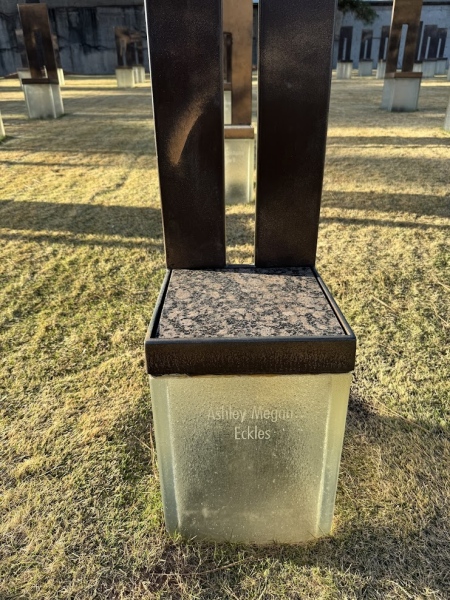
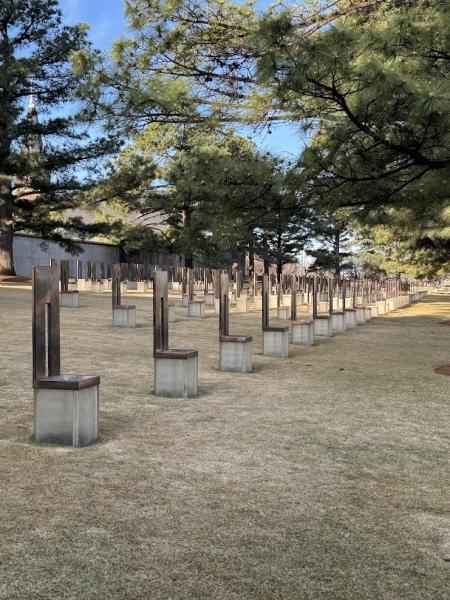
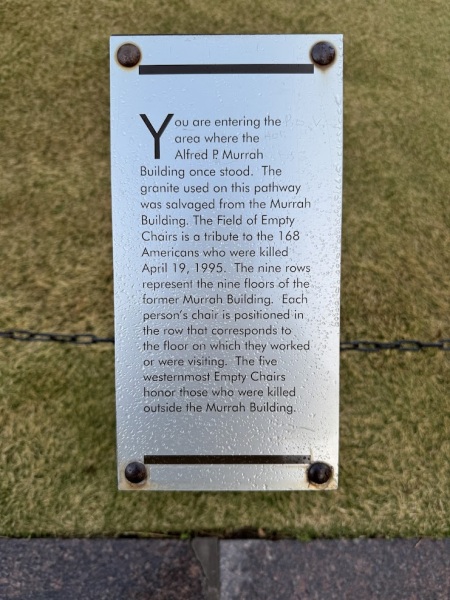
The next morning, we toured the Alfred P. Murrah Federal Building site, where on April 19, 1995, at 9:02 a.m., Timothy McVeigh detonated a homemade bomb, destroying a third of the 9-story building, killing 168 people, including 19 children, and damaging or destroying over 300 nearby buildings and incinerating dozens of nearby vehicles. This remains the deadliest act of domestic terrorism in U.S. history.
Thursday, March 12, 2026, Amarillo, Texas
Our drive to Amarillo, Texas, took us just under 4 hours to cover the 260 miles (418 kilometers).
Amarillo, Texas, March 12, 2026
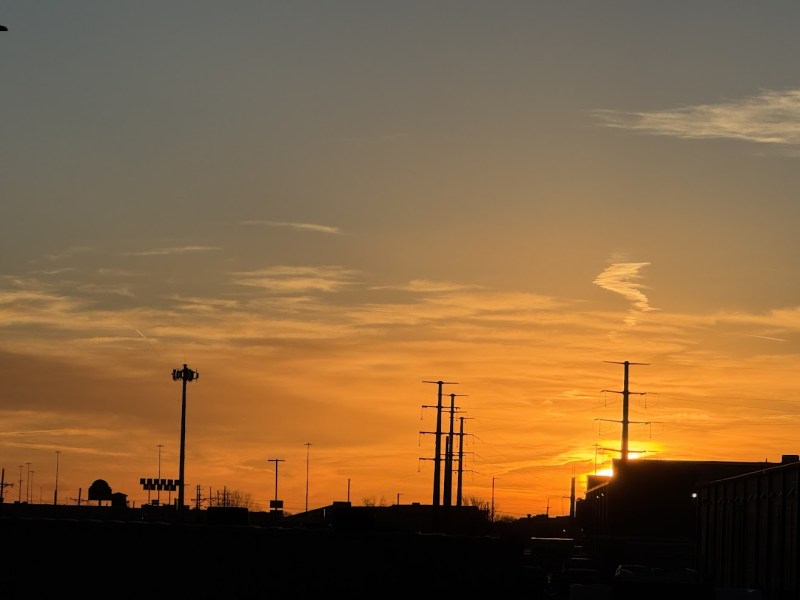
The sunset was my motivation to take a photograph.
Friday, March 13, 2026, Albuquerque, New Mexico
Our trip to Albuquerque, New Mexico, took just under 8 hours and covered 543 miles (874 kilometers).
Sandia Peak Tramway, March 13, 2026
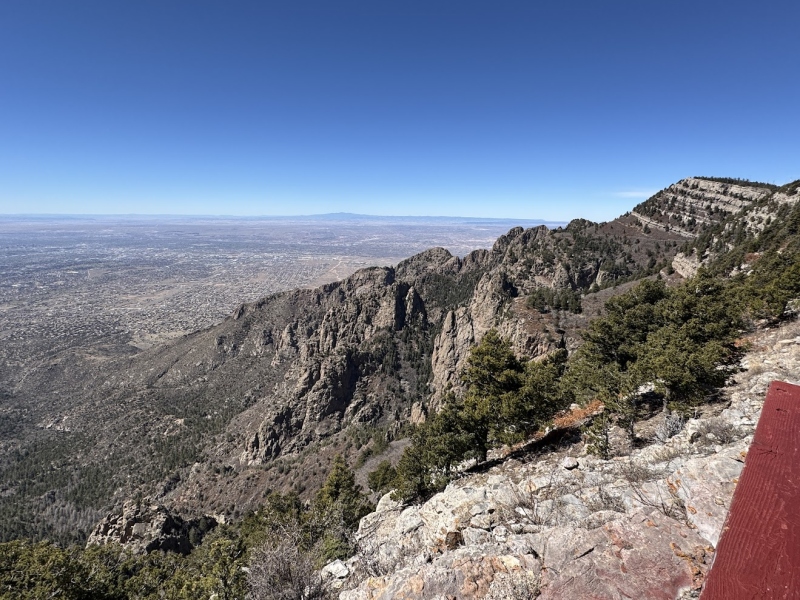
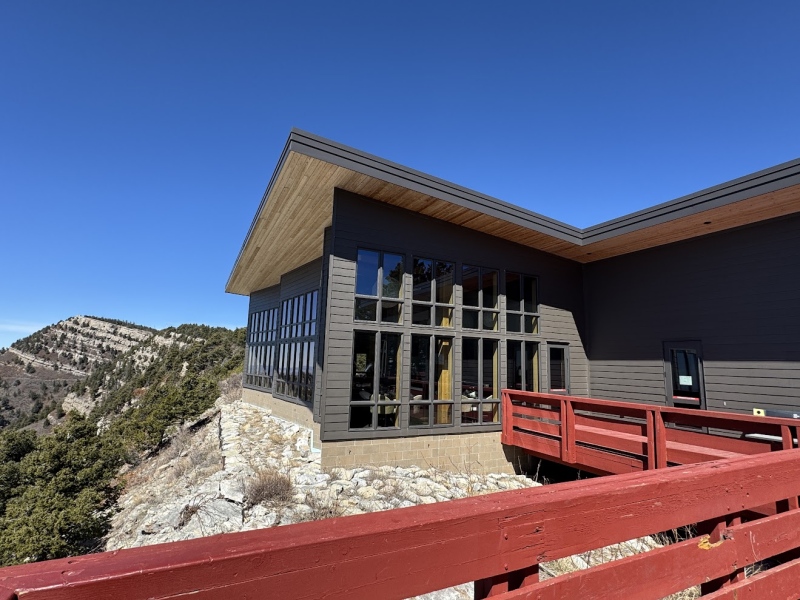


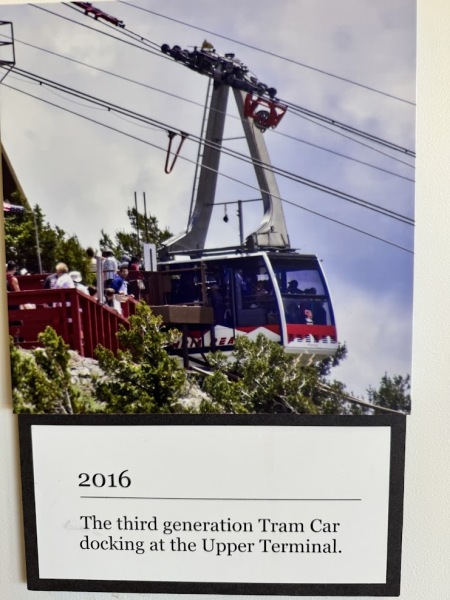


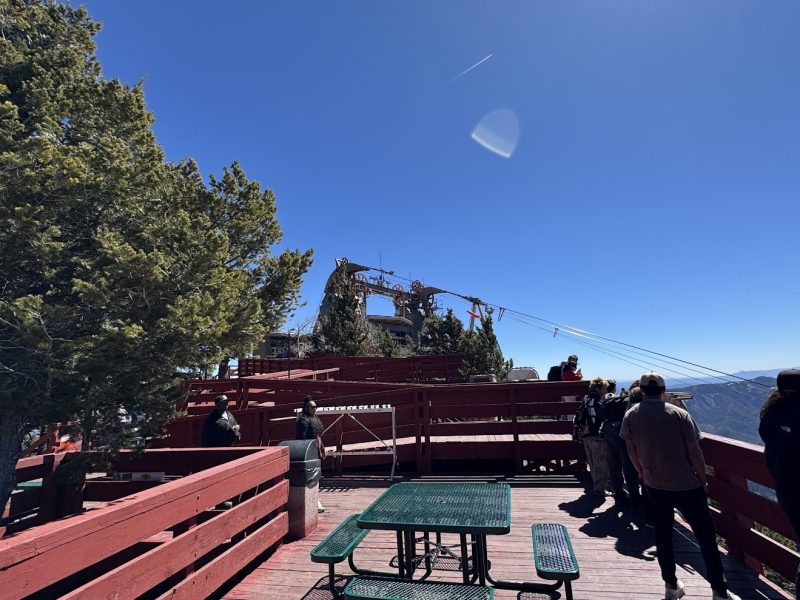
The Sandia Peak Tramway is an aerial Tramway, near Albuquerque, New Mexico, on the ridgeline of Sandia Peak. It is the world’s third-longest span, and the longest in America. We took the Sandia Peak Tramway to the top of the mountain.
From here, we headed to our hotel to enjoy two types of entertainment: music and technology. Is your job at risk of being replaced by a robot?
Sheraton Albuquerque, New Mexico, March 13, 2026
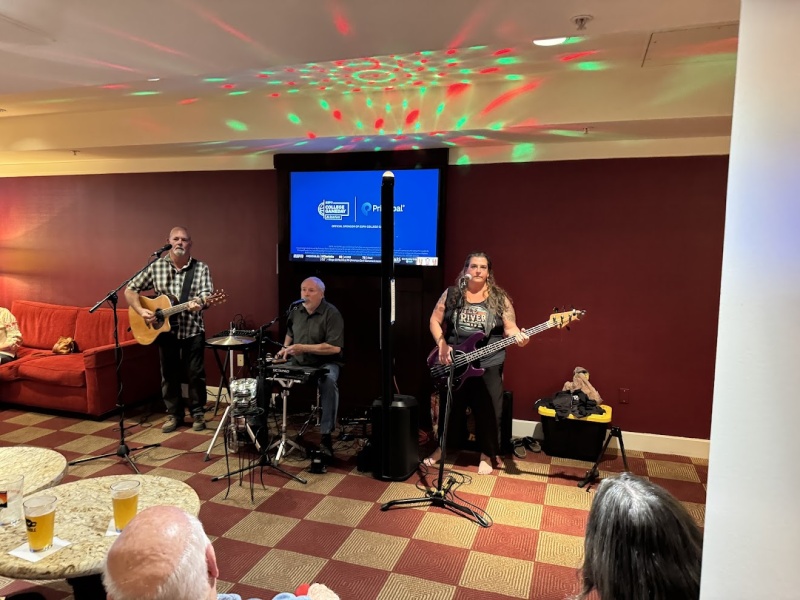
We were delighted to be entertained by these singers at our hotel.
It looks like servers at this hotel may be out of work soon, with robots taking over their duties.
Saturday, March 14, 2026, Williams, Arizona
Our drive to Williams, Arizona, took 5 hours to travel 356 miles (573 kilometers).
Petrified Forest March 14, 2026

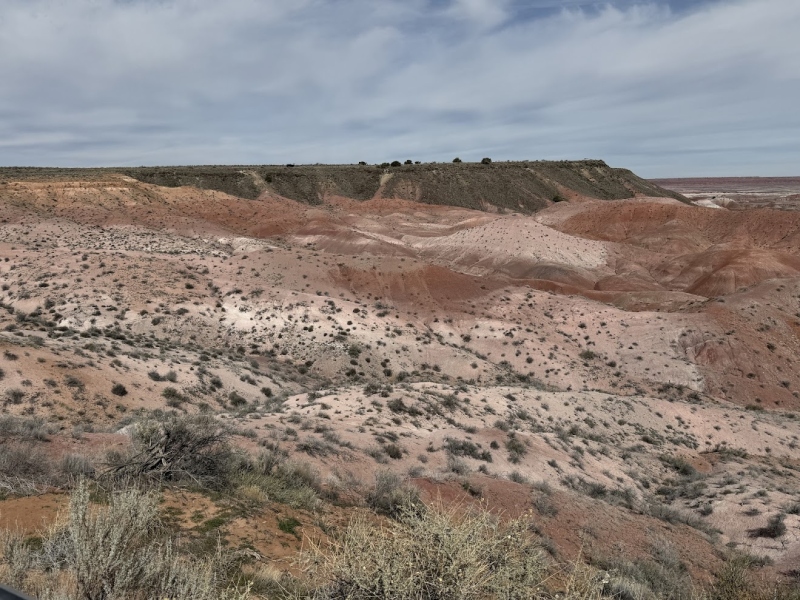
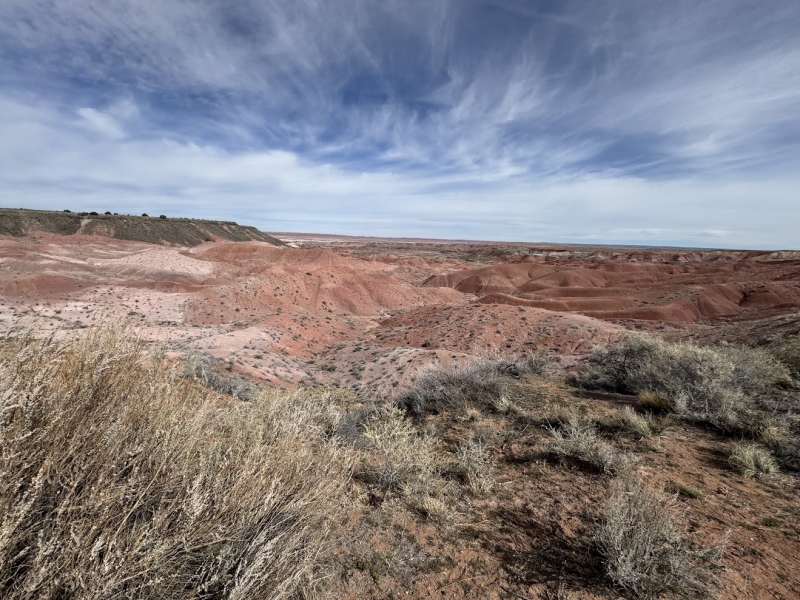


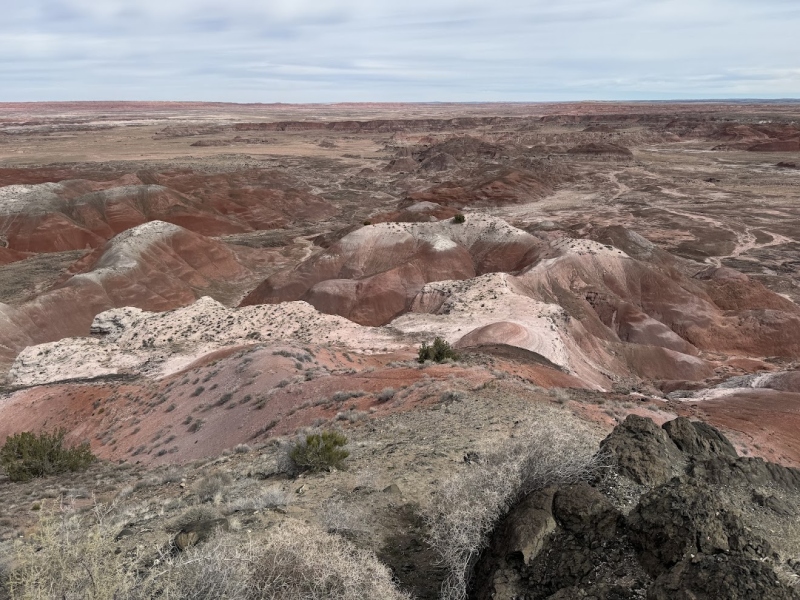
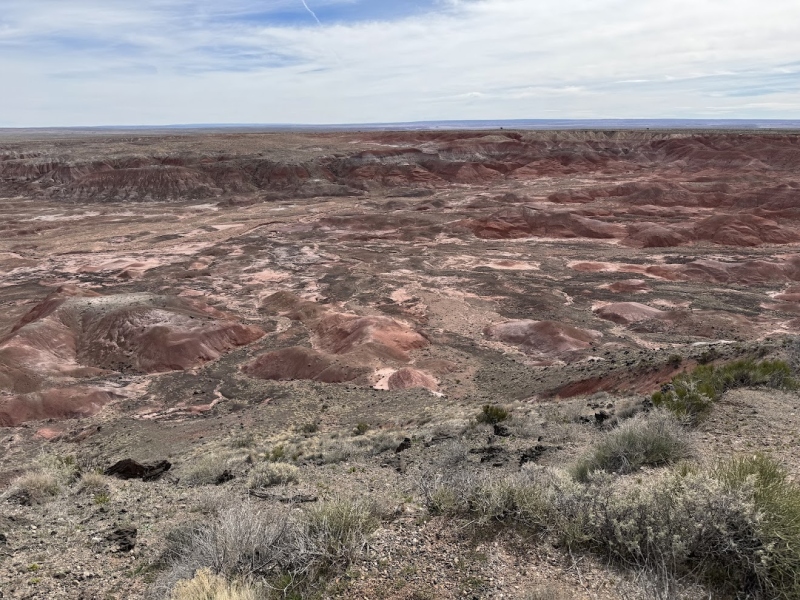
We visited the Painted Desert, which spans 7,500 square miles (19,425 square kilometers). The Petrified Forest National Park lies at its heart. The park contains colorful mudstone and sandstone rocks, called the Chinle Formation, which were deposited from 227 to 205 million years ago during the Late Triassic Period.
Rio Puerco Village, March 14, 2026

As part of the circular drive, we stopped at Rio Puerco Village, a prehistoric settlement built of shaped sandstone blocks and inhabited between A. D. 1250 and 1380. At its peak, it had 100 rooms with a possible population of 200 people.
Apollo Test Capsule March 14, 2026
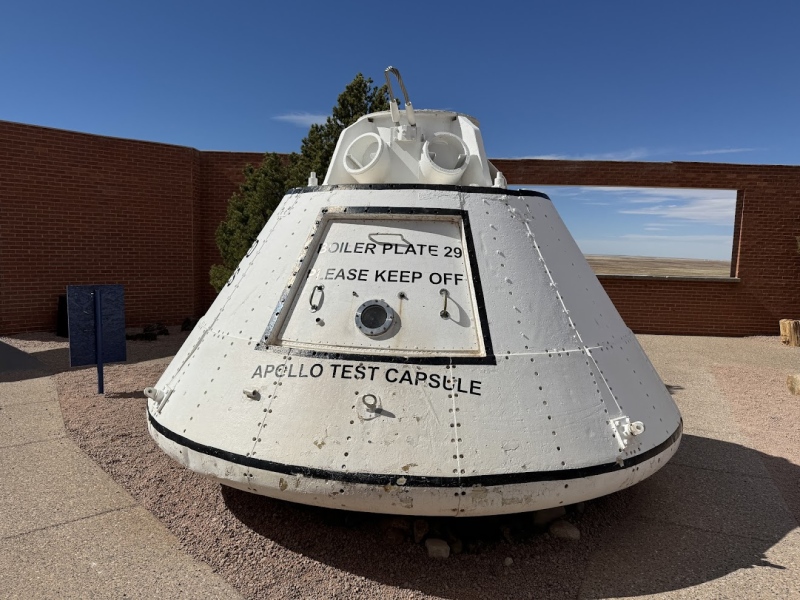

If that wasn’t enough entertainment for the day, we even saw the Apollo Test Capsule.
Meteorite, March 14, 2026


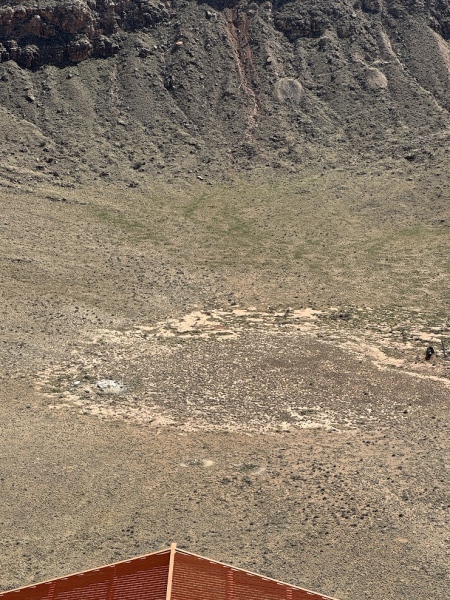


It was more than fascinating to see the impact of a meteorite and how large an area it affected.
Sunday, March 15, 2026, Bakersfield, California
Today was the longest drive of our trip west, taking nearly 7 hours for 447 miles (720 kilometers).
Monday, March 16, 2024, Martinez, California, Airbnb 80 days
Our drive from Bakersfield to our Airbnb was just over 4 hours for 276 miles (444 kilometers), and our total trip mileage from home to this point was 2,590 miles (4,168 kilometers). In fairness, and to be accurate, we did a detour to visit our daughter and her family in Moraga.
Our goal now that we are staying at our Airbnb is to get around the local community by walking to various points of interest. With our daughter working, her husband at home, and our granddaughters at school, we did not want to intrude on their lives during the week, so we planned to visit on weekends. The drive from our Airbnb to their home in Moraga takes 30 minutes. We used our GPS to find our way there and back, requesting that we not drive on the interstates but only drive through the more scenic suburbs. It was interesting that there were options for getting there, and the GPS would take us different routes depending on traffic congestion.
Airbnb Martinez, Saturday March 28, 2026
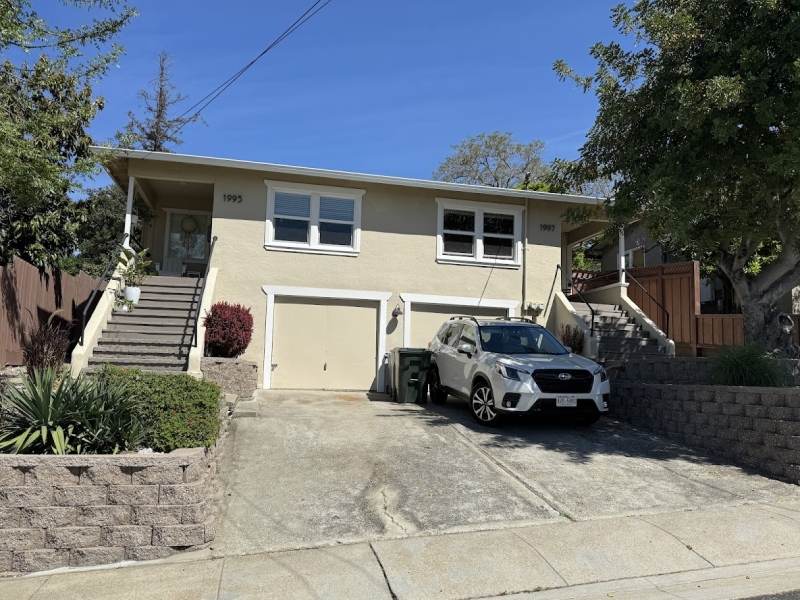
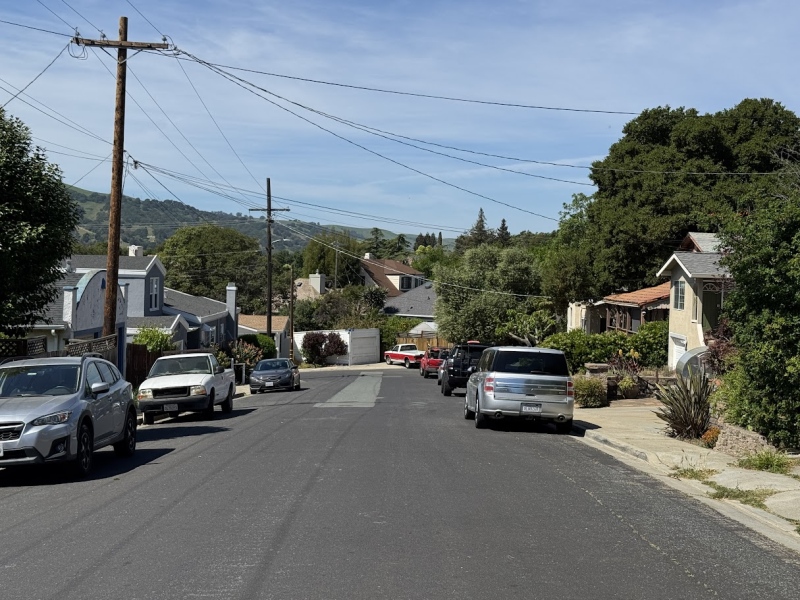
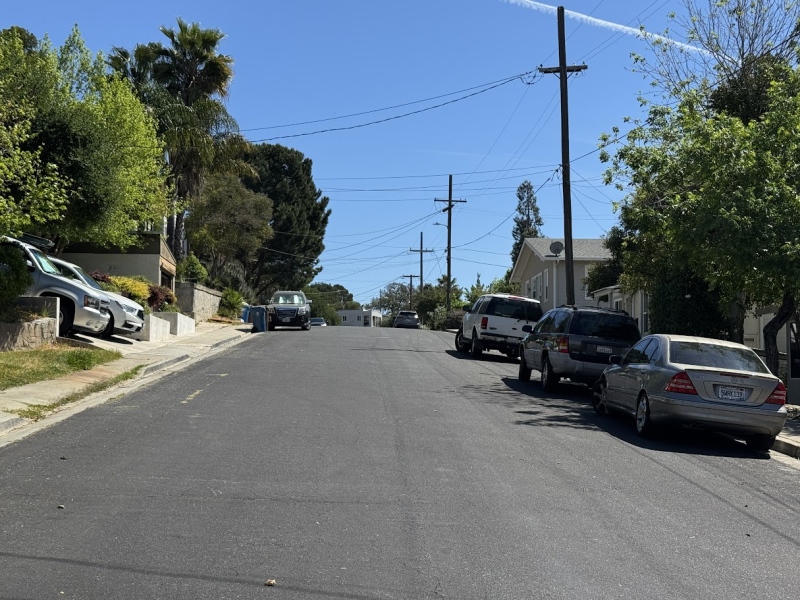
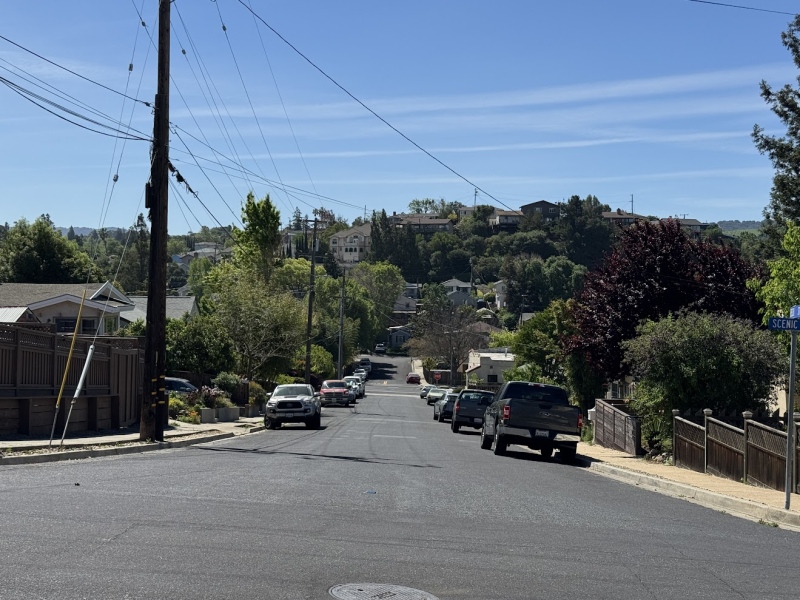

Life in California, and Martinez (on the East Bay near San Francisco) in particular, is different from what we are used to in New Berlin, Wisconsin, where the landscape is generally flat. Our Airbnb is located on a hill on Scenic Drive, and many homes in the area do not have garages or, if they do, only a single-car garage; consequently, most vehicles are parked on the street.
If I needed to drive anywhere, I drove down the hill to the stop street and turned left or right depending on my destination. The challenge is cars parked on both sides of the street; there was only a single lane open, and if an oncoming car was approaching, I had to pull off the road to let it pass. When I arrived at the stop sign, I was in the middle of the road and had to be careful in case a vehicle wanted to turn up our street. There is, of course, an additional challenge. There was a utility truck parked on the road right at the stop sign, making it difficult to get past. When I got to the stop sign, I had difficulty seeing if there was any traffic from the left or right because of all the vehicles parked on the sides of the road. Is there a solution to this problem? I sincerely do not believe this is due to homeowners needing to find parking for their vehicles. All motorists can do is be very cautious when driving. Speed is not your friend.
I chatted to a postal delivery person and asked if they would like to take a transfer to Wisconsin. In Martinez, the postal worker had to find a spot to park their vehicle, gather up all the mail to be delivered, and begin walking up and down the street. They had the added burden of climbing steps to reach the mailbox. With our Airbnb, there were 14 steps. I spoke to an elderly neighbor who told me she had to climb 20 steps to her front door.
Radke Martinez Regional Shoreline Park March 28, 2026
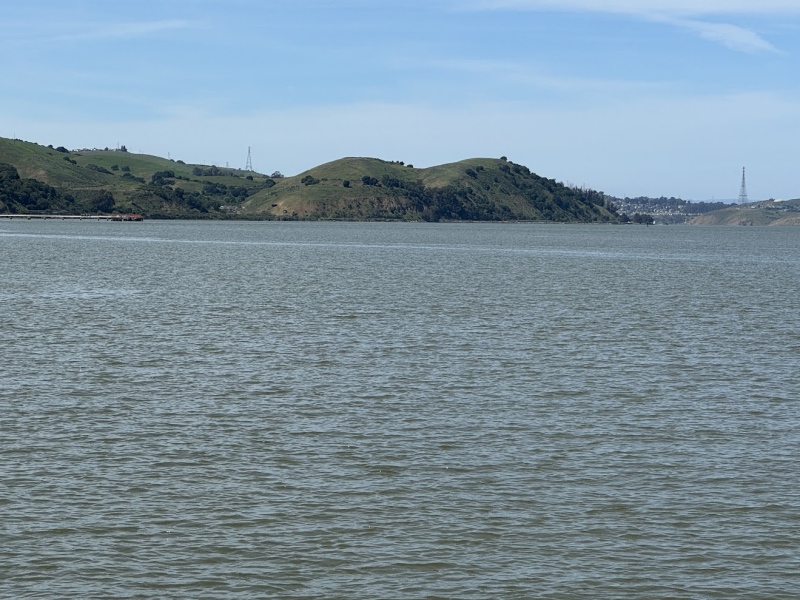

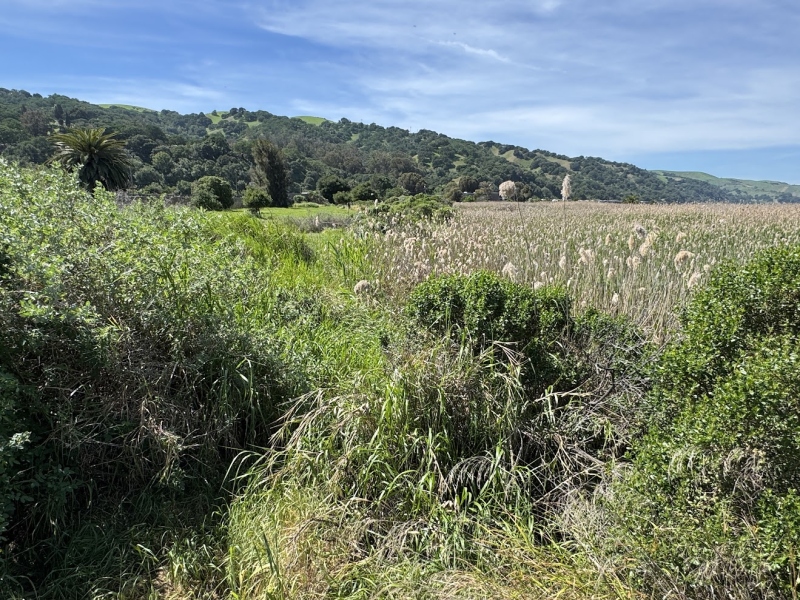
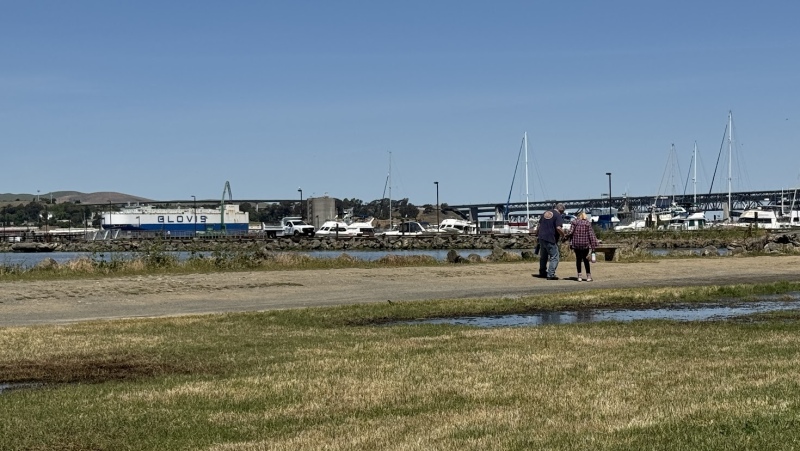
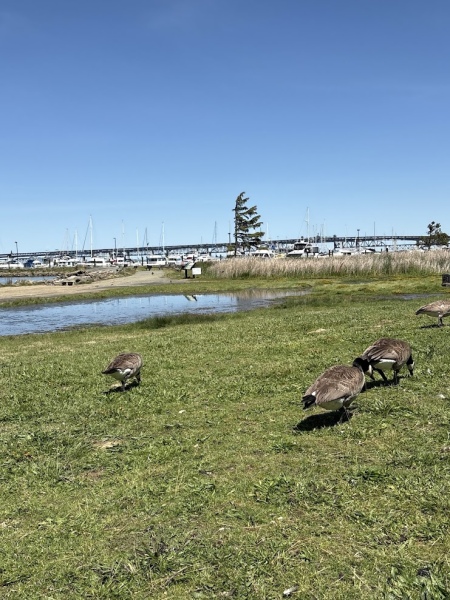

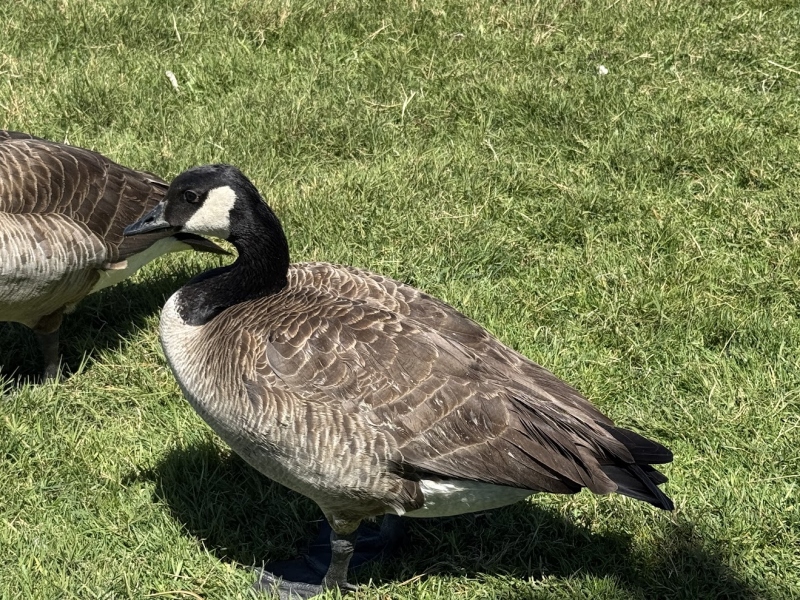

On one of our frequent walks, we visited the Radke Martinez Regional Shoreline Park.
Tuesday, April 2, 2026, Flight to Portland, Washington
We flew from San Francisco International Airport (SFO) to Portland, Oregon, with our daughter and her family, then drove to Salem, Oregon, to visit Willamette University. Ultimately, after our return home a few weeks later, Isabel decided that this was where she would study theater tech, starting in late August.
Wednesday, April 3, 2026, visit to Willamette University.
Willamette University April 3, 2026
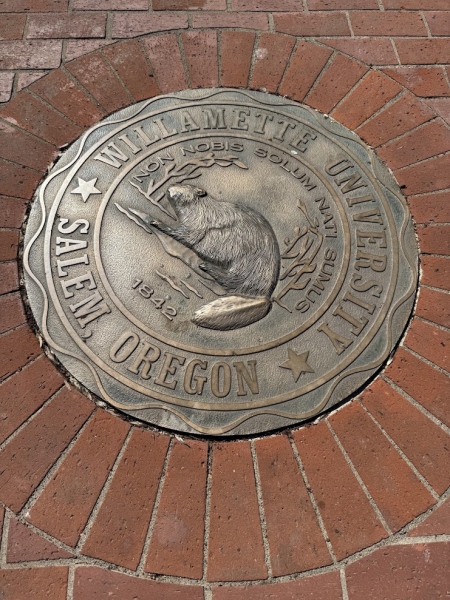
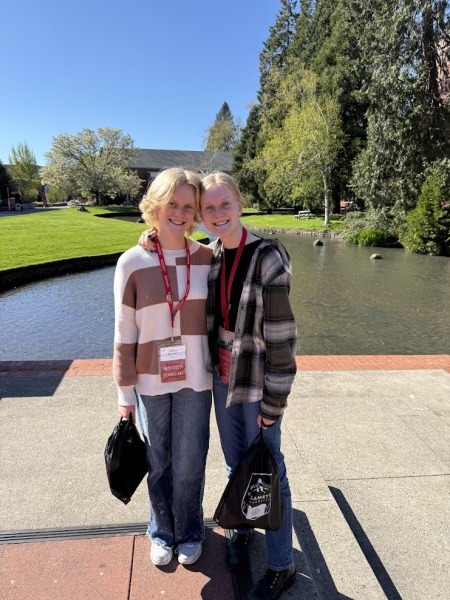
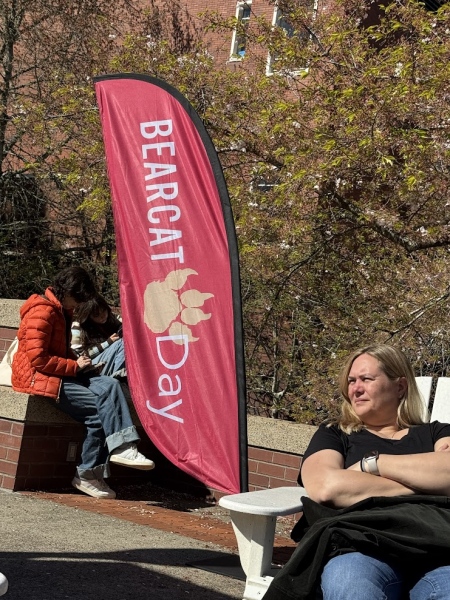

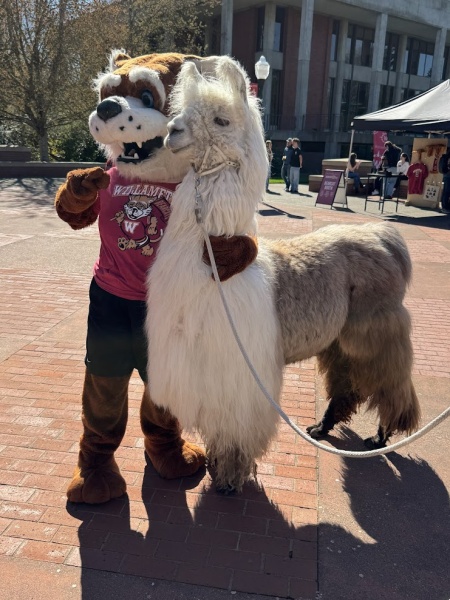


The all-day event was impressive to say the least. The students who might study at this university spent the day on tours and were divided by subject to learn more about what they might expect. Those who had made a definitive commitment to enroll at Willamette had to ring a bell to be recognized with applause. Parents attended separate presentations followed by lunch in a large dining room. It was laid out with multiple round tables, each seating 8 people, including one faculty member, so that we could ask questions to learn more about the university. During the morning session, I took the liberty of talking to the rector to address my questions. The campus is spread out and located across the road from the state capital offices. There is no doubt in my mind that Isabel will be very happy for four years at this university.
Since the beginning, Willamette’s inventive, interdisciplinary approach to education has developed leaders ready to make a positive impact on their communities and around the world. Since its founding in 1842, Willamette has remained a beacon of innovative learning, original research, and civic engagement. Willamette’s approach to education has earned it a place in the reputable guide Colleges That Change Lives. As one of just 40 colleges listed, Willamette is proud to offer a learning experience that allows students to explore their interests and gain meaningful skills. A private university with an undergraduate liberal arts college, an undergraduate art and design college, and four professional graduate schools in law, management, art and design, and computing and data science. Willamette’s beautiful, historic Salem campus is always buzzing with activity, from days filled with learning to relaxing afternoons near the Mill Stream to movie nights on the quad. In Portland, Willamette’s students live and study in one of the most vibrant cities in the northwest. Undergraduate enrollment is 1,565, and total enrollment is 2,589.
We all flew home on April 4th.
Tuesday, April 7, 2026, visit to the John Muir Historical Site in Martinez, California.
John Muir



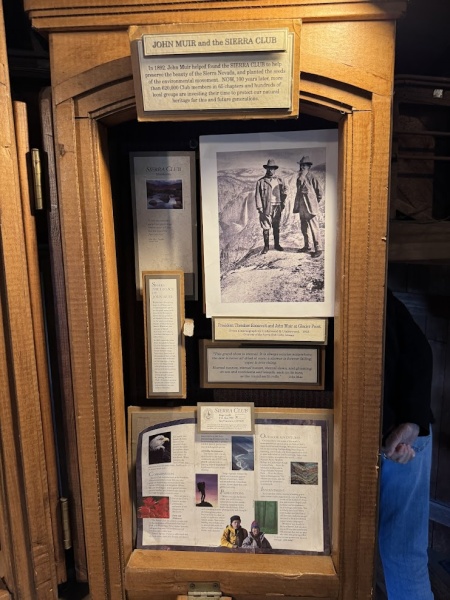
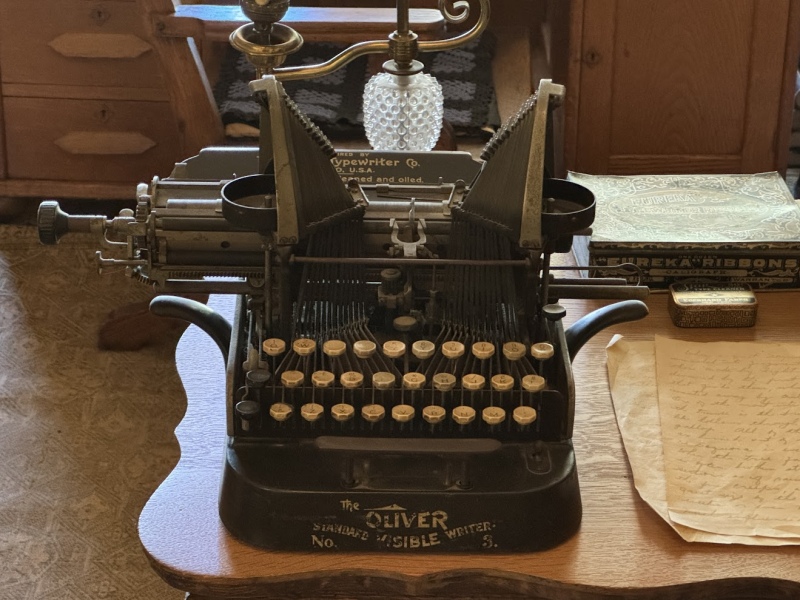
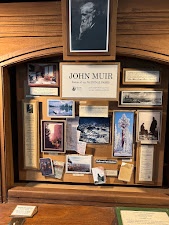
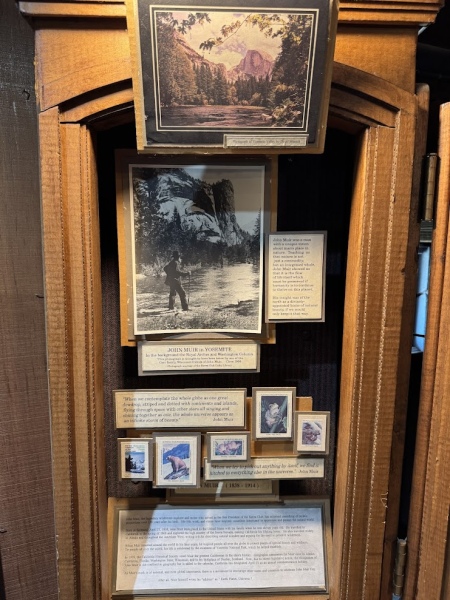

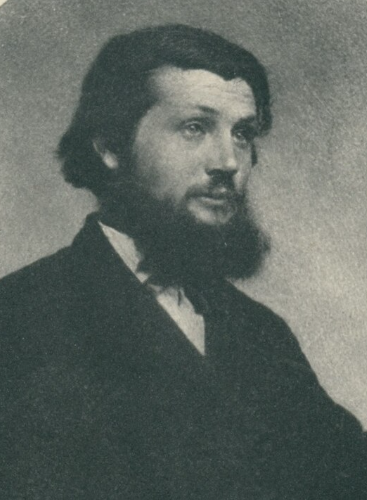
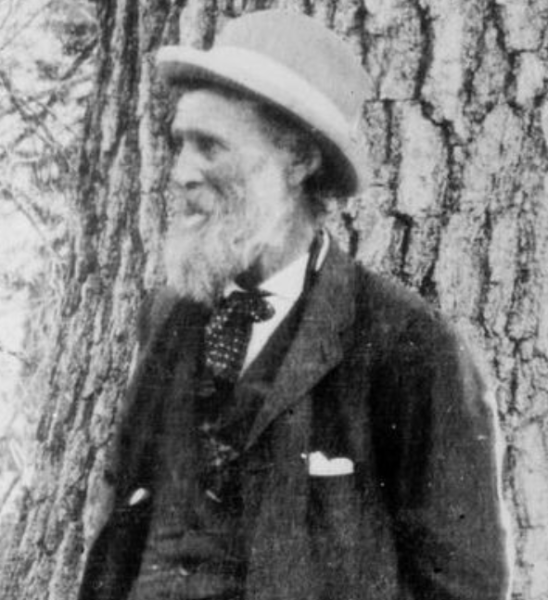

I am not sure that I can do justice to all we learned about John Muir. Our first stop was a tour of his home in Martinez, not too far from our Airbnb. Next, we walked his trail, also in Martinez, and later we drove to Yosemite to learn even more about this unique person. After that, we took a drive to Muir Woods National Monument. Everywhere you walk around Martinez, the presence of John Muir is felt, with many buildings and offices bearing his name.
It is with much shame that I must admit that I borrowed John Muir’s book “The Story of My Boyhood and Youth” from the library, but I only read half of it. To be honest, every chapter was filled with details about birds, and while in California for 3 months, reading about birds got to be just too much.
John Muir (April 21, 1838 — December 24, 1914) was born in Dunbar, Scotland, and was an American naturalist, author, environmentalist, philosopher, botanist, zoologist, glaciologist, and early advocate for the preservation of wilderness in the United States. A conservationist whose work helped establish Yosemite and Sequoia National Parks and inspired the modern environmental movement. In 1849, Muir’s family immigrated to the United States, starting a farm near Portage, Wisconsin, called Fountain Lake Farm. It has been designated a National Historic Landmark. This is a 90-minute drive from our home, and we will need to visit it this summer.
A leaf, a flower, a stone—the simple beauty of nature filled John Muir with joy. Through his writing, Muir shared his love of nature and inspired people to protect our country’s wild places, helping to form the National Park Service and the modern conservation movement. Muir loved all things wild and saw humans as just one small part of nature. He valued the natural world not only for its economic benefits but also for its beauty and healing powers. Muir championed the revolutionary idea that wild spaces should be preserved for everyone to enjoy.
John Muir Sequoia.
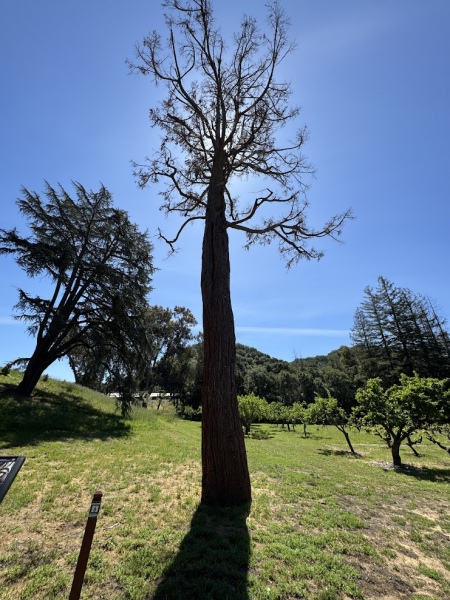
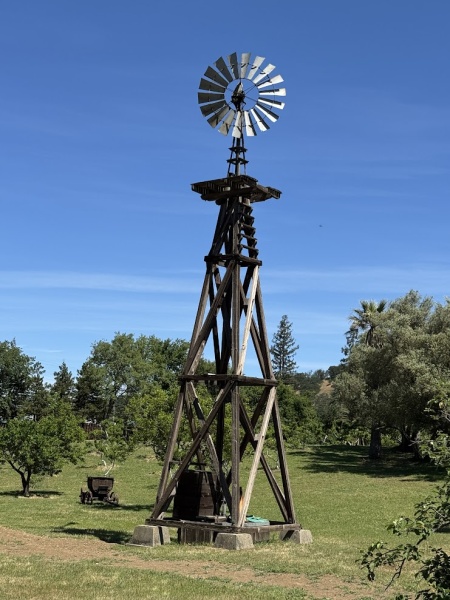
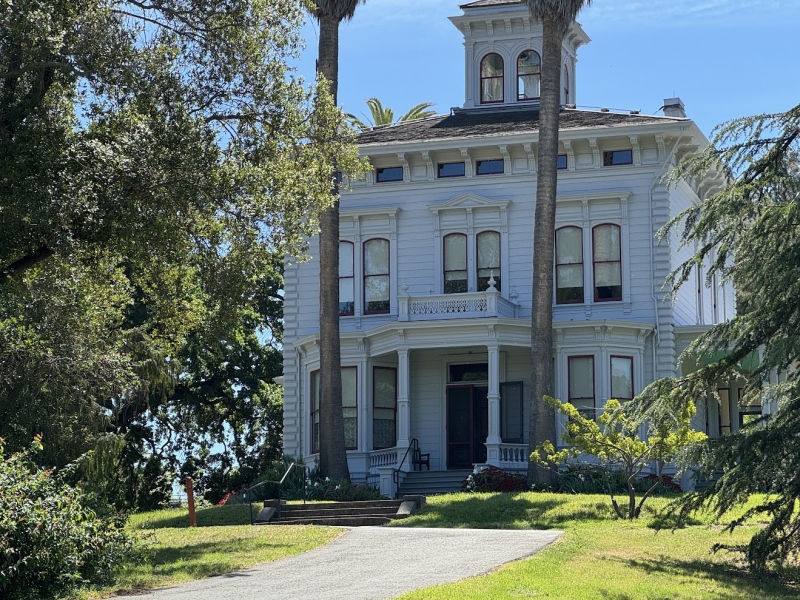
This giant sequoia holds a unique place in history. Planted by Muir himself, this majestic tree symbolizes his enduring impact, passion for preserving nature, and vision for conservation. The giant sequoia (Sequoiadendron giganteum), native to the Sierra Nevada mountains, is one of the most magnificent trees on earth, towering over the landscape. Known for their immense size and longevity, these trees can live for over 3,000 years and grow beyond 300 feet (90 meters) tall in their native habitat. With this tree’s lifespan at an end, the National Park Service will need to safely remove this tree.
Wednesday, April 8, 2026, visit to Mount Wanda, John Muir Historical Site in Martinez, California
Mount Wanda
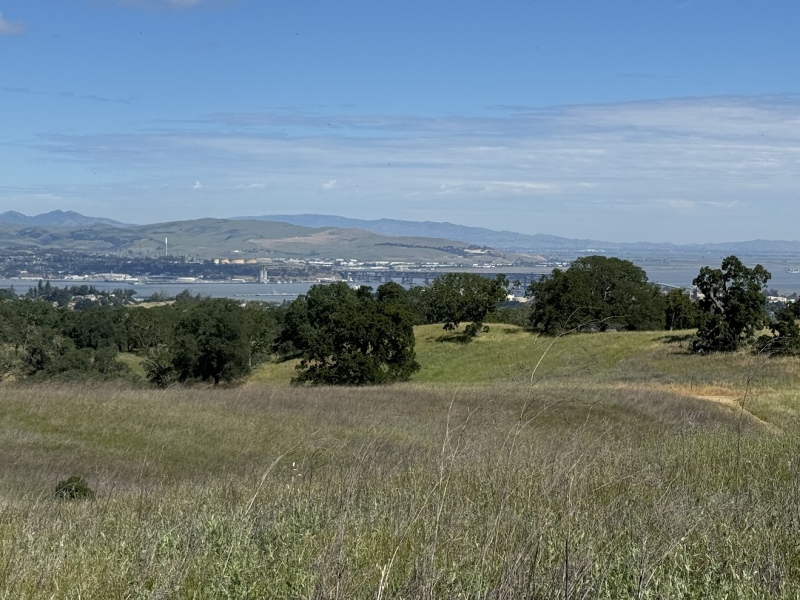
John Muir walked in these hills with his two daughters, Wanda and Helen. Linda and I enjoyed this walk, or more accurately, a hike, with many other people out for a lovely climb and walk with great views of Martinez from this hill.
Wednesday, April 15, 2026, day trip to Sonoma, California
Sonoma, California

Looking for a place to explore, Linda and I set out to drive to Sonoma, California, an hour from our Airbnb. This is wine country, and the scenery along Sonoma Valley is magnificent. My mistake was not keeping dashcam videos of what we saw along the way. Sonoma is part of the San Francisco North Bay region, with a population of around 32,000. Growing up in Cape Town and visiting the wine country around Franschhoek, Stellenbosch, and Paarl, my only conclusion is that the expanse of California’s wine district, including Napa and Sonoma, with its 3,328 wineries, is significantly greater than that of South Africa’s 508 wineries.
Thursday, April 16, 2026. Disaster.
On this day, I broke a tooth, in dental parlance #14 upper left. Once I returned home on June 15, I spent one hour at the endodontist getting 4 root canals treated in that one tooth, and on the 16th, spent 3 hours in the dentist chair getting a new crown fitted. I did not have any pain, but it took a few days for the swelling to subside.
Radke Martinez Regional Shoreline Park, April 17, 2026
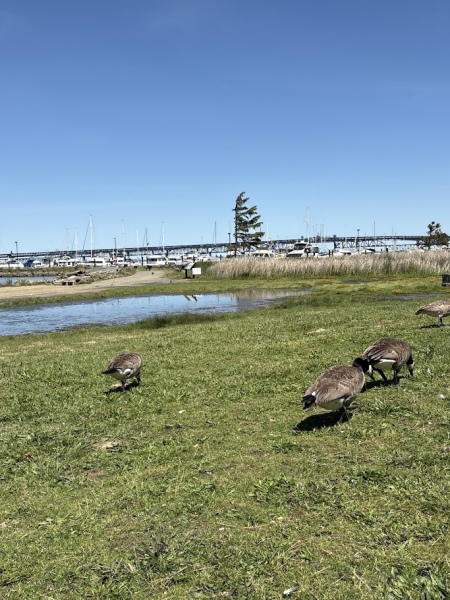


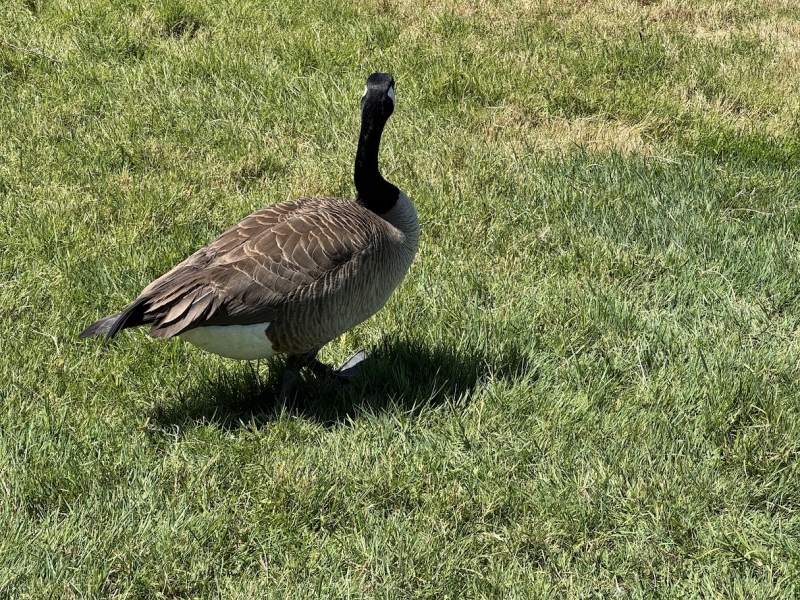
Friday, April 17, 2026, Radke Martinez Regional Shoreline Park.
One more time, we had our 4-mile walk to this magnificent park to enjoy the birds and scenic views.
Plaza Ignacio Park, Martinez, April 27, 2026
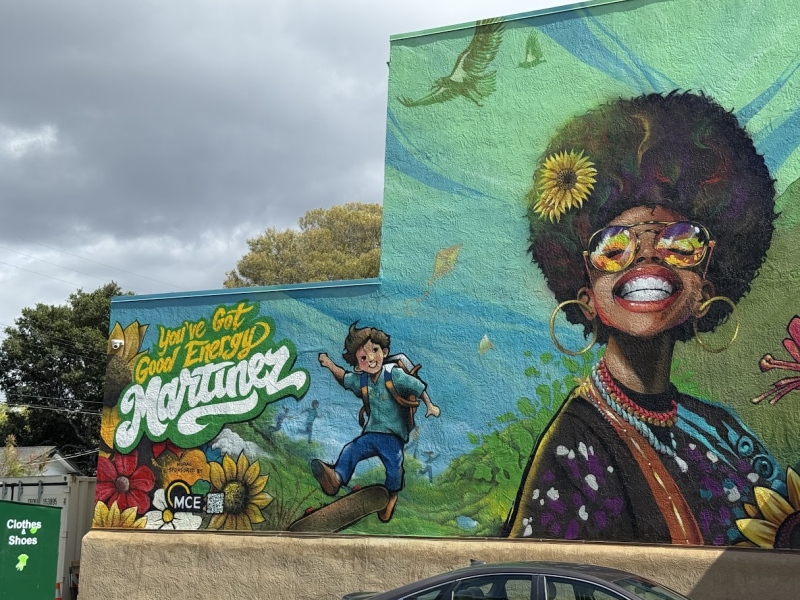

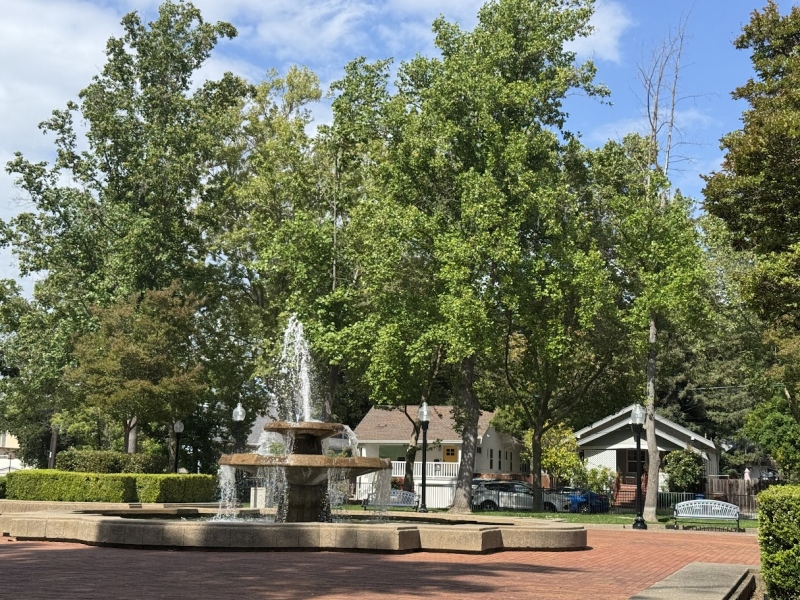
After our walk today, we relaxed in this nearby park.
Thursday, April 23, 2026, St. Helena and Calistoga.

Today we took a one-hour scenic drive to St. Helena and Calistoga, two cities in Napa Valley. St. Helena had a population of 5,430, and Calistoga had 5,228 in the 2020 census. If you might be interested in the available stores in St. Helena, please click this link.
Monday, April 27, 2026, Plaza Ignacio Park, Martinez

Wednesday, April 29, 2026, Drive to Yosemite, California
Pictured is a giant sequoia slab, cut from a 2,000-year-old tree toppled by a winter storm in 1979 in Eastern Tulare County, measuring 200 feet (61 meters) in length and 50 feet (15 meters) in circumference. The tree weighed 900,000 pounds (408,233 kilograms).
With our obsession with studying everything John Muir, we had to learn more. John Muir first arrived at Yosemite Valley in 1868, captivated by its granite cliffs, waterfalls, and giant sequoias, which he described as the “sanctum sanctorum of the Sierras.” Muir’s observations were recorded in copious field journals and later published in influential articles, including “The Treasures of the Yosemite” and “Features of the Proposed Yosemite National Park” in The Century Magazine.
“No temple made with human hands can compete with Yosemite,” wrote John Muir, whose crusading led to the creation of California’s Yosemite National Park in 1890. This temple of granite cliffs and towering waterfalls saw 4,278,413 visitors in 2025. Most spent time in Yosemite Valley, a mile-wide, seven-mile-long canyon cut by a river and later widened and deepened by glacial action.
It took us 4 hours to drive one way to Yosemite today. Due to the distance, we stayed in a hotel outside Yosemite in Oakhurst, California, and made reservations for a formal tour in a small van on the morning of the 30th.
I took several short videos of the magnificent waterfalls and surroundings.
Yosemite Valley, California, April 30, 2026 Video 1 (10 seconds)
Yosemite Valley, California, April 30, 2026 Video 2 (30 seconds)
Yosemite Valley, California, April 30, 2026 Video 3 (17 seconds)
Yosemite Valley, California, April 30, 2026 Photographs
Thursday, April 30, 2026, Yosemite, California, Bus Tour.
We were picked up for our bus tour outside our hotel at 7:00 am. The tour operators are concerned that entering the park might take quite some time due to the volume of visitors. We were lucky as we got into the park very quickly. There were only 8 of us on this bus, and we were blessed with a very knowledgeable tour guide.
As you can see from the photographs and videos, the magnificence of this park cannot be appreciated unless you are there in person to see and enjoy its wonders. The following are just some of the sites we saw on our tour.
Yosemite Valley, California, April, 30, 2026, Powder House
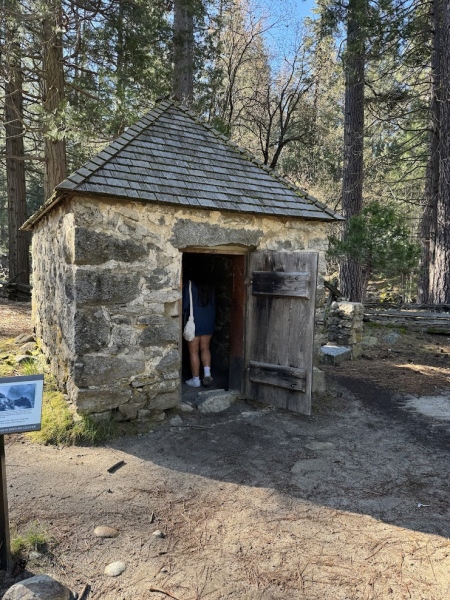
The powder house, likely built by road worker and Irish immigrant John Degnan in the 1880s, was designed to safely store explosive powder used in the construction of Yosemite’s roads and trails. The thick granite walls and sand-filled ceiling were built tough to prevent accidental ignition of the explosives stored inside, and to contain the resulting blast.
Before the first road to Yosemite Valley was completed in 1874, people could only reach it on foot or on horseback. It took the hard work of roadbuilders, including hundreds of Chinese immigrants, to make it possible for stages and, later, cars to travel to Yosemite. Building roads also required plenty of explosives to blast through the hard granite terrain. Later, the building was used as a jail. In 1950, two car thieves escaped by digging away the mortar between the rocks with a leg they twisted off the rickety steel-frame cot.
Yosemite Valley, California, April 30, 2026, Homestead Cabin
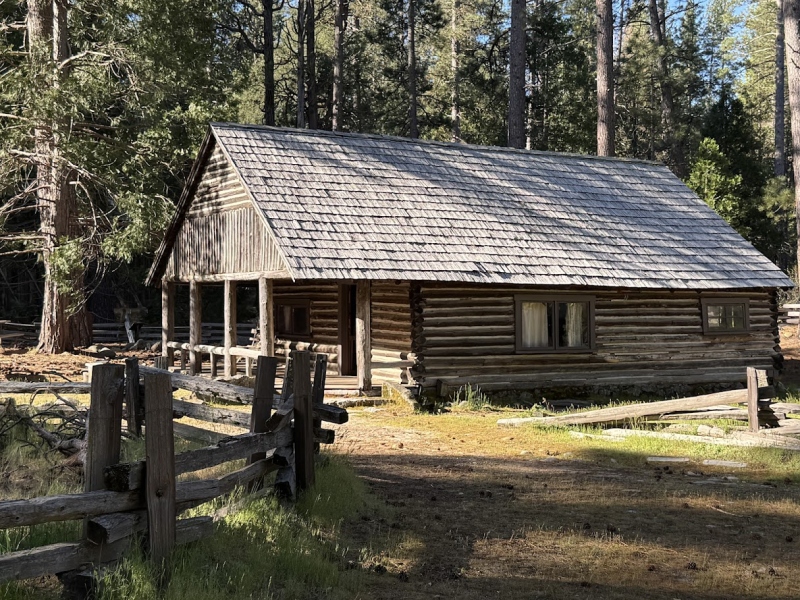
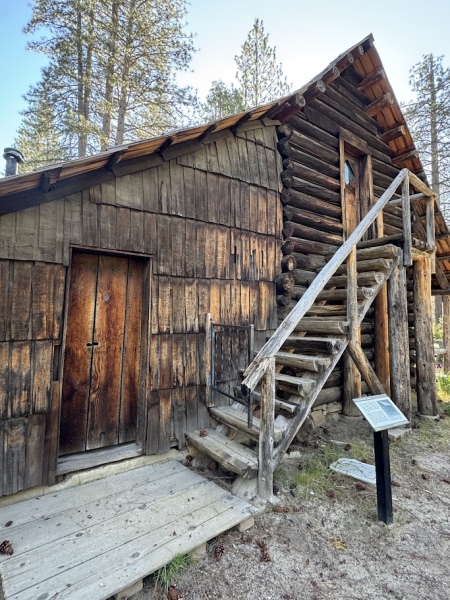
In 1879, Tom Hodgdon hired a Chinese cowboy named Ah Hoy and his neighbor, Franklin Babcock, to build this two-story cabin in Aspen Valley. Tom and family were ranchers, grazing cattle in nearby meadows. When the area became part of Yosemite National Park in 1890, the residents lost their grazing privileges. US Army soldiers, ordered to protect Yosemite’s natural resources, enforced livestock restrictions.
No longer able to earn a living from ranching, the Hodgdon family adapted to make money from tourism. In 1882, the Hodgdon’s access road was extended by Chinese workers to Tioga Pass for mining. When the Tioga Road opened to the public, tourist traffic increased through Aspen Valley. The Hodgdon family used this cabin for tourist lodging and built a complex of hotel buildings. Eliza, Tom’s spouse, contributed to the entrepreneurial effort by selling hot meals to hungry travelers. After the Hodgdon’s last grazing privileges, they temporarily vacated the cabin. Patrolling soldiers and army horses occasionally sheltered inside.
Yosemite Valley, California, April 30, 2026 Anderson Cabin
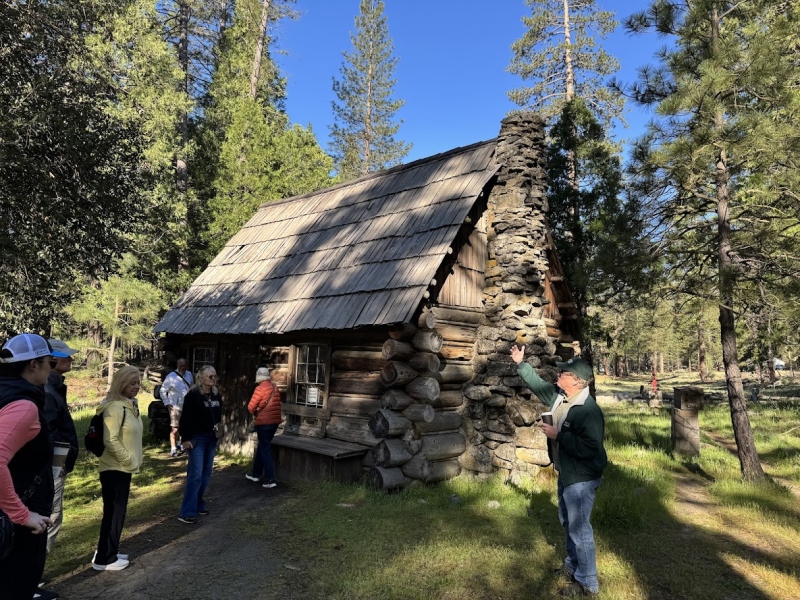
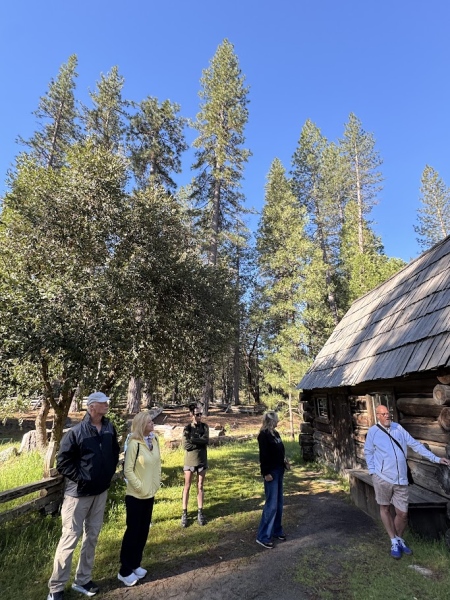
George Anderson, a Scottish immigrant, came to Yosemite around 1868, working a variety of jobs in Yosemite Valley during the warm summer months to make ends meet. During the winter, he lived in this modest cabin, which was originally located in Big Meadow (now Foresta).
George applied his skills as a blacksmith and trail builder to open new paths for explorers, allowing them to experience the beauty of Yosemite. He built several famous trails, including parts of the Mist Trail. His most daunting challenge was finding a way to the “perfectly inaccessible” summit of Half Dome, and through persistence, innovation, and guts, George became the first known person to have accomplished this feat. On the final steep slab of Half Dome, he drilled holes and hammered in iron bolts of his own making, precariously standing on each bolt as he painstakingly drove in the next.
Yosemite Valley, California, April 30, 2026 Wawona Covered Bridge
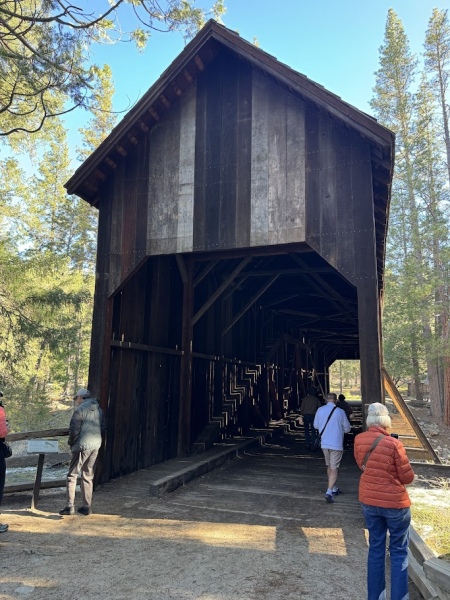

In 1868, entrepreneur Galen Clark funded construction of a bridge (then uncovered) as part of a road he hoped to complete between Wawona and Yosemite Valley. At that time, the only way to reach Yosemite Valley was on foot or horseback along narrow trails. Building a road would provide comfortable, swift access via stage. When Clark ran into financial troubles, Henry Washburn took over the project, and the road was finished around 1875. The bridge was covered around 1878, perhaps to remind Henry of bridges in his home state of Vermont. The road from Wawona to Yosemite Valley was built by a crew including 300 Chinese immigrants. Much of the current Wawona Road Is this original road. Despite the rough terrain, they completed the 27 miles of road in only 4 1/2 months. The bridge, the oldest in Yosemite, served as a vital link for wagons, stages, and eventually cars connecting Wawona and Yosemite Valley.
Yosemite National Park by John Muir.
“No temple made with human hands can compete with Yosemite,” wrote John Muir, whose crusading led to the creation of California’s Yosemite National Park in 1890. This temple of granite cliffs and towering waterfalls saw 4,278,413 visitors in 2025. Most spent time in Yosemite Valley, a mile-wide, seven-mile-long canyon cut by a river and later widened and deepened by glacial action.
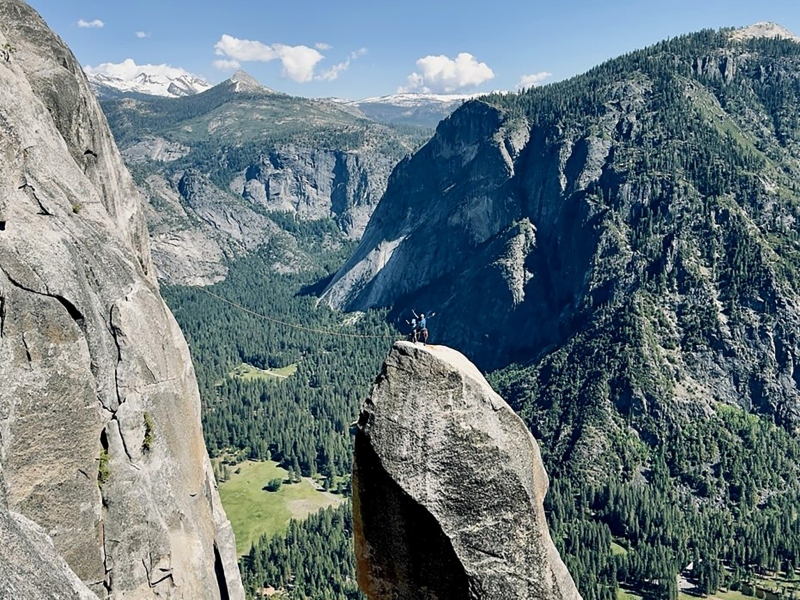

A 7-year-old boy has reached the top of California’s El Capitan. Joey Danger Evermore, who began the climb on Sunday at age 6, summited the infamous 7,573-foot monolith in Yosemite National Park, making him the youngest person to achieve the feat since his brother did so at age 8 in 2022, according to a representative for the family. Joey Evermore completed the climb alongside his older brothers, Sam Evermore and Sylvan Evermore, his father Joe Evermore, and a documentary crew. “Joey’s birthday has been amazing. He started this journey as a six-year-old, and now he’s seven, about to complete the impossible. A five-day ascent of ElCapitan,” wrote Sam and Joe Evermore in a joint Instagram post documenting the feat this week.
The Evermore family is from Colorado Springs, Colorado, and began the climb on Sunday, reaching the summit on Thursday night. Joey Evermore celebrated his birthday on the mountain, turning 7 on Wednesday. “Just be intentional with your kids,” he said. “Put together some kind of plan. It doesn’t have to be climbing mountains—it could be something like an annual parent-child road trip. The important thing is creating those bonds and helping our children become courageous adults.”
Yellowstone Chaos, New York Times, June 22, 2026

A problem we avoided by going outside of school holidays. You can read the New York Times story here.
Monday, May 11, 2026, Muir Woods, California
Can you appreciate this scenic drive to Point Reyes Station, California, which is 90 minutes from San Francisco? Remote, picturesque, and sparsely inhabited. The silent video is 5 minutes long, and you see the car in front with its brake lights constantly on, just to understand how difficult it was to negotiate all these curves. The trees are magnificent.
Muir Woods National Monument, May 11, 2026

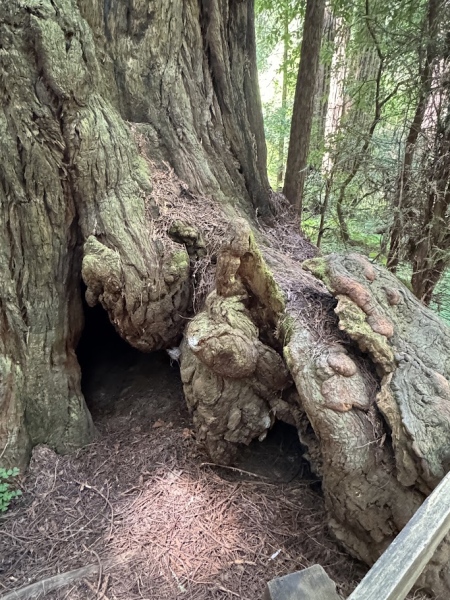
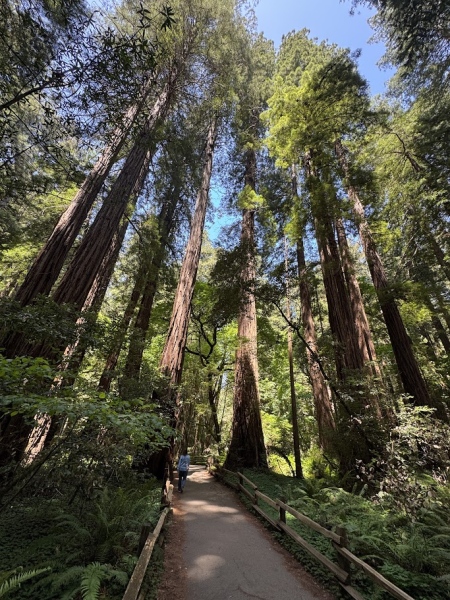

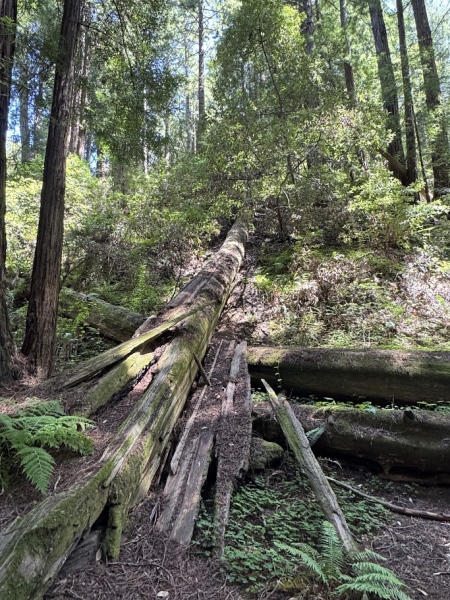
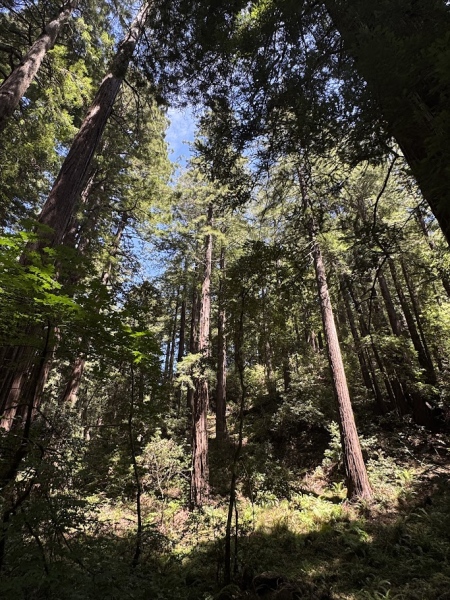
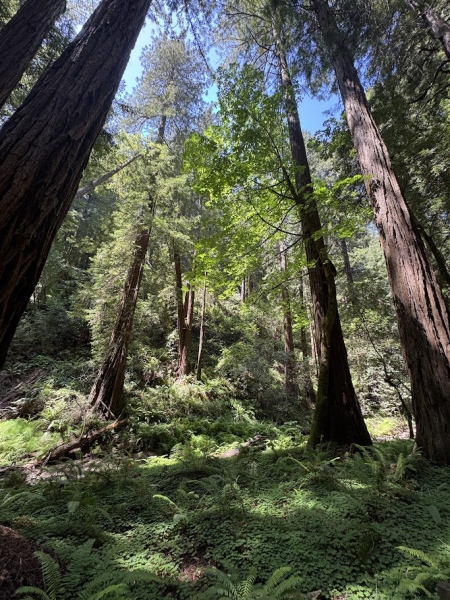
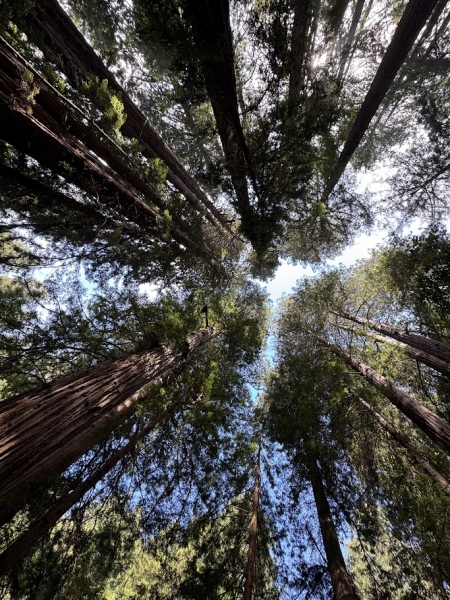
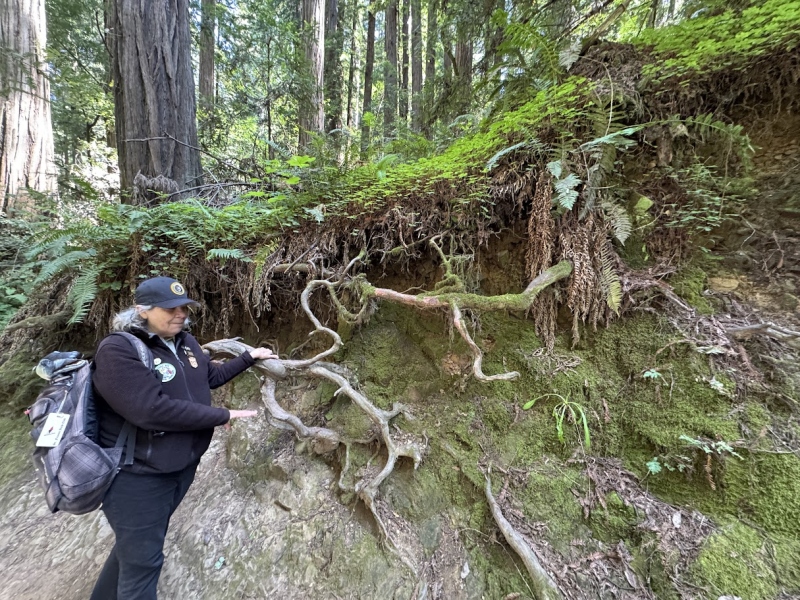
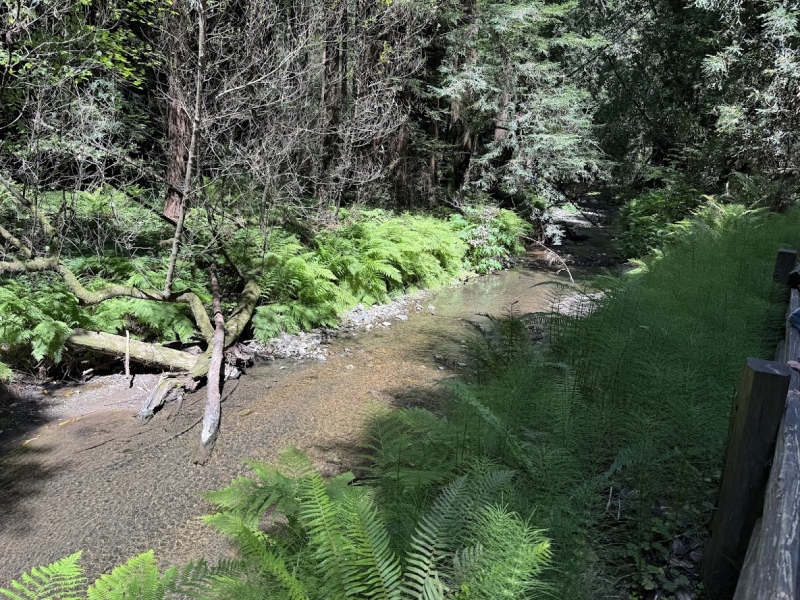
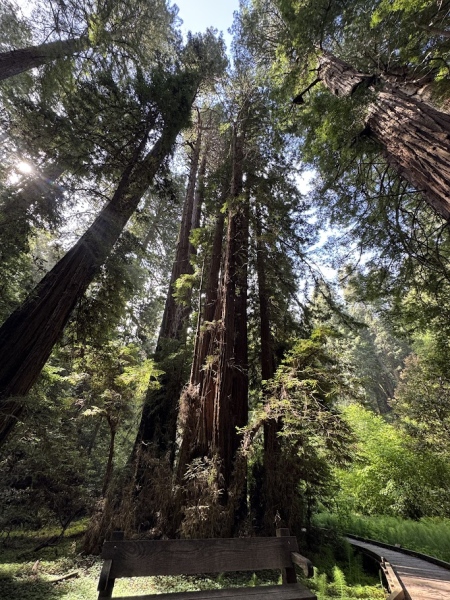
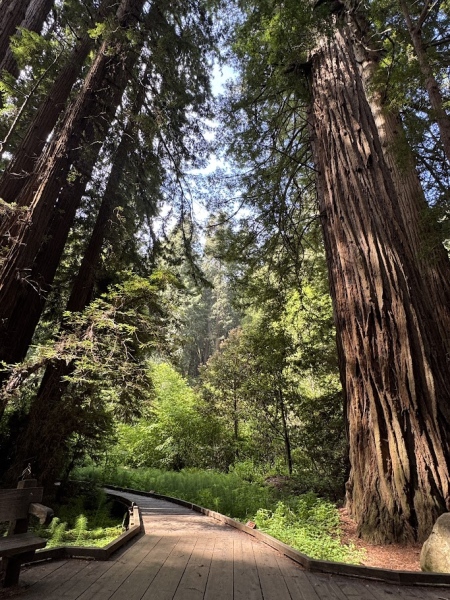
Muir Woods National Monument Tree for the ages, May 11, 2026

The slice of redwood was put on display in 1930. Careful study of its rings revealed that it lived 1,021 years. The painted lines on the cross-section highlight some of the historical events that occurred elsewhere in North America while the tree was alive.
909 A.D., the tree is born
1100 Building of cliff dwellings begins, Mesa Verde
1325 Aztecs begin construction of Tenochtitlan, Mexico
1492 Columbus sails to America
1607 Jamestown, VA, was established by English colonists
1776 Declaration of Independence
1849 California Gold Rush
1906 Muir Woods National Monument Established
1930 Tree falls
“God has cared for these trees, saved them from drought, disease, avalanches, and a thousand straining, leveling tempests, and floods; but he cannot save them from fools—only Uncle Sam can do that”. John Muir, 1897
Still being somewhat obsessed about all things John Muir, we took a drive to Muir Woods in California, a one-hour drive over a very impressive bridge on Interstate 580.
Muir Woods National Monument was established in 1908 through the inspired leadership of William and Elizabeth Kent, Griffith Pinchot, and President Theodore Roosevelt. William Kent was a prominent businessman, outdoorsman, and community leader who later served in Congress, where he sponsored legislation that created the National Park Service in 1916. Kent and his wife, Elizabeth, acquired this redwood-filled canyon in 1905 to protect it as a natural area. Two years later, the North Coast Water Company tried to obtain title to the grove by eminent domain, hoping to build a dam and reservoir. To stop this maneuver, the Kents offered to give the area to the Federal Government if the President would use the Antiquities Act to protect it as a National Monument. Kent proposed that the site be named in honor of their mutual friend, naturalist and writer John Muir. Gifford Pinchot, the first director of the US Forest Service, recommended Kent’s proposal to President Roosevelt, who enthusiastically signed an executive order creating the National Monument on January 9, 1908.
The United Nations at Muir Woods. In 1945, delegates from all over the world met in San Francisco to establish the United Nations. On May 19, 1945, they traveled to Muir Woods to honor the memory of the 31st President, Franklin Delano Roosevelt, whose death one month earlier had thrown the world into mourning. President Roosevelt believed in the value of national parks as sources of inspiration and human renewal. He also believed that good forestry practices and the sustainable development of natural resources were keystones of lasting peace worldwide. Organizers of the event hoped that the profound beauty and serenity of Muir Woods would inspire the delegates to pursue the president’s program for world peace as they met to establish the United Nations. “Persons who love nature find a common basis for understanding people of other countries, since the love of nature is universal among men of all nations.” Dag Hammarskjold, Secretary-General of the United Nations, visited Muir Woods in 1955.
Napa, California, townhome June 2026
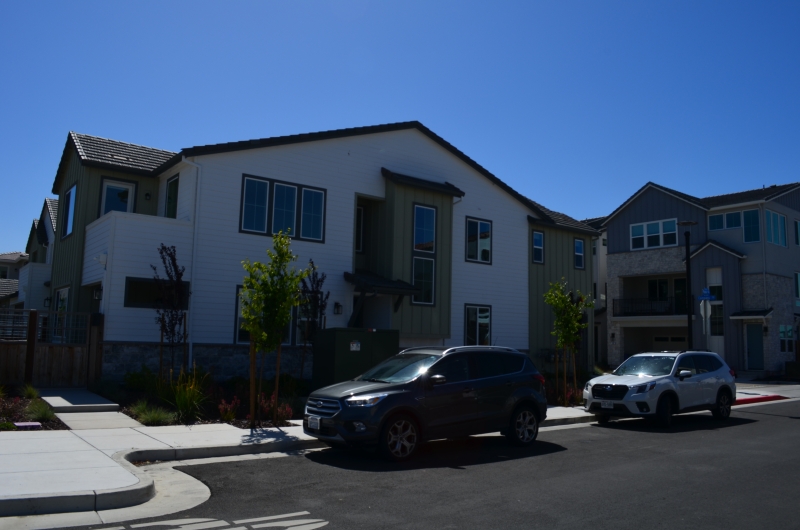
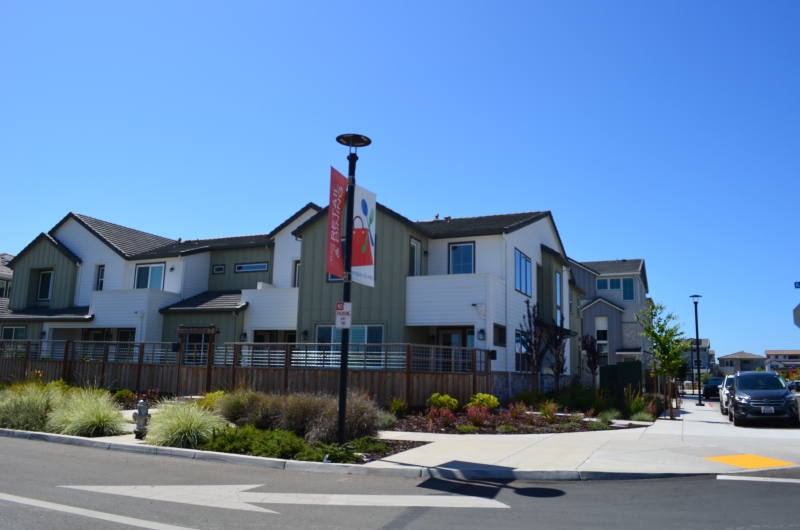

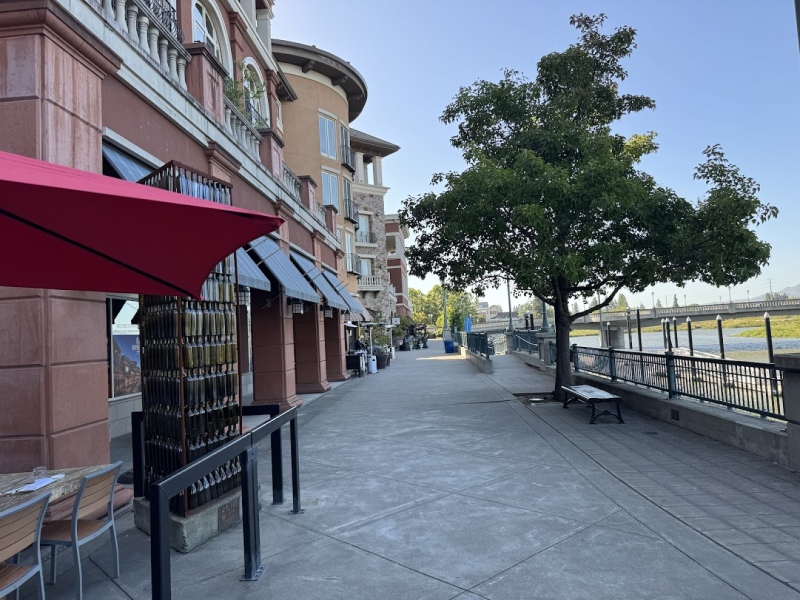
Napa City, California, riverfront, June 2026



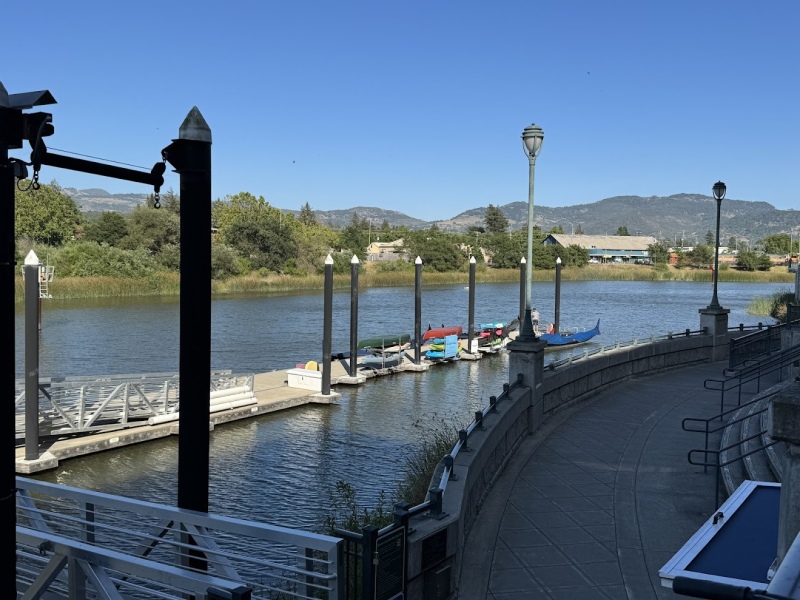
Wednesday, May 20, 2026, Radke Martinez Regional Shoreline Path
All I need in life is a diet of grass and not to be afraid of humans.
Monday, June 1, 2026, Napa, California
We took at least 16 trips to Napa, California, during our 80-day stay at our Airbnb, to see where our daughter and family purchased a brand-new townhome. Just a few pictures from outside to appreciate the lovely surroundings. Then, too, we enjoyed the riverfront in the city of Napa, only a 10-minute drive from their home.
Wednesday, June 3, 2026, South Lake Tahoe, California
Edoardo National Forest, June 30, 2026
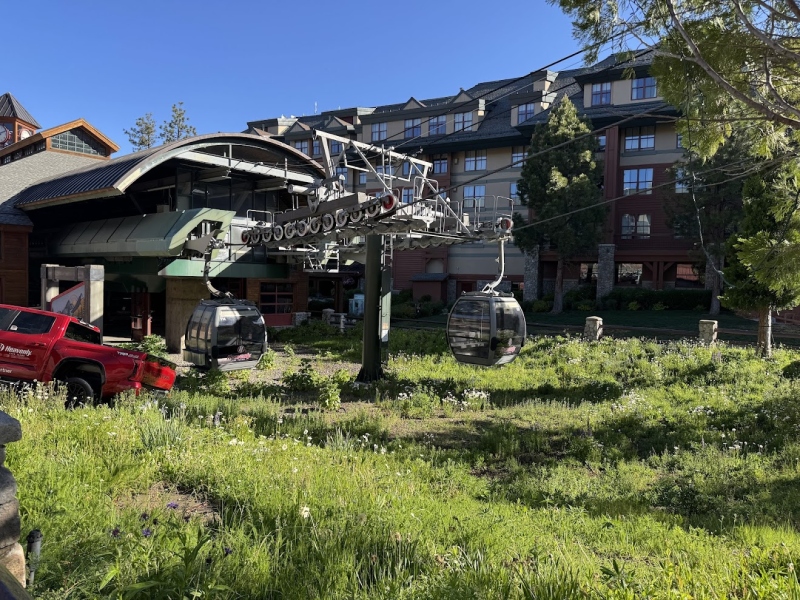
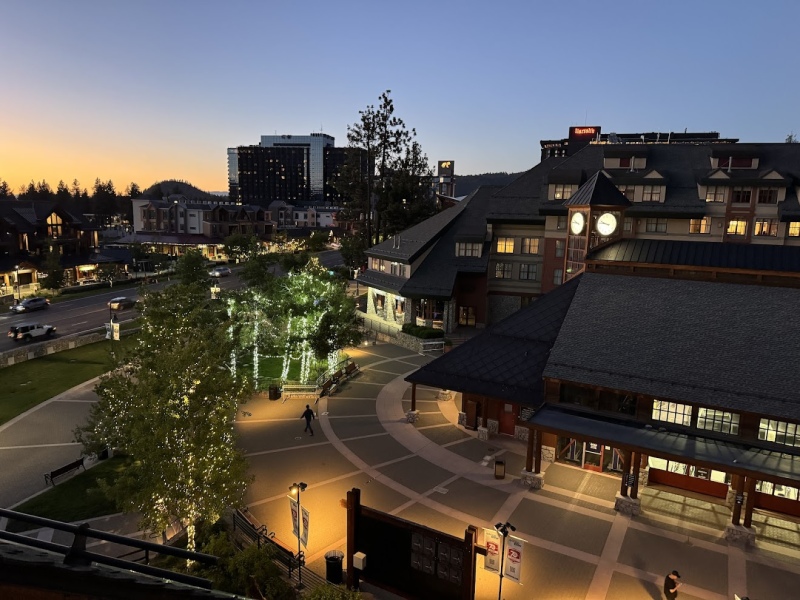
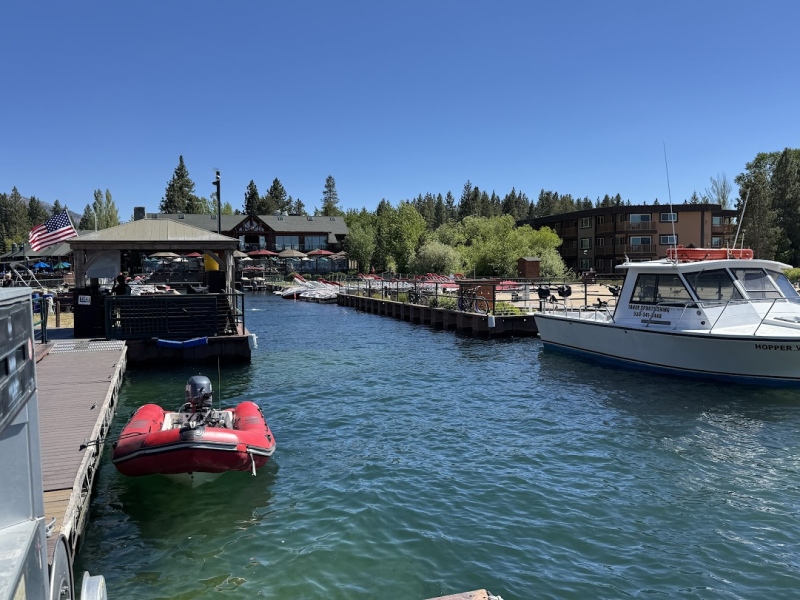

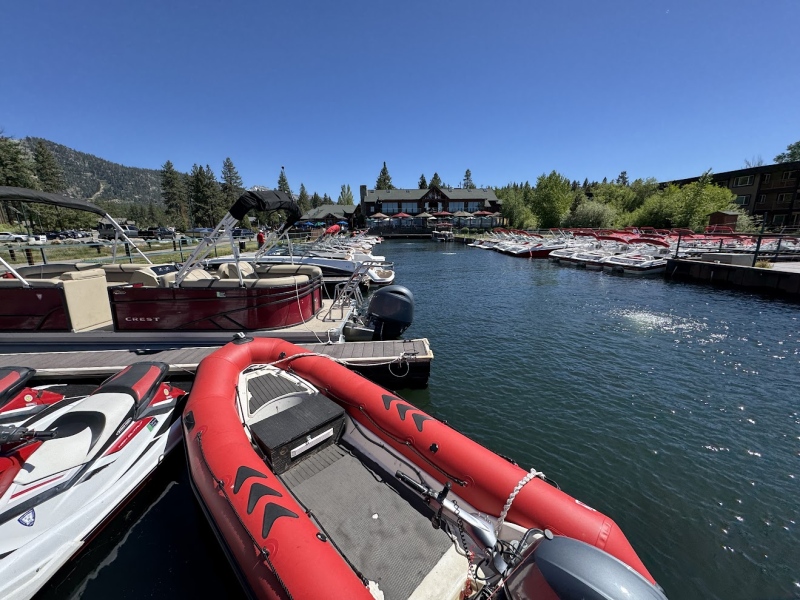

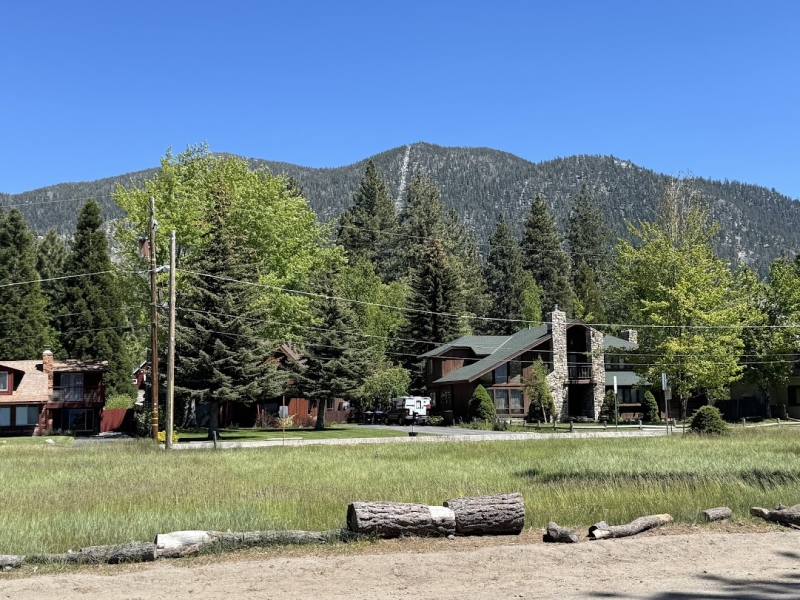
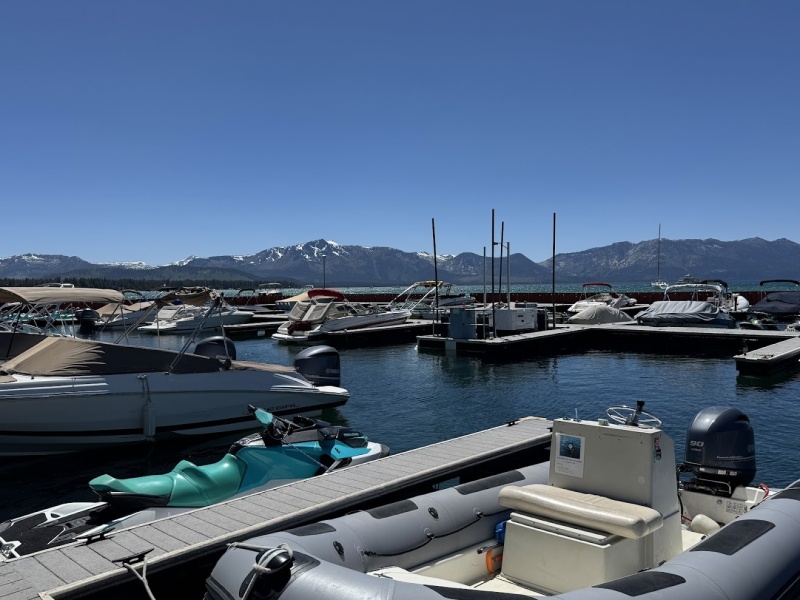
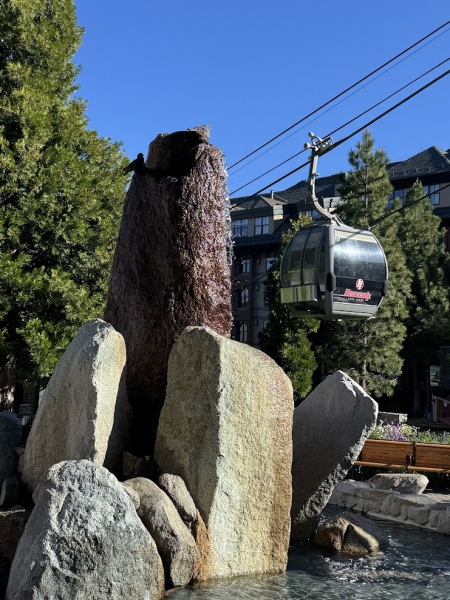

Today we began our 8-day drive back to our home in New Berlin, Wisconsin. Our first stop was in South Lake Tahoe, California, and it took just over 3 hours. The activities outside our hotel featured rides up the mountain, which we did not take. However, we walked to the nearby lake, part of the Eldorado National Forest.
Thursday, June 4, 2026, Elko, Nevada
Today was a longer drive, taking us 5 hours from South Lake Tahoe. We stayed at an American Inn, the only non-Marriott hotel during our 3-month travel. One interesting fact about this hotel: its occupants were mainly workers at a local mine who stayed there for weeks and months at a time. Elko County, Nevada, is a major mining hub with over 1,300 documented mines, primarily producing gold, silver, and copper, and is home to some of the world’s largest gold operations.
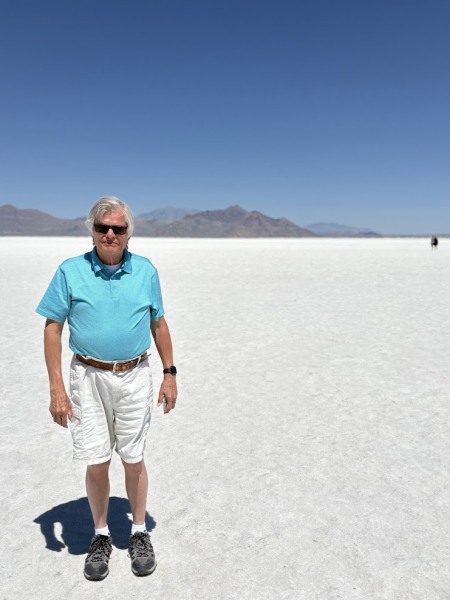
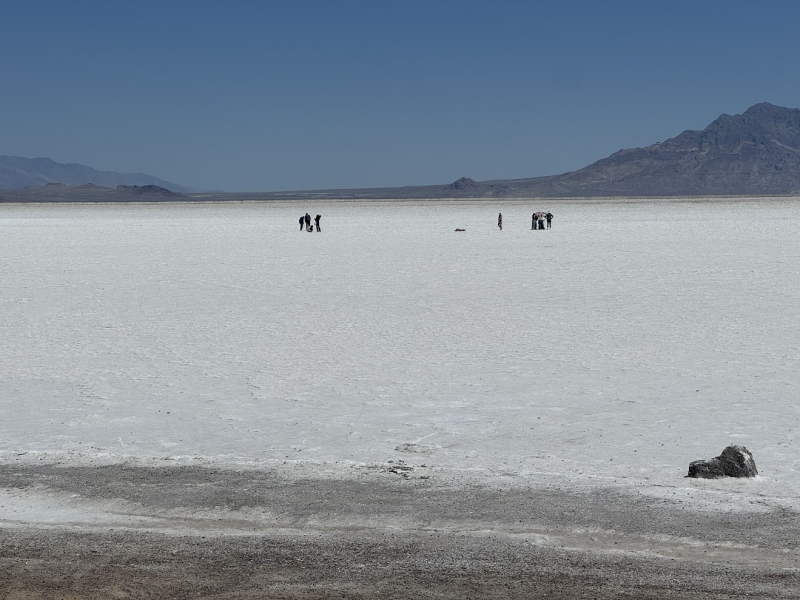
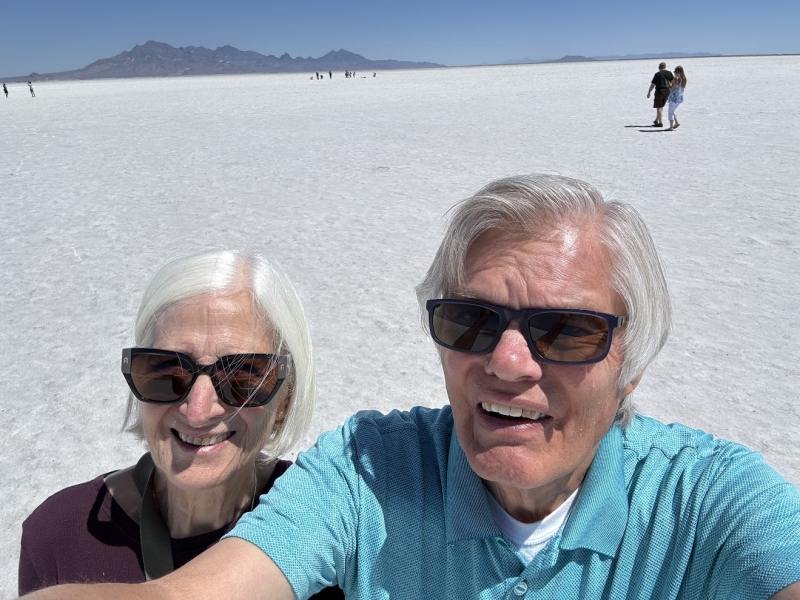
Bonneville Salt Lake, June 5, 2026

Friday, June 5, 2026, Salt Lake City, Utah via Bonneville Salt Lake
We had a 5-hour drive today, but stopped at Bonneville Salt Lake, just under 2 hours from Elko, Nevada. We also had a crazy GPS and travel situation. To get to the Bonneville Salt Lake, the GPS made us head east for 30 miles, cross over the interstate, and head back on the westbound interstate for 30 miles! The simple fact is that once we left our hotel, there was no way we could get to the Bonneville Salt Lake area unless we exited the westbound interstate.
The Bonneville Salt Flats are the site of the world land-speed record runs. Utah’s famed measured mile is located here. The elevation along the course is approximately 4,218 feet above sea level. The total length of the course, which includes the measured mile, varies from year to year, but for recent runs it has been laid out on an 80-foot-wide path approximately 10 miles (16 km) long, with the black reference stripe down the middle. Because of the Earth’s curvature, it is impossible to see from one end of the course to the other. The timing of world land speed record runs is under the jurisdiction of the United States Automobile Club.
World land-speed record times represent an electronically timed average of two runs over the measured mile within a one-hour time, one run in each direction. The first world land speed record on the Bonneville Salt Flats was set on September 3, 1935, by Sir Malcolm Campbell. His speed was 301.13 mph. Craig Breedlove holds the honor of being the first man to go faster than 400, 500, and 600 mph. His record of 600.601 mph set on November 5, 1965, was finally broken on October 23, 1970, by Gary Gabelich. Gabelich’s new record is 622.407 mph. Both Gabelich’s rocket engine “Blue Flame” and Breedlove’s jet-powered “Spirit of America” were equipped with specially designed inflatable tires pretested at speeds exceeding 800 mph. As of today (June 22, 2026), this record still stands.
I would be remiss not to add that walking on the salt lake is surreal. The color of snow, but the texture of sand.
Salt Lake City, June 6, 2026

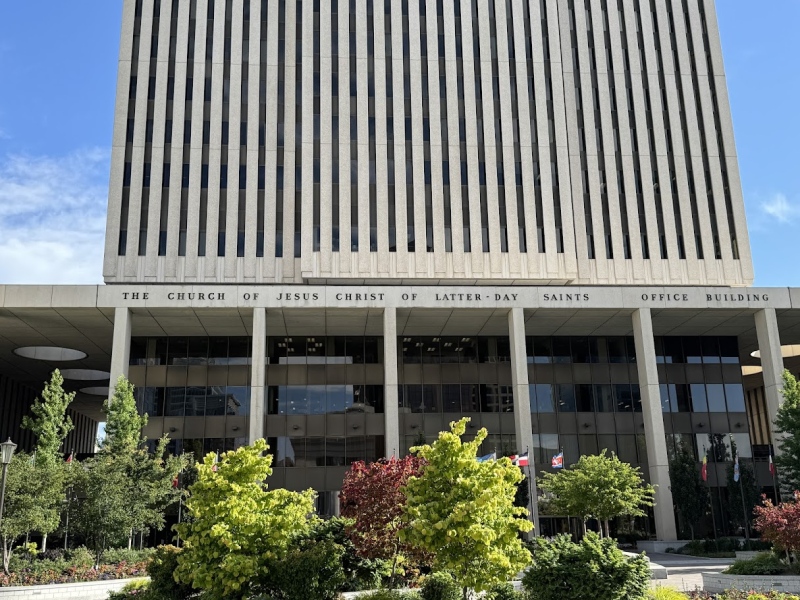
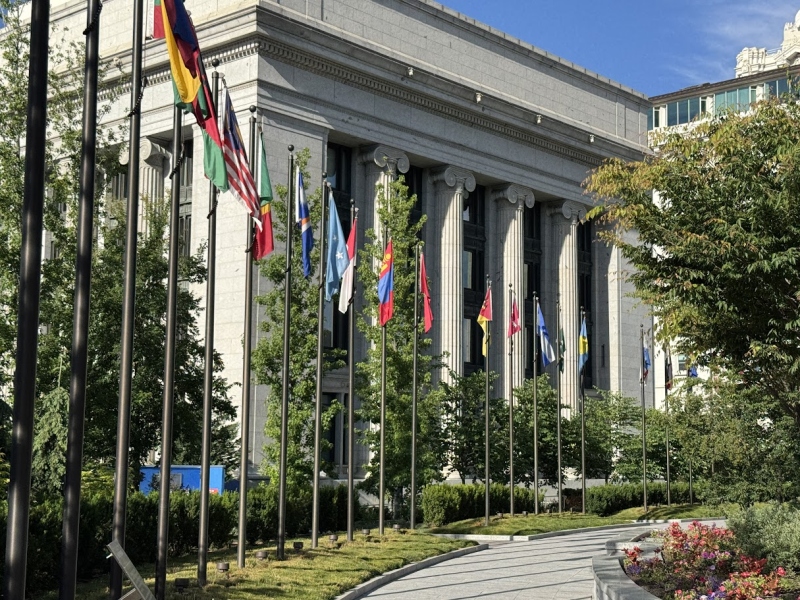

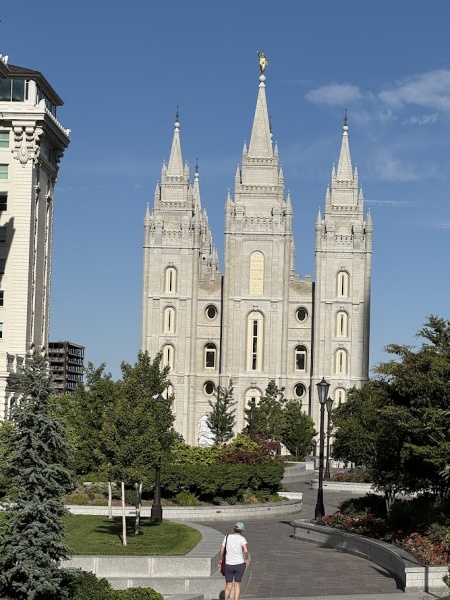


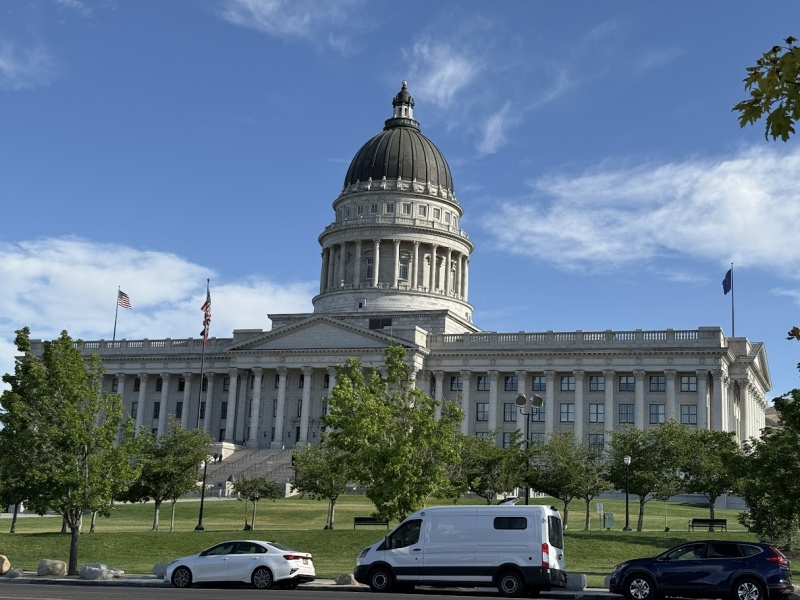
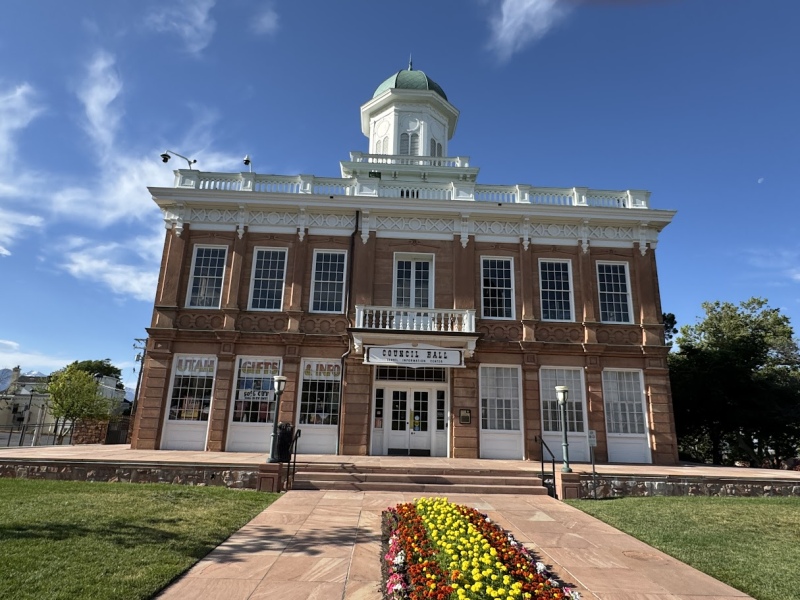

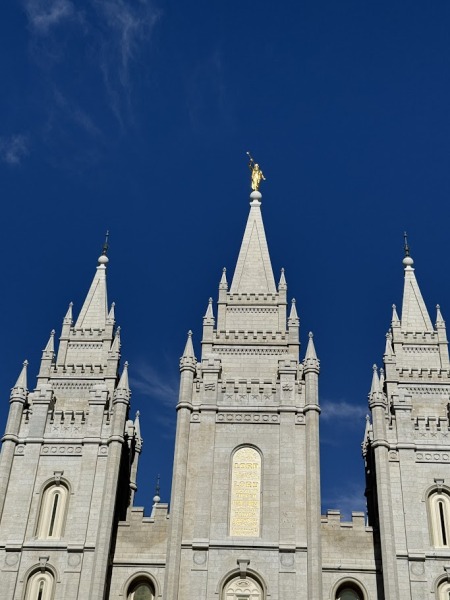

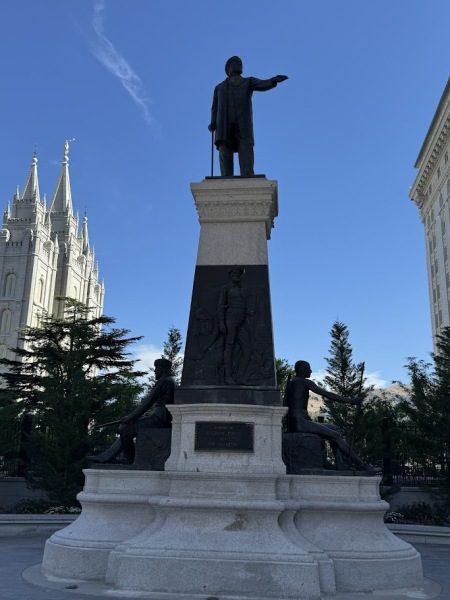
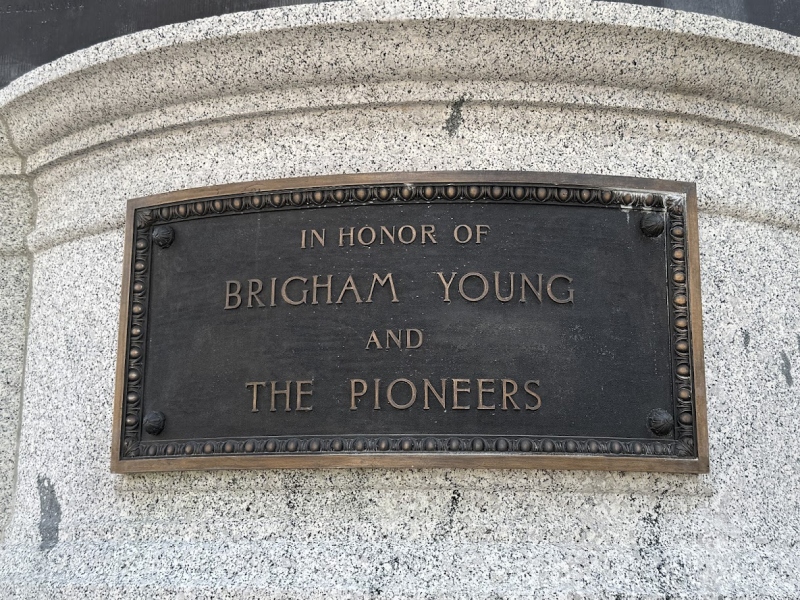


We thoroughly enjoyed our time in Salt Lake City, taking a long time to walk around and see the impressive buildings, and we clearly understood that this is the center of the Mormon Faith.
Salt Lake City Council Hall, June 6 2026

In the one photograph, you will see the Old City Hall, now known as Council Hall. Constructed in 1864-1865 at 120 East 1st South, this red sandstone building served as the seat of city government for nearly 30 years, 1866-1894. Here, the territorial legislature met and passed laws establishing free public schools, made appropriations for the first University of Utah buildings, and granted women’s suffrage. From its Cupola, a 1700-pound bell sounded fire alarms and curfews while its clock chimed at the time of day. In 1961, the structure was removed stone by stone and restored to its original likeness through the efforts of the Church of Jesus Christ of Latter-Day Saints, the State of Utah, the Salt Lake City Corporation, and the N. G. Morgan Foundation. Now a Utah State visitor center and historic shrine.
Saturday, June 6, 2026, Rock Springs, Wyoming
We had a relatively short drive today, only 3 hours in the car. Most of the day was spent admiring and enjoying Salt Lake City.
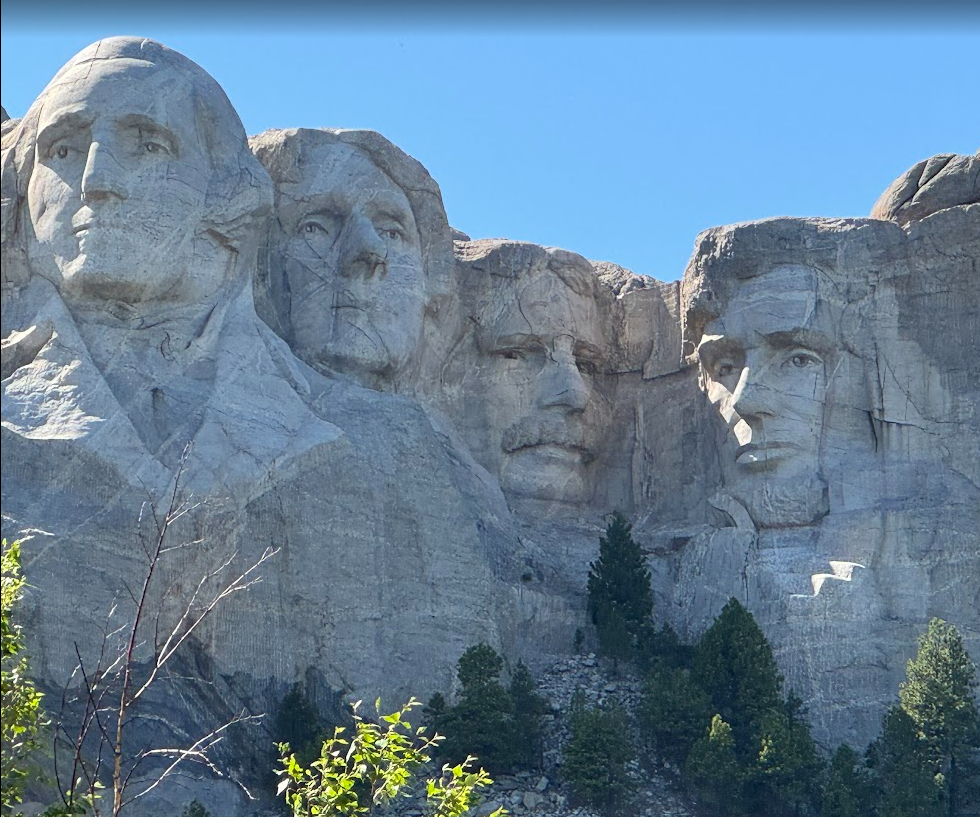
Mount Rushmore National Memorial, June 7, 2026

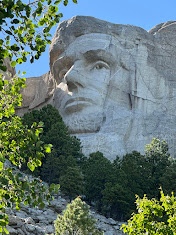


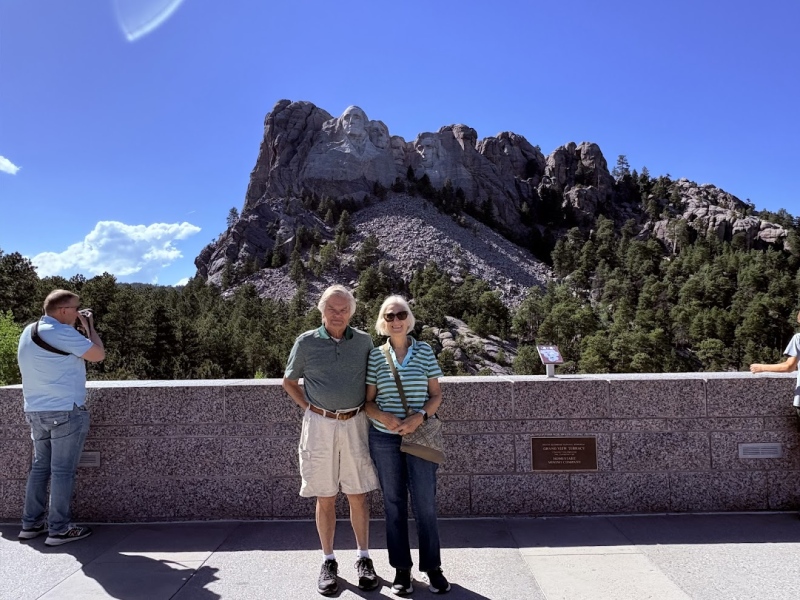
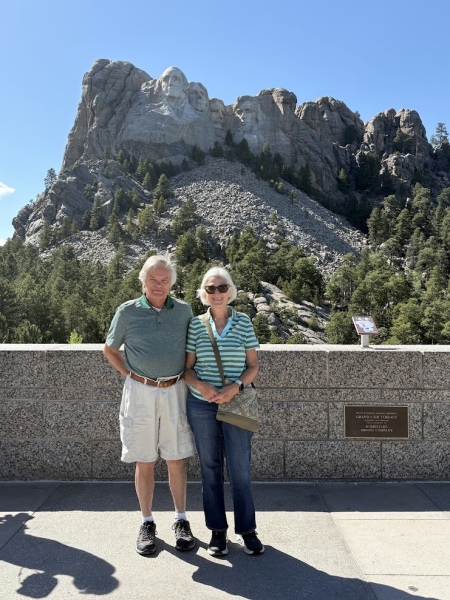


Sunday, June 7, 2026, Rapid City, South Dakota
Our previous trip to Mount Rushmore was about 30 years ago. What we found impressive is how much they have improved and enhanced the National Memorial. New buildings, new facilities, everything to make one more welcoming and comfortable.
Wall Drug, South Dakota, June 8, 2026
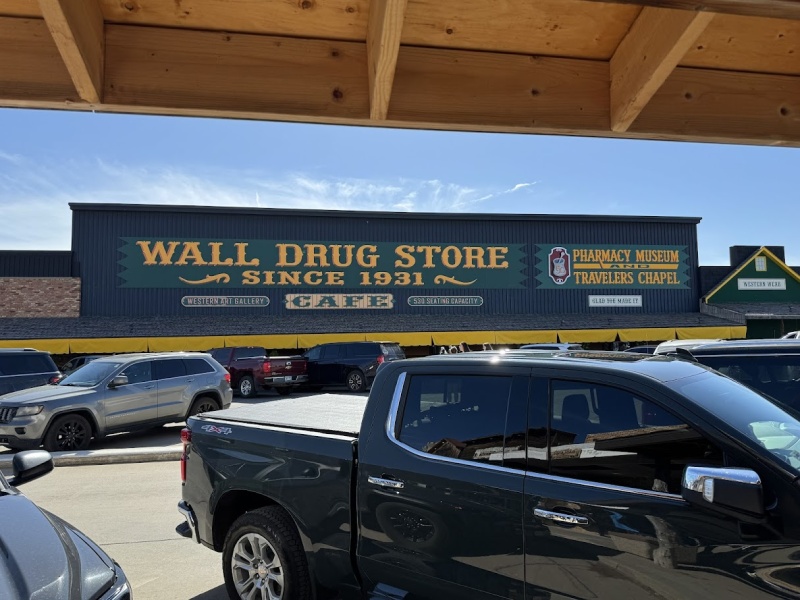

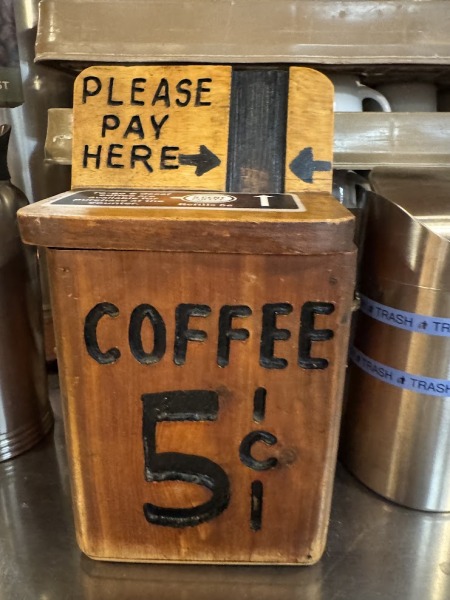

Monday, June 8, 2026, Sioux Falls, South Dakota
Today we had a 5-hour drive. However, one hour outside Rapid City, we stopped at Wall, home of Wall Drug, again a stop we have not made in decades. Wall Drug has a rich history in South Dakota. Nestled in the city of Wall in the western part of the state, Wall Drug has grown from its humble beginnings in 1931 to a thriving oasis. Wall Drug offers dining, activities, gifts and souvenirs, visitor information, and, of course, free ice water. Many road-worn travelers stop at Wall Drug and leave awake and refreshed, just like they did more than 80 years ago.
But it wasn’t always a thriving business, attracting 2 million visitors each year to the small town of Wall. Ted and Dorothy Hustead struggled to make Wall Drug successful in the early days. The city of Wall was somewhat affectionately known as “the geographical center of nowhere” back then, and to compound the challenges, the Great Depression was taking hold across the United States. But the story of Wall Drug was a story of success because one simple idea took root: offering road-weary travelers free ice water. Soon, travelers would make a point of stopping at Wall Drug for a refreshing break, and they haven’t stopped coming since.
Today, Wall Drug continues to offer the same amenities that made it a must-stop destination all those years ago, and visitors still stop to stretch their legs, eat a delicious home-style meal, and drink some free, rejuvenating ice-cold water.
The city of Wall, South Dakota, is home to 800 year-round residents and, thanks to Wall Drug, one of the most popular attractions in the state, drawing in more than 2 million visitors each year. Stop at Wall Drug and see what the excitement is all about.
Badlands, South Dakota, June 8, 2026

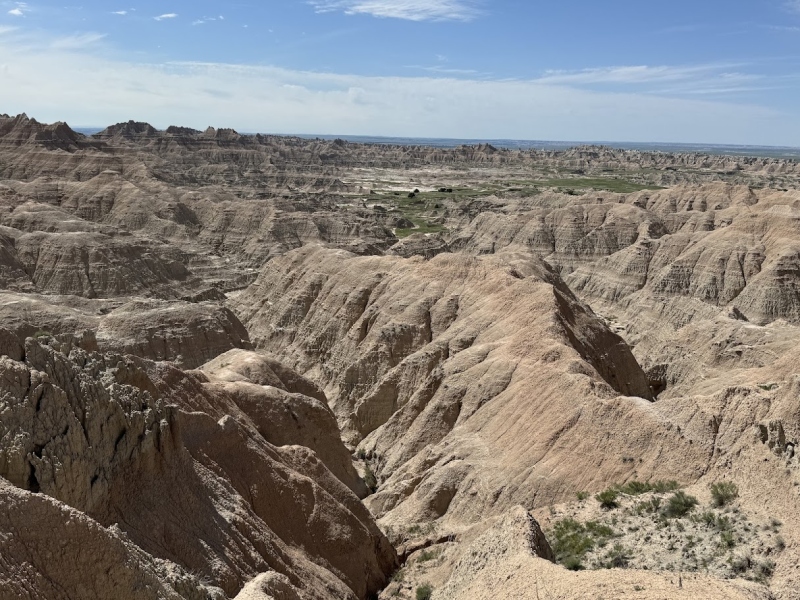

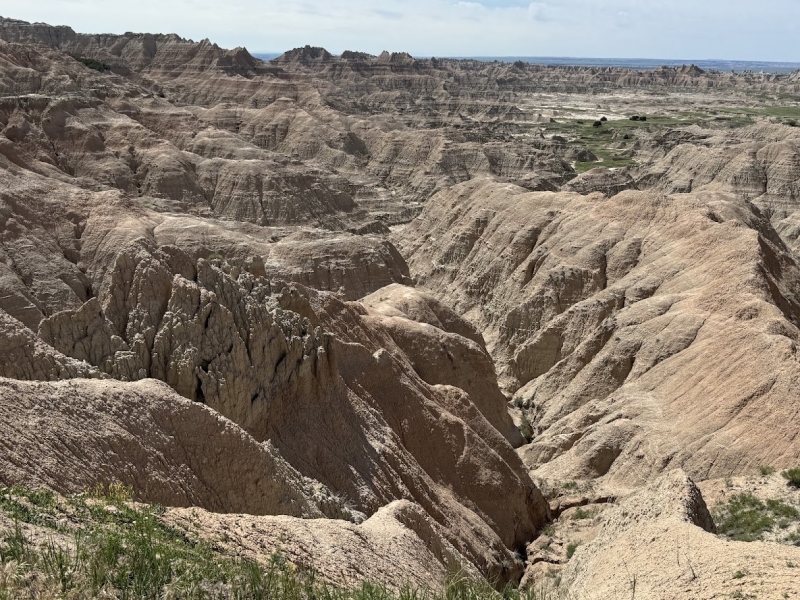
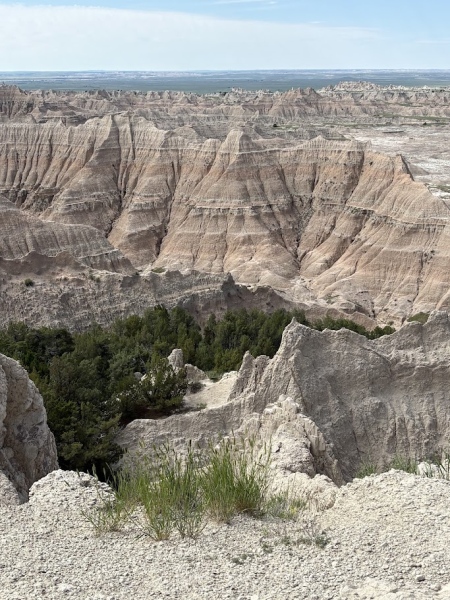
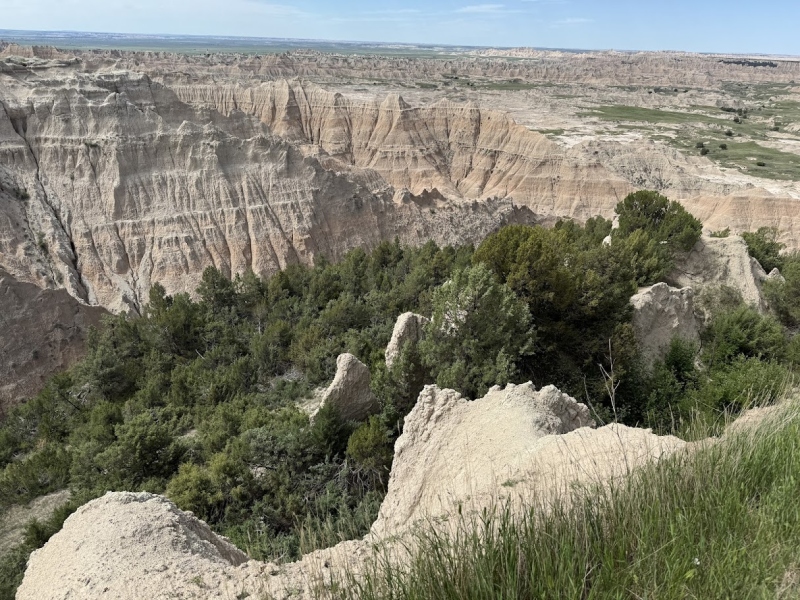
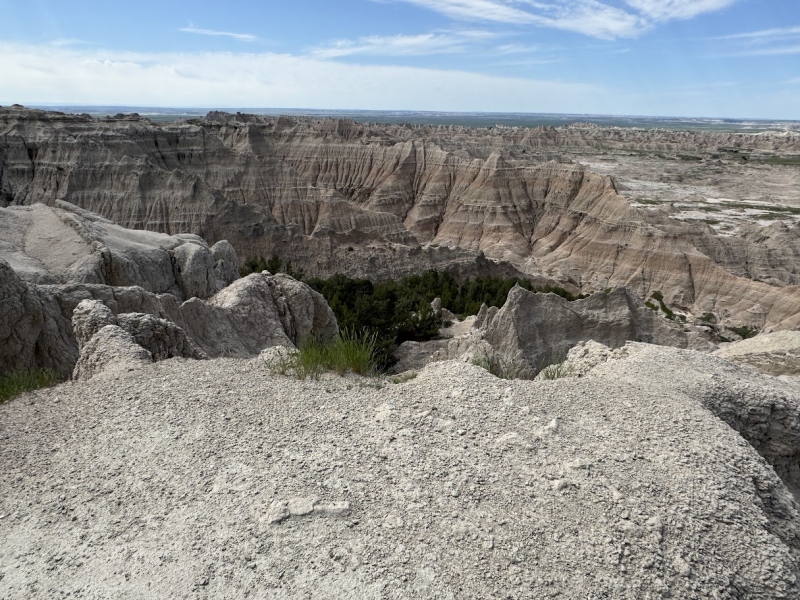
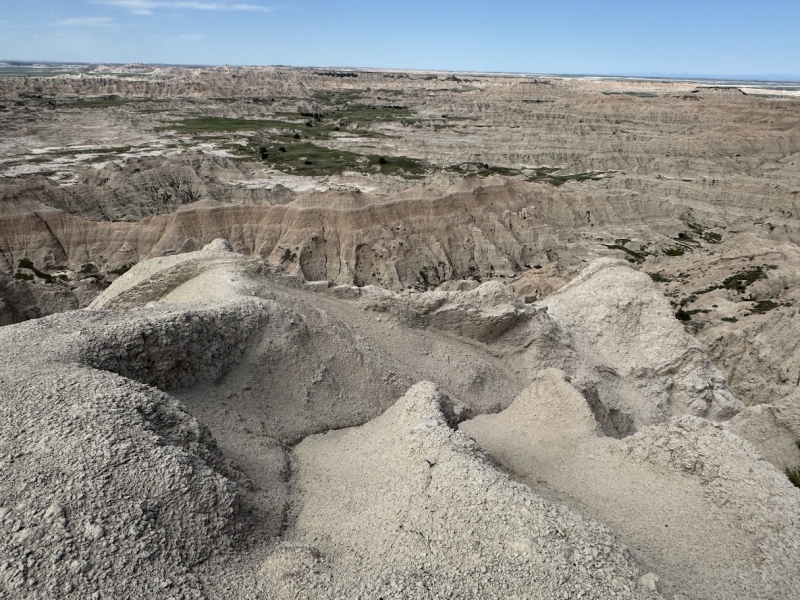
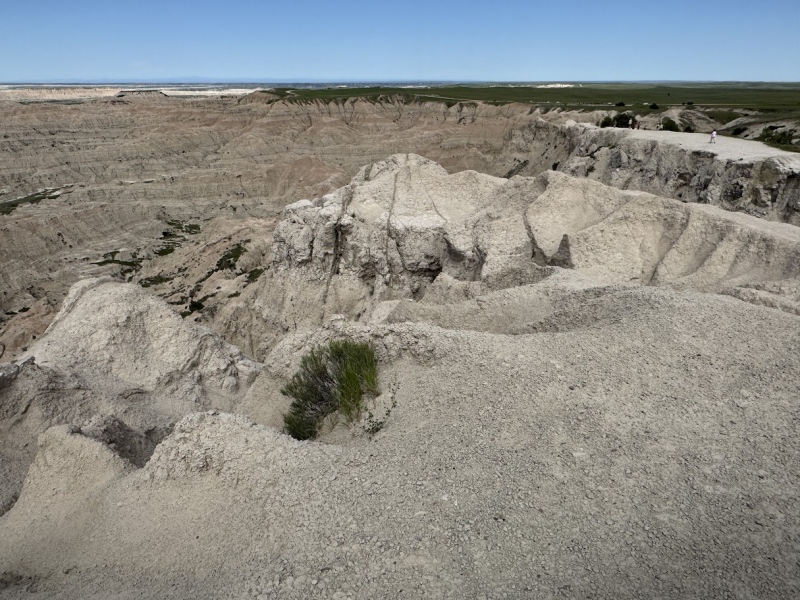
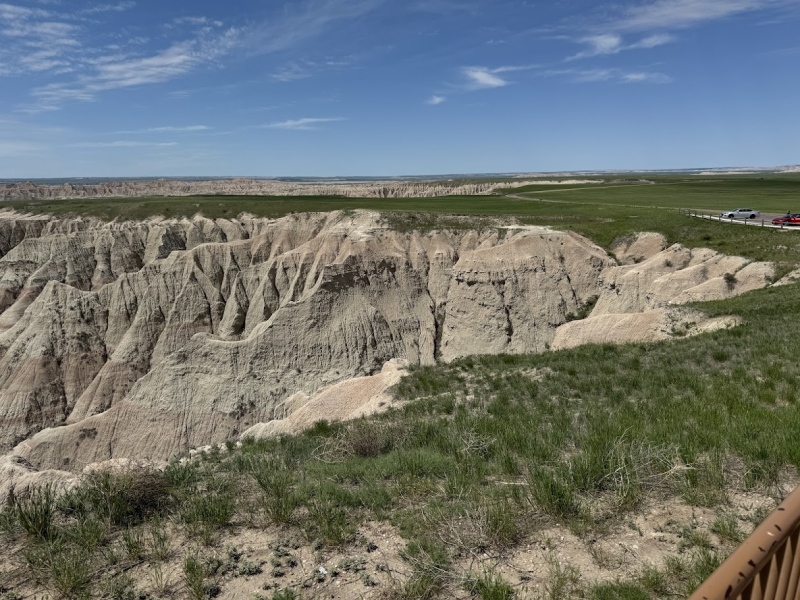


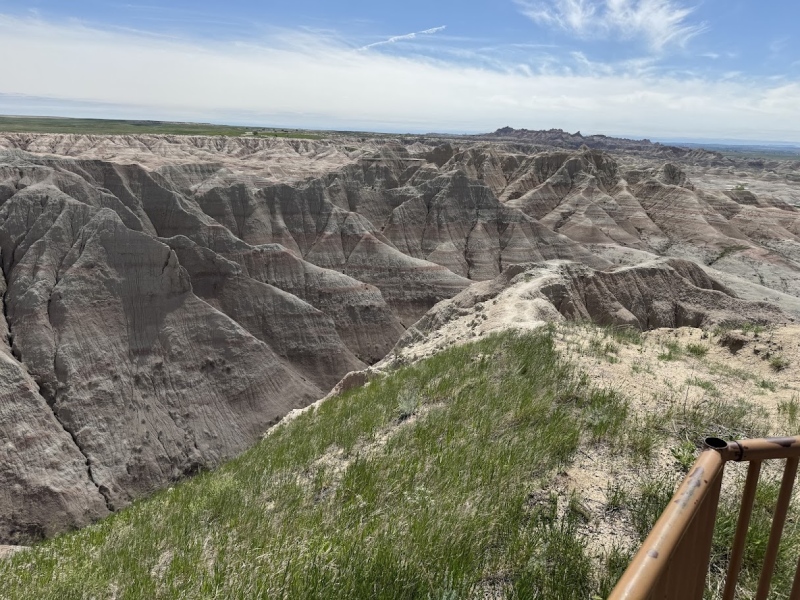
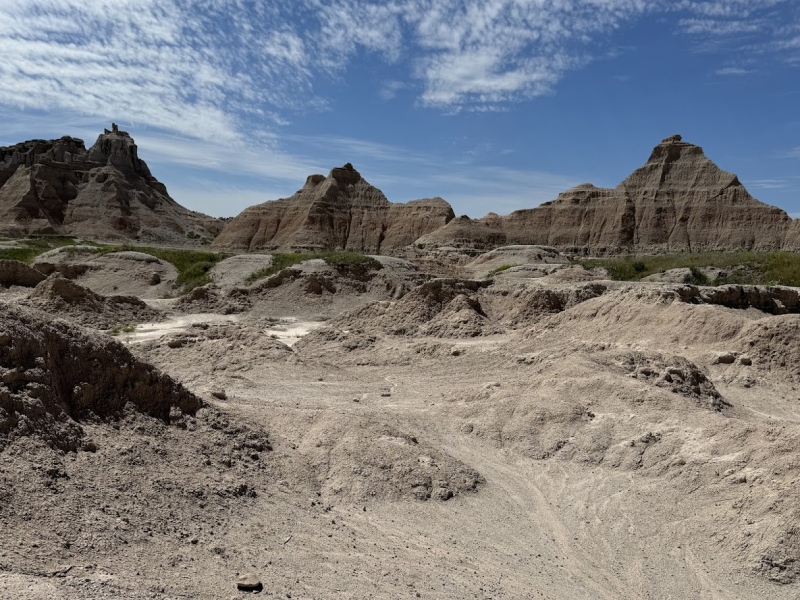
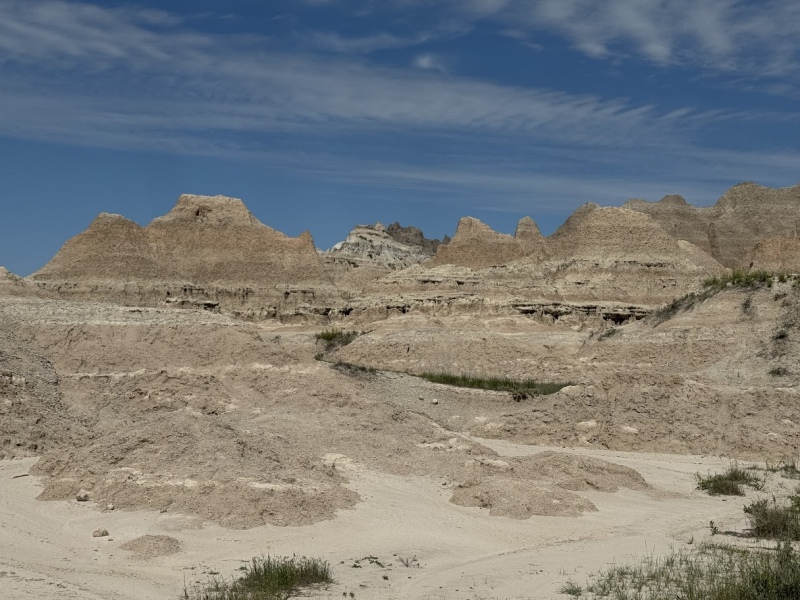
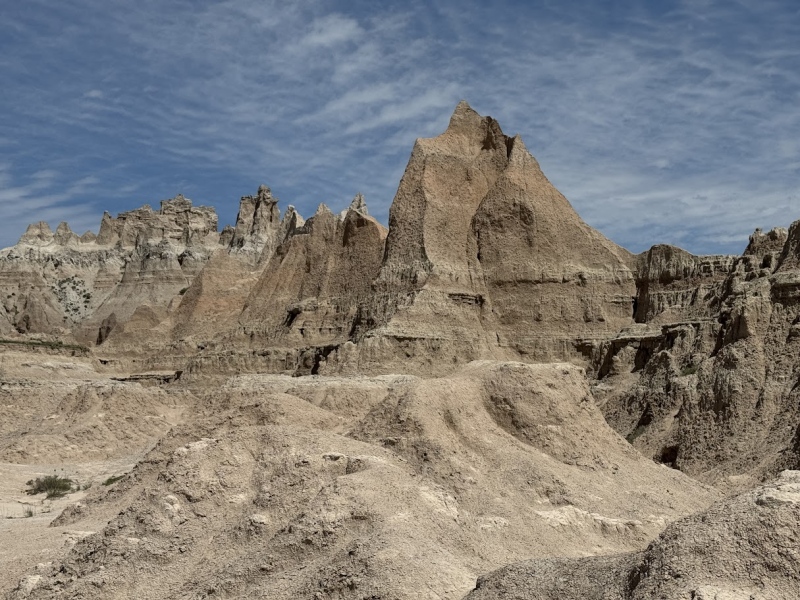
Why so many photographs? Unless you visit the Badlands, you cannot appreciate the landscape’s diversity and magnificence.
Born of volcanoes. 37-million years ago, the ancient crystalline core of the Black Hills had already been exposed to erosion. The long blue profile of those mountains, visible to the west, looked much as it does now. At about that time, streams flowing from the west began depositing sediment in this area. Most of the sediment was wind-blown volcanic ash, which had settled into the watershed that fed the streams. Occasionally, the rivers brought gravel and stream-worn rocks from the Black Hills themselves. The ash weathered into clay and turned to rock. Erosion did not begin to gully the Badlands layers and foretell the present landscape until quite recently, perhaps only half a million years ago.
In the heart of a sparsely settled region, far from the sources of industrial pollution, Badlands National Park offers clean air and haze-free views most of the time.
Ammonite fossils found in the park are evidence that this area was underwater 75 million years ago. Some ammonites could grow to more than 3 feet across and serve as a food source for giant mosasaurs and other predators.
We decided to stop at a rest area. What an interesting place.
Chamberlin, South Dakota, Rest Area Facility, June 8, 2026

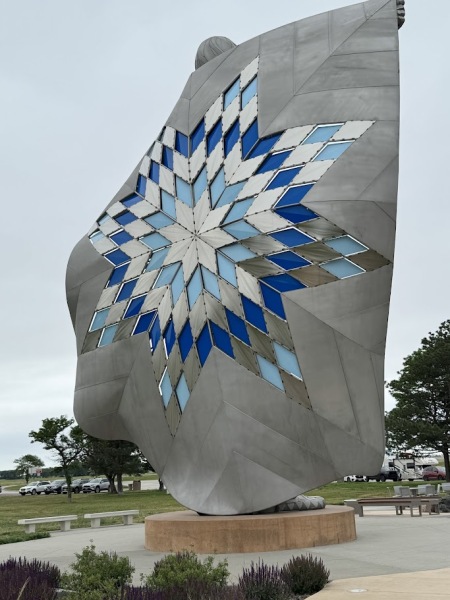


Dignity of Earth and Sky. Standing at a crossroads, Dignity echoes the interaction of earth, sky, and people. She brings to light the beauty and promise of the indigenous peoples and cultures that still thrive on this land. The intent is for the sculpture to stand as an enduring symbol of our shared belief that all is sacred and that all is in a sacred place. Sculptor and South Dakota Artist Laureate, Dale Claude Lamphere. Gifted to the people of South Dakota from Norm and Eunabel McKie. Dedicated September 16, 2016.
Artist Statement. As I developed the design, foremost in my mind was the dignity and long history of indigenous people in this land. I wanted to encourage visitors to understand the deep cultural and worldview of the First Peoples. Women have always been a stabilizing and renewing force. This is celebrated here, specifically honoring the Lakota, Nakota, and Dakota women who continue to be strong and to be a guiding influence for the families and communities of the Oceti (Seven Council Fires). My greatest hope is that Dignity will inspire present and future generations to recognize the enduring strength of tradition in indigenous cultures throughout our nation and encourage all of us to embrace our similarities and celebrate our differences.
St. Olaf College, Northfield, Minnesota, June 9, 2026
Tuesday, June 9, 2026, Northfield, Minnesota
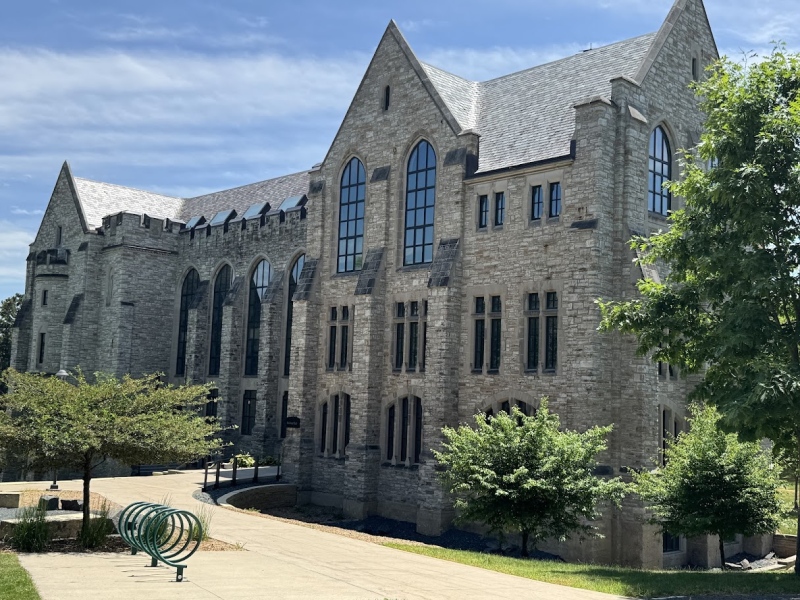

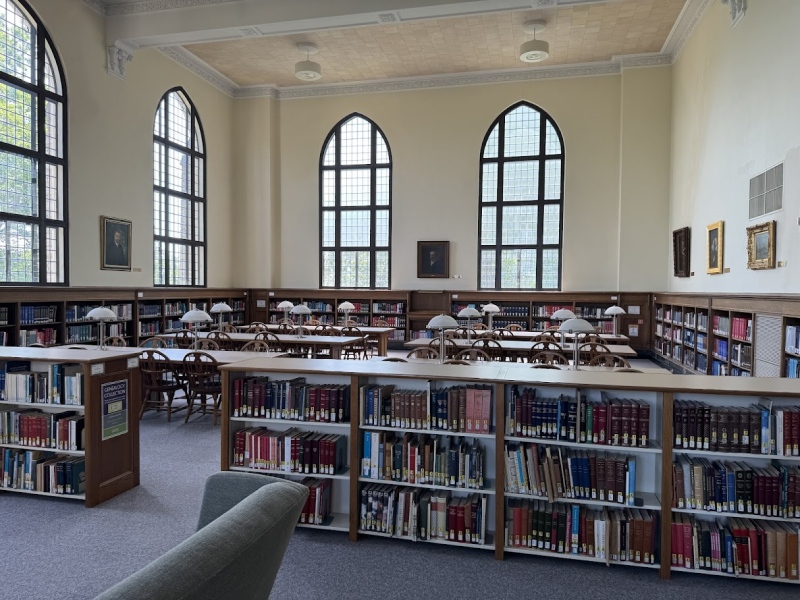


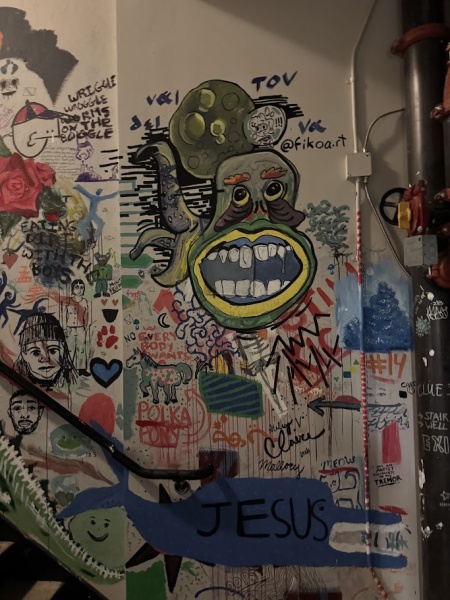
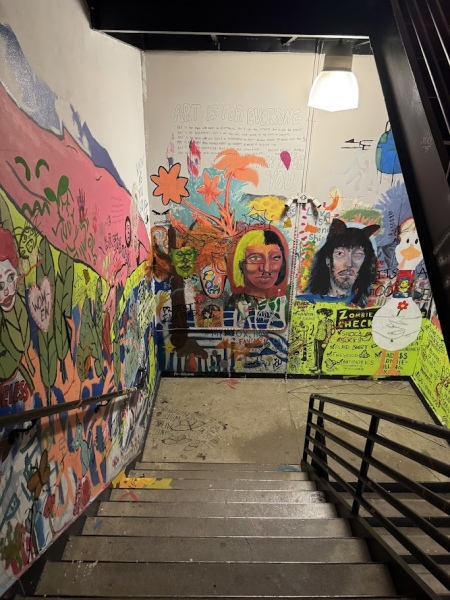
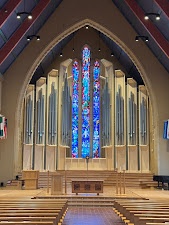
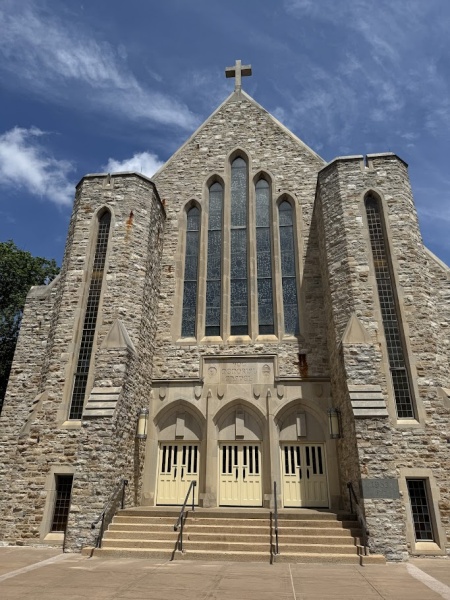
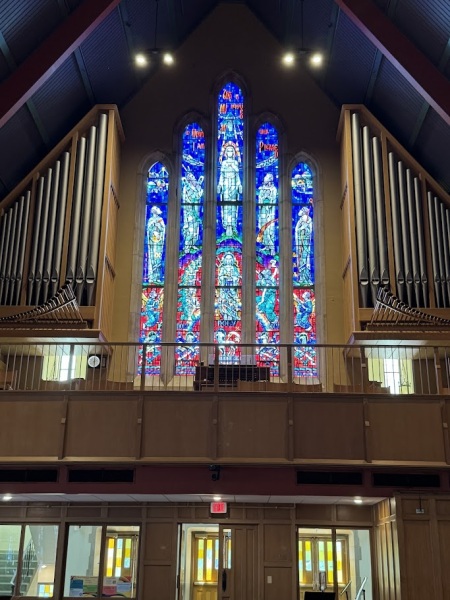

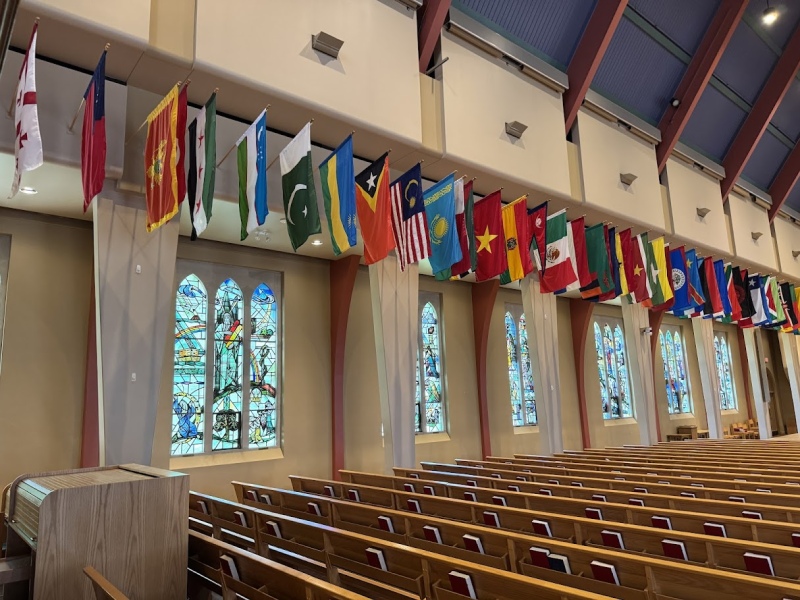
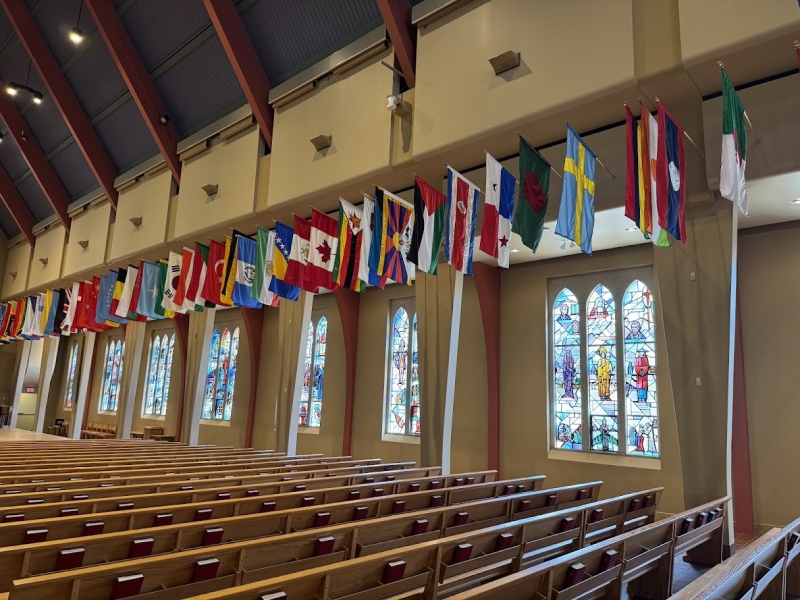

Today was a short 3 ½ hour drive. We added Northfield to our drive home at the last minute. Our granddaughter, Oliva, made the decisive decision to enroll at St. Olaf College in Northfield, so we wanted to see the campus, even though it is vacation time. For the uninitiated, “college” in America is used interchangeably with university. College is generally a smaller institution, while a university is larger and offers a broader range of programs. Oliva plans to study art history.
When we arrived in the parking area, we met John Gorder, a retired pastor from St. Olaf. He pointed out the admissions building where we hoped to get an informal tour of the campus. We were fortunate to have a student guide us to several buildings, and, being an art student, she showed us where Olivia will likely spend most of her time. I was fascinated by the church, especially seeing all the flags hanging from the rafters. We learned that there are several students from many parts of the world, and each year the flying flag represents students from that country. We did meet students from Congo, Swaziland, and Thailand. I was delighted to see a South African flag and asked Olivia to find out the student’s name and details when she gets to campus. I strongly believe that Olivia will be very happy at this very friendly college.
The Ole Store Restaurant, June 9, 2026
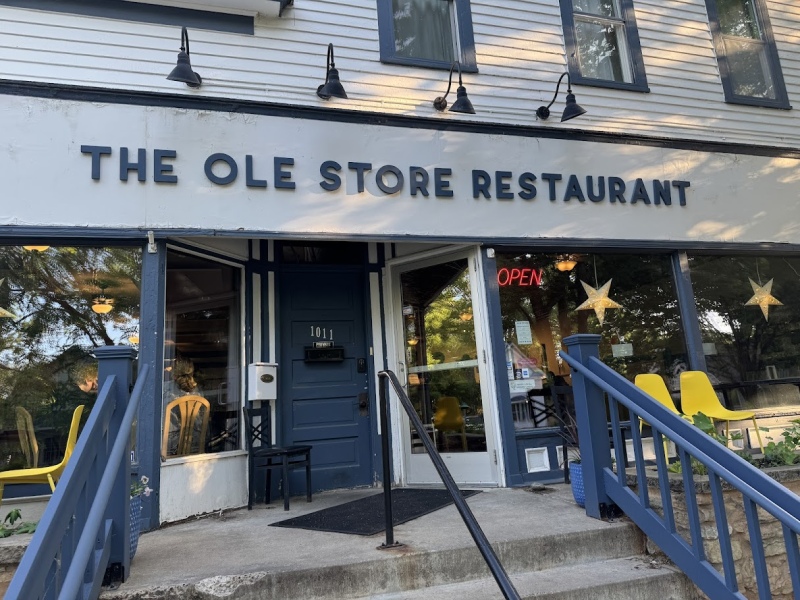

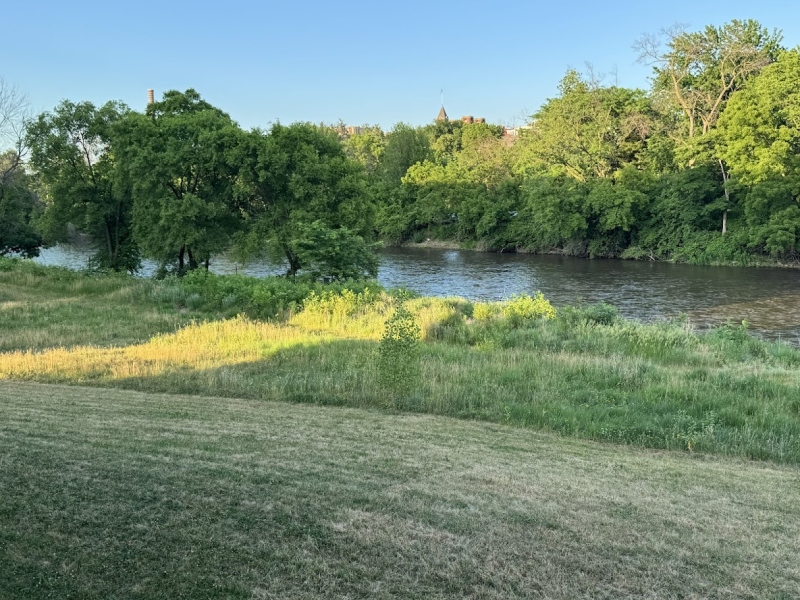
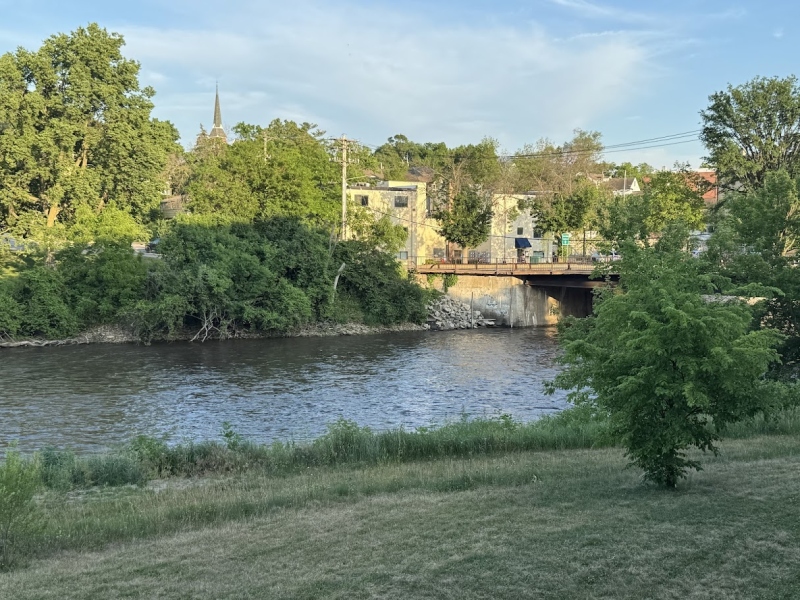
From the Fairfield hotel, we literally could walk up the hill to the campus, and along the way discovered a delightful restaurant where we had dinner. The other photographs were views of the campus from the hotel.
New Berlin Pond June 23, 2026

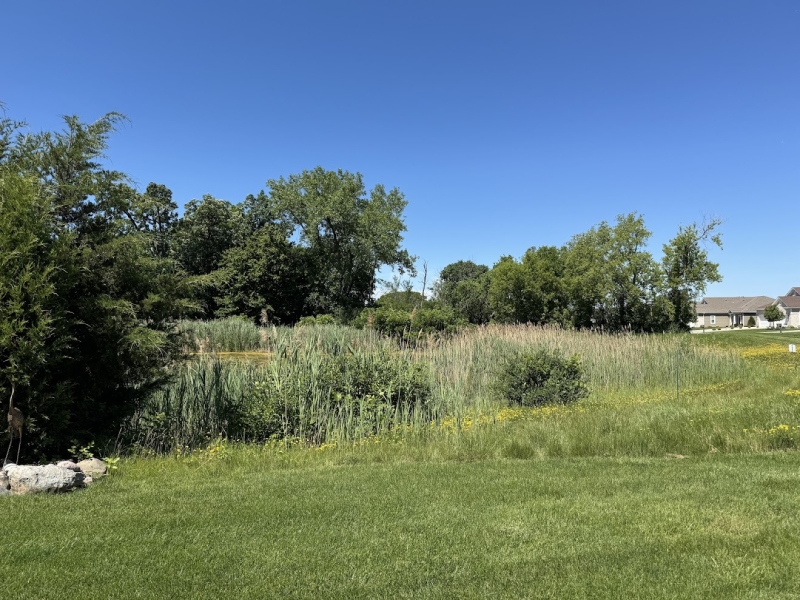
Wednesday, June 10, 2026, New Berlin, Wisconsin. Home!
Just one of the many places we can relax near our condominium.
After a 5-hour drive, we were back home, a trip we are likely to make many times to Northfield, Minnesota, during Olivia’s time studying there. Then, too, our son Sean is 5 hours to the east in Indianapolis, so we will have trips there as well. All in all, it was a wonderful travel experience to appreciate all the magnificence, scenic beauty, hills, valleys, farmland, trees, and people of this magical country. We are not sure that we will undertake such a long drive again. Our goal is to reestablish our daily ritual at home as it was prior to this adventure. Thank you for reading.
Leave a Reply