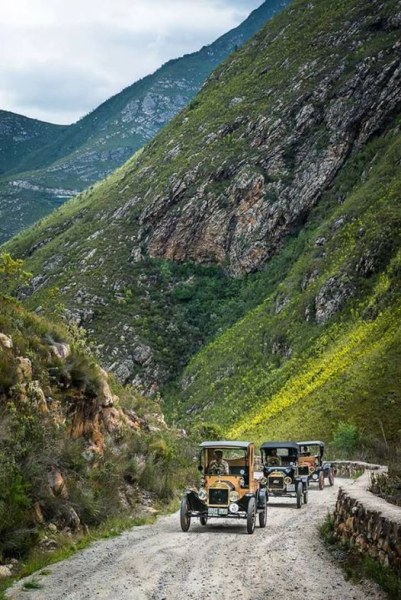
Aerial cover photograph courtesy of Hilton Preston hilton@montagu.org.za
My obsession with Montagu, like many of its visitors, is to get away from the rat race of the big cities to the peace and tranquility of this delightful town, or more correctly, village. A haven for fantastic weather, fun, healthy living, exercise, and great food experiences.

I was born at the southern tip of Africa in Cape Town. Our family moved to New Berlin on the outskirts of Milwaukee, Wisconsin, in late 1986. Milwaukee is located alongside the freshwaters of Lake Michigan, 307 miles (494 km) long by 118 miles (190 km) wide, with a shoreline of 1,640 miles (2,640 km). A two-hour drive south takes you to Chicago, Illinois. The residents of Illinois are known as flatlanders, a reflection of their topography. Southeastern Wisconsin is equally flat.
My fascination with our annual pilgrimage to the Western Cape in South Africa is to enjoy the many mountain ranges and the sheer majestic beauty of the landscape. I have written about the magnificence of Chapman’s Peak Drive, Boyes’ Drive, and the mountain passes in Franschhoek.


When driving from Cape Town to Montagu, a two-hour trip that may take three hours due to road construction, takes you across Du Toit’s Kloof and through the Huguenot Tunnel. You pass through Worcester, Robertson, Ashton, and the Kogman’s Kloof Pass to arrive in Montagu.
Kogman’s Kloof (gorge) is named after Cogmans, a Khoi chiefdom that lived in the area at the beginning of the 18th century. The Khoi (meaning people) were hunter-gatherers who inhabited Southern Africa at the time of the Portuguese (Bartolomeu Dias 1488), Dutch (Jan van Riebeeck 1652), and British (1795) occupation. The Khoikhoi were decimated by the smallpox epidemic around 1673-1677 during the third Khoikhoi-Dutch war. This gorge is built through the Langeberg (long mountain) between Ashton and Montagu on Route 62, which takes you to Oudtshoorn.
Update April 24, 2024. I found the following entry on Facebook today. Cogmanskloof Pass:
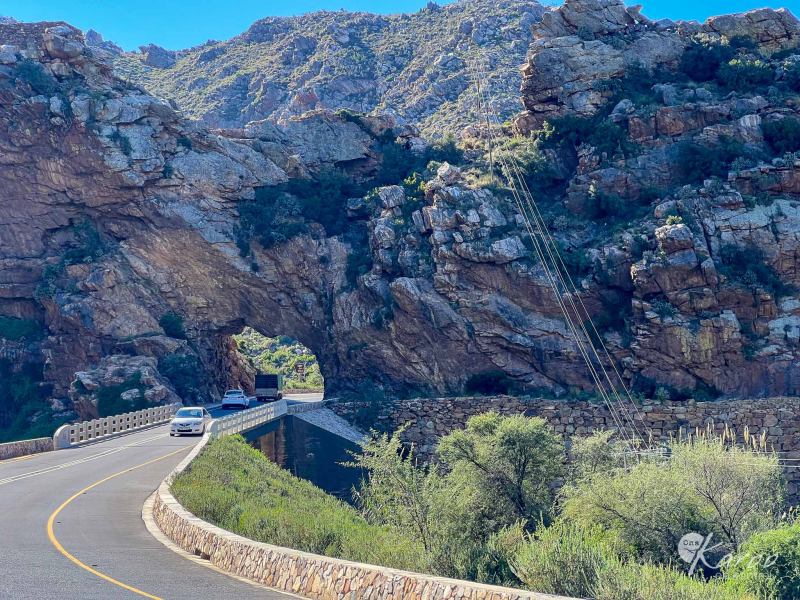
“The pass traverses a poort through the Langeberg mountains between Ashton and Montagu.
“The earliest route through the kloof followed the river, where 8 dangerous drifts of deep sand and boulder-strewn beds had to be crossed. Wagons had to travel around Kalkoenkrantz in the stream itself – a hazardous undertaking in a Karoo river where flash floods occurred. Flooding destroyed the route and cut Montagu off from civilization for long periods, causing great hardship. When 12 people lost their lives in such a flood in 1867, parliament finally acted.
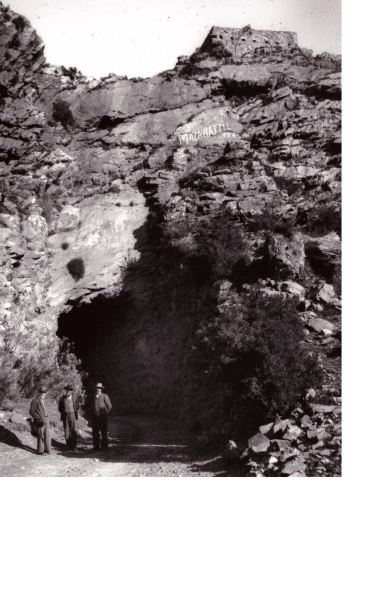
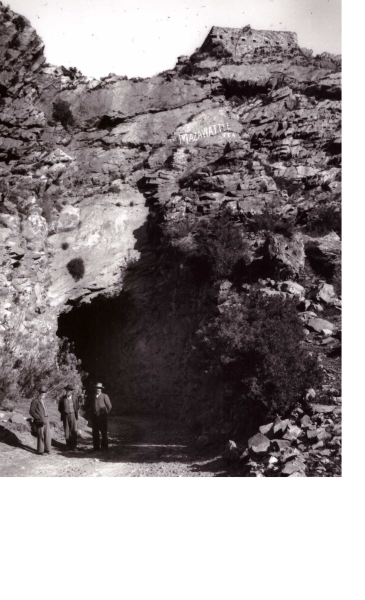
“Construction of a pass through the kloof was approved but came to a standstill after completion of the first road section in 1872. Brilliant road engineer Thomas Bain was called in to complete the pass in 1873. He decided to construct a tunnel through Kalkoenkrantz to avoid 2 dangerous drifts in the river.
“Bain’s tunnel – Although the unlined tunnel with its 5-meter high arch was only 16 meters in length, it took a long time to complete. The rock under the Krantz was extremely hard and folded into almost vertical beds in places. When blasting occurred, the explosions lost their force because of the weak zones between these beds. It was a very difficult undertaking as Bain only had a small amount of the powerful new explosive dynamite. Most blasting had to be done using the much more dangerous gunpowder.
“In 1877, Cogmaskloof pass was completed, and Mr. Frederick Hodges, Robertson magistrate, performed the opening ceremony while his daughter christened the tunnel.
“Toll house – As with all passes, toll had to be paid for upkeep of the road. The old kloof toll house was situated about a kilometer before the tunnel on land belonging to Jan de Pasquale, who was the toll keeper for many years. Today, only the foundations of the house remain.
“Plaque – In 1931, the tarring of the road through the kloof was completed. A plaque commemorating this momentous occasion was unveiled by the Administrator of the Cape Province.
“Plaque – In September 1978, just more than 100 years later, Thomas Bain’s granddaughter unveiled a plaque in his honour, celebrating the centenary of the opening of the pass.
“Cogmanskloof pass was exceptionally well constructed. Bain’s words that the pass would not be subject to much damage by heavy rains were prophetic. When the modern road through the kloof was all but destroyed in the disastrous flood of January 1981 it was Bain’s old road that carried all traffic for weeks until the new road had been repaired.
“The stonework was impeccable, and the impressive 5-meter-high dry-stone retaining wall before the entrance of the tunnel that supported the road against the slope of the mountain can still be seen today.”


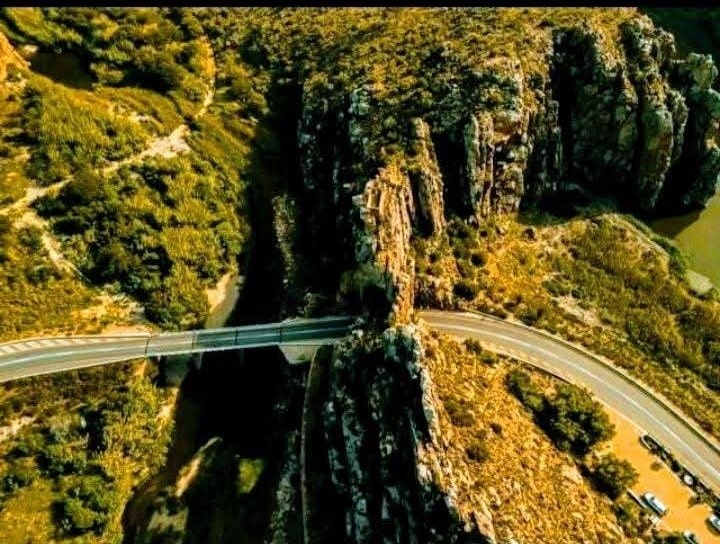

I repeatedly see new information on Facebook about this pass. Here is one from March 25, 2025.
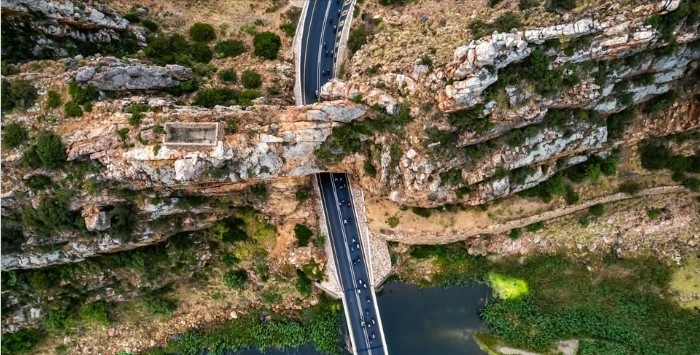
Cogmanskloof Pass cuts through the Langeberg Mountains and connects Ashton and Montagu. It was originally completed as an alternative to Tradouw Pass, which is located to the east. The pass follows the Kingna River (also known as the Cogmans River), which, like other nearby gateways, is at risk of flooding. However, the valley is wide enough for the road to be built above the usual flood levels.
Early European settlements in the area began in 1725, but access was challenging due to the riverbed path, which had several dangerous drifts. In the 1850s, the Swellendam Division Board made improvements, but floods often washed them away.
In 1861, a parliamentary committee decided to build a proper road with convict labor, although no convicts were available. After twelve people drowned in a flood of 1867, work began in earnest, but progress was slow. In 1872, Thomas Bain and Overseer C. Hendy were brought in to complete the work. The road, including the famous tunnel under Kalkoenkrantz, was completed in 1877. The pass provided reliable access, even though floods continued to affect the region.
The pass was exceptionally well-built. Bain’s boasts that “the road is protected by good drains and culverts—the slopes are so easy that the pass will not be subject to much damage from heavy rain and consequently will cost little in repairs… was prophetic.
During the disastrous floods of 1980, when the new road through the gorge was breached in several places and destroyed overflows and bridges, it was Bain’s road that successfully carried all traffic for the weeks it took for the water to subside and the modern road to be repaired. The ancient stonework remained immaculate.
Update September 19, 2024. I saw this on Facebook.

I have two younger sisters. My youngest sister and her husband have two businesses in Montagu. A pip (pit in America) processing plant where they dry and split peach and apricot pips. The outer husks are used for yard mulch or finely ground and used for abrasive materials, and the seed for medicinal purposes. Their other business is an Arabian horse breeding farm. My older sister and my now-deceased parents have at some time in their lives lived in Montagu, and reason enough for me to visit this quaint town.
Montagu has a population of 15,500, with an additional regular stream of 30,000 visitors peaking at 40,000 in season. What is the attraction of this town? In 1936 Montagu was declared a health resort, attracting an influx of wealth. The hot water healing properties at Avalon Springs and Montagu Springs are among the attractions. Montagu Hot Springs charged a fee dating back to 1873. My wife and I have walked from town along the fee-paying Badskloof Trail, following the Kogmanskloof River through the magnificent mountain gorges, to the hot springs, and back along Route 318 to our home base. An exhilarating hike if there ever was one.
With health being an attraction, one of my favorites is Carma Lifestyle Hair Salon and Body Wellness. Salon owner Michael Cole’s 32-year career began in London at Vidal Sassoon. Mike’s talent supported his global travel as a stylist, manager, and educator. He settled in South Africa at the Mount Nelson Hotel. Eventually, Michael started Carma Hair & Wellness in Montagu. Carla Cole, Michael’s wife, designs customized body treatments based on an in-depth consultation to target your needs. I enjoyed head massages, haircuts, pedicures, and back massages by this highly professional team.

With the significant tourist trade in Montagu, it is not surprising that there are many excellent restaurants. At last count, a minimum of 16. I have probably supported each of them at one time over the years. As a creature of habit, there are two that stand out for me. BluVines provides all professional aspects of a restaurant with occasional singing entertainment, wine tasting, and a conference room facility. This restaurant is so impressive that I wrote separately about it.


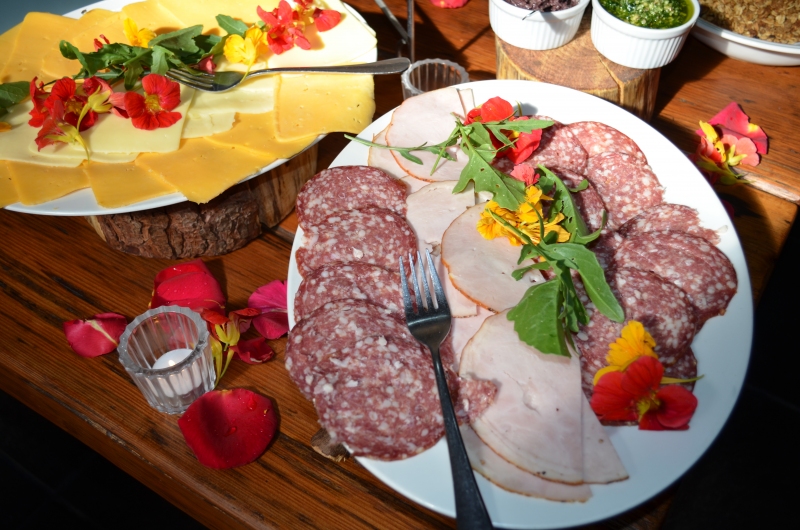


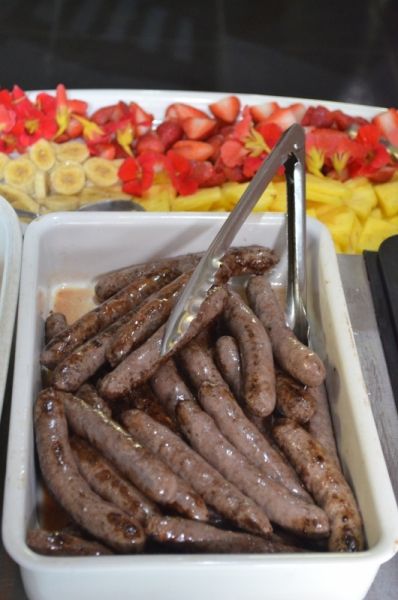


My other favorite is Rambling Rose, managed by Sergio and Cay Fernandes. I have returned to this establishment many times over the years thanks to the great food and friendly atmosphere. Both restaurants are located on Route 62, Long Street, the road as you enter Montagu from Ashton, situated on the right-hand side. If you are paying using US$, these restaurant prices are ridiculously low, and the quality is good, if not better than US restaurants.
Montagu provides accommodation to suit every tourist’s needs. Approximately seven hundred people are employed in the tourism industry. There are 1,900 beds provided through 40 Hotels, Self-Catering Units, Guest Houses, and Bed & Breakfast establishments. With additional Game Lodges, a Caravan Park, and provisions for Backpackers. Here, I am fortunate that my family provides for my accommodation needs.
When visiting the Tourism Office at 24 Bath Street, they provide materials to help with your enjoyment of the many sights and activities in Montagu. They offer a walking tour map highlighting 25 places of interest in town. I will name-drop by referencing one site. The Dutch Reformed Church was constructed between 1858 and 1862 by Joseph Barry for an amount of £4,300 (in 2019 currency £520,000, US$670,000, R10 million). George Burkett designed the Neo-Gothic cross-shaped church. The Eastern and Western galleries, designed by John Parker, were added in 1906. Initially painted in traditional white color, but after complaints by residents that the reflection of the bright sunlight blinded them, it was painted in today’s creamy yellow. I must recognize Maraletta Mundey, Tourism Manager at Montagu-Ashton Tourism, for providing me with excellent reference materials regarding Montagu and its environment. Maraletta and her team provide excellent and professional customer service.


One attraction I enjoy is the Montagu Village Market, held on Saturday mornings. It is my favorite place to find mementos for my granddaughters and other family members and friends. I never miss freshly made pancakes and coffee. Here you will find many handicrafts, including clothing, jewelry, beads, hand-painted clothes, etc. The locals have access to olive oil, cheese, vegetables, loaves of bread, chutney, sauces, and eggs. Naturally, biltong (jerky) is available—but do not attempt to take this overseas with you. It could cost you having it confiscated or getting arrested for trying to sneak in food products. There are specialty bookstores. How can you afford to miss this exciting and friendly market?
Bird Sanctuary


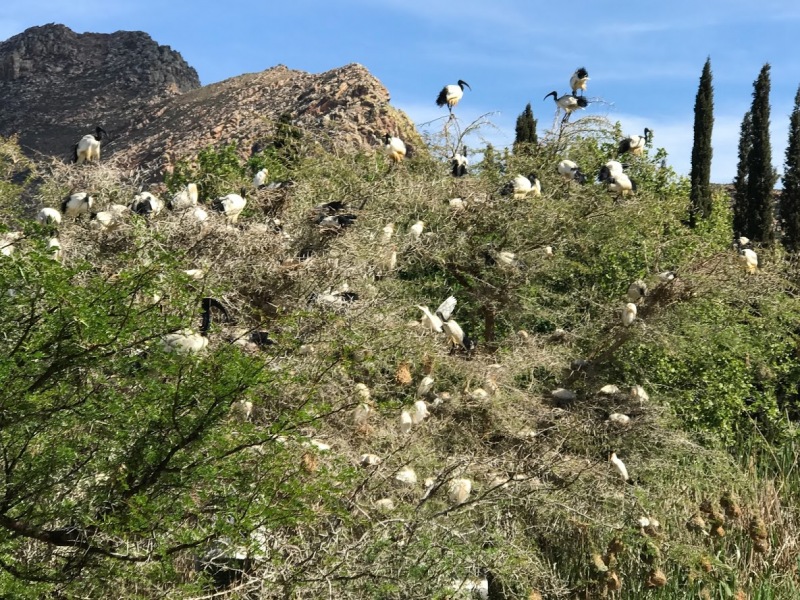


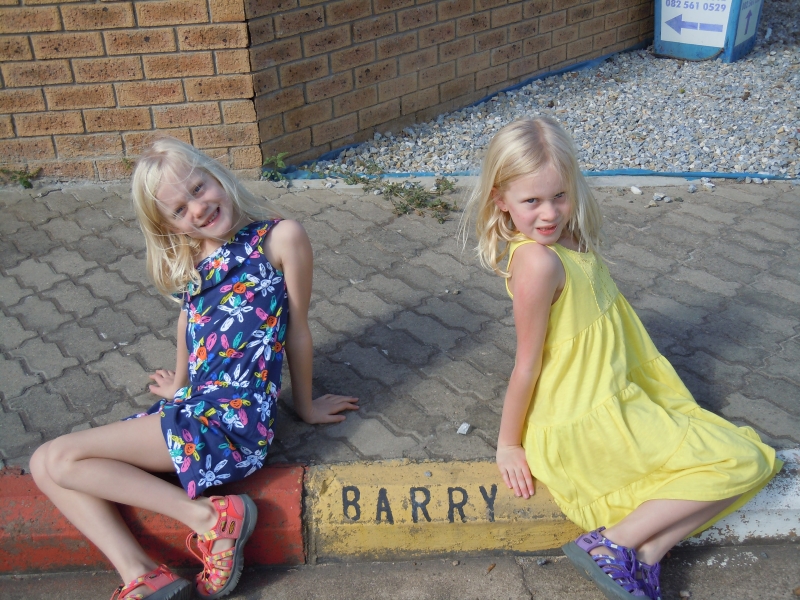
If you wish to spend time alone watching birds, then the bird sanctuary is a peaceful location to enjoy nature. It is important to know that this is located at the intersection of Bath and Barry Streets.
Update March 23, 2024. From Facebook.
- Masked Weaver
- Cape Weaver
- Cape Wagtail
- Cape Reed Warbler
- Laughing Dove
- Cape Turtle Dove
- Red-eyed Dove
- Cattle Egret
- Little Egret
- Red Bishop
- Fiscal Shrike
- Fiscal Flycatcher
- Cape Robbin
- Red-knobbed Coot
- Sacred Ibis
- Black-headed Heron
- Grey Heron
- Reed Cormorant
- Non-Breeding Spotted at the Leidam
- House Sparrow Cape White-eye
- Cape Sparrow White-throated Canary
- Cape Siskin Cape Canary
- Pintailed Wydah Common Waxbill
- Lesser Doublecollared Sunbird Moorhen
- Malachite Sunbird Bokmakierie
- Red-winged Starling Spotted Prinia
- Pied Starling Levailant’s Cisticola
- European Starling Yellow-bellied Eremomela
- Olive Thrush African Sedge Warbler
- Stone Chat Booted Eagle
- Familiar Chat Cape Bulbul
- Brown-throated Martin Pied Barbet
- House Martin` Lesser Striped Swallow
- Brown-hooded Kingfisher European Swallow
- Malachite Kingfisher White-backed Mousebird
- Giant Kingfisher Alpine Swift
- Diederik Cuckoo Little Swift
- Klaas’ Cuckoo White-rumped Swift
- Rock Pigeon Black Swift
- Black-crowned Night Heron Blacksmith Plover
- Purple Heron Three-banded Plover
- Gymnogene Dabchick
- African Black Duck Darter
- Yellow-billed Duck Hadeda Ibis
- African Spoonbill
- Yellow-billed Egret
Montagu Mountains
This short video identifies a small portion of the mountain that I had the pleasure of viewing for many days in a row and appreciated the ever-changing beauty.


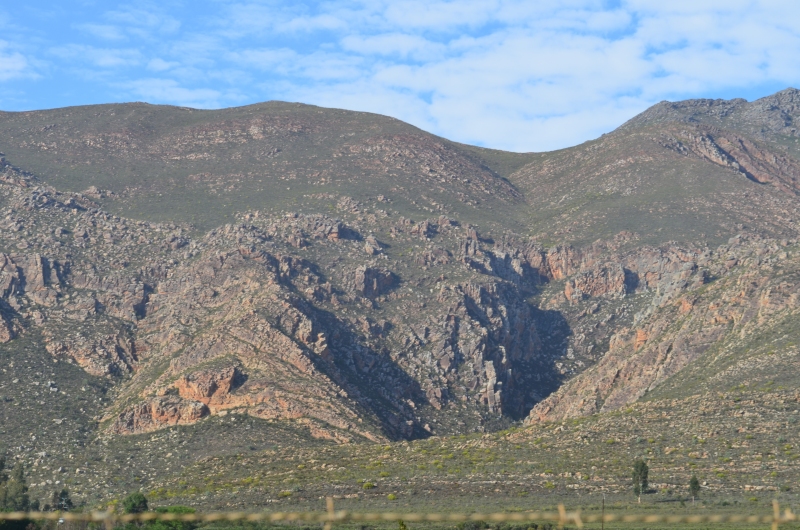
The above represents eight photographs taken on different days to show the kaleidoscopic beauty and mood of a single spot in this tiny portion of the Langeberg (long mountain) west mountain range.

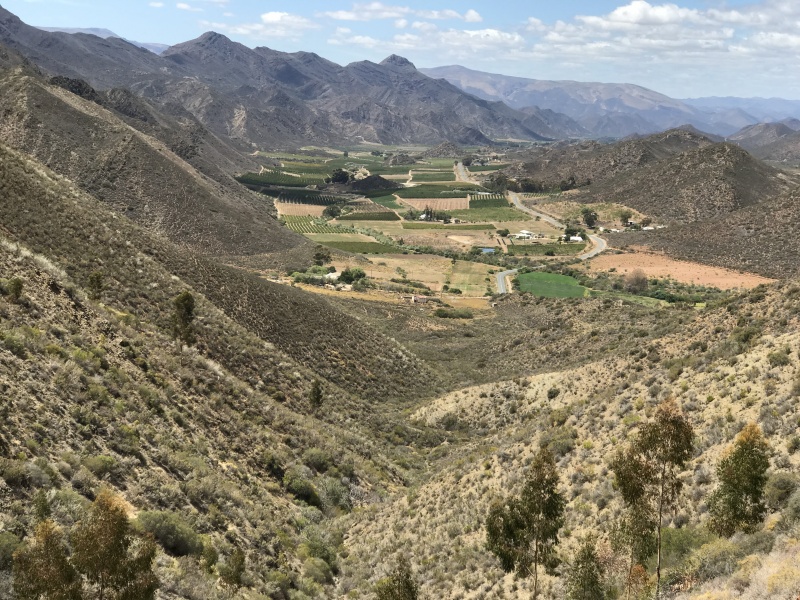

Montagu is a springboard for several scenic drives. I wrote about my trip to Barrydale along Route 62 in my blog. You can follow a delightful journey in the opposite direction, along Route 318, to Keisie. Keisie means “sweet water” in the language of the Khoisan. It is 18 kilometers along the Langeberg (long mountain) valley in the Little Karoo, a semi-desert region, arid, with a unique ecosystem, South Africa’s most significant collection.
Update May 31, 2024, from Facebook.
The Healing Power of Montagu. The story of Ley Lines.
Many ancient paths crisscross our countryside in straight lines that are often found to link sacred sites such as burial grounds, stone circles, standing stones, and other markers used by the ancient people of the world.
These lines, on paths of energy, are known as ley lines and are thought by many to form a planetary grid, connecting across the whole of the earth’s surface to make up a system of energy akin to the body’s meridian system.
It is thought that ancient people built their sacred monuments along these lines because they were far more sensitive to the energies of the earth than we are today. It is also thought that ghosts, psychic phenomena, and other examples of supernatural power appear more frequently along the paths of ley lines.
Chinese ley lines are called dragon paths, and they play an important role in the ancient art of Feng Shui, the art of positioning domestic arrangements to promote the well-being of its occupants.
It is thought that there are significant ley lines in this part of the Klein Karoo. It has long been believed that the small town of McGregor, some 50km southeast of Montagu, is situated on the path where several ley lines cross.
Deeply spiritual people are often drawn to these towns, and it is now believed that not only McGregor, but also sister towns Robertson, Barrydale and Montagu are situated on these paths.
One of the reasons Montagu holds a strong attraction for visitors is because its situation on a path or paths coincides with the strong presence of natural mineral spring water, which originates in parts of the Cape Fold Mountains, in themselves strongly spiritual rock and cliff formations. When the very first travellers came to the Hot Springs, they were astounded by the healing properties of these mountain waters.
Healers often visit the hill behind Montagu, where one may find rare and beautiful crystals growing on rocks. Crystals are believed to have particular healing properties.
Update from Facebook. June 6, 2024 THE BEGINNING OF MONTAGU’S HOSPITAL
Montagu’s Hospital had its inception in 1922. It was but a small start, for it was built on and improved over the years. But the story of his establishment is fascinating.
As is so often the case with a facility that affects the entire community, the drive of an individual has played a crucial role. In the case of the hospital, that individual was Rachel (Ray) Euvrard (b. Van Zyl). She was an aunt of Mr Piet van Zyl, formerly of Le Roux Street and currently of Avalon Place. Ray grew up in Montagu as the daughter of Jan van Zyl van Lang Street. She was married in about 1917 to Mr. George Barry, a wealthy businessperson.
She came to Montagu after her wedding to him shortly after the devastating flu epidemic of 1918 broke out. They lived in the house, which is today Kingna Lodge, and the whole tract of land west of House Uitvlucht to Barry Street, including where the St Mildred’s little church currently stands, belonged to Mr. Barry. The so-called Spanish Flu flattened nearly 2.6 million people in South Africa, of whom about 140,000 died.
The suffering and misery that Ray Barry witnessed in the village as a result of the flu, especially among poor people, stirred her. Because she had a soft heart for sick and less fortunate people, she immediately became involved in the nursing of the sick. It was especially in the Oudam, as Montagu West was known at the time, that she performed her labor of love. Many sick people could not afford a doctor or a hospital.
As a result of these experiences, Ray began to dream of a small hospital that she would like to establish in town one day. The story goes that one day she and George Barry were walking through the field when she picked up a stone and threw it out in front of her. “Look, Barry”, she would have said, “where the stone has now fallen, I want us to build the hospital”. That location was on the site of the current hospital.
George Barry, a wealthy man, involved several friends in the plan. After the wheel was set rolling, the little hospital opened its doors in 1922. The only access from the old town to the hospital was over the Lady de Waal bridge at the lower end of Kohler Street, which opened in 1915 and which currently serves only as a pedestrian bridge. Drs. Joseph Castles and C.A. Wessels were the first physicians. Dr Charlie Muller and his wife Isabel, also a medical doctor, were also involved. The hospital was a private hospital until 1945, when the Provincial Administration took it over.
After George Barry’s death, Ray remarried to Mr. A. P. Euvrard. Eventually, as a widow, she moved to Huis Uitvlucht, where she was much loved by the inhabitants. Later, she went to an institution in Cape Town, where she died at the age of 90.
At the suggestion of Rev. Japie Weideman, Ray donated her stinkwood dining room table with its eight chairs to the Dutch Reformed congregation. It is still used as a Communion table.
Ray Euvrard can be considered the “Florence Nightingale of Montagu”. At a time of name changes in South Africa, it is probably not unexpected for the local hospital to be named after Ray Euvrard. Or that, at least in the lobby or somewhere else, recognition is given to her unselfish pioneering work.
Sources: “50-Year-Old Hospital a Monument,” in Die Burger, October 18, 1972. Also, “Woman dies at 90, but leaves a monument”, in Die Burger, edition unknown. Communications were provided by Mr. Piet van Zyl of Montagu, a nephew of Ray Euvrard.
History
John Montagu was the Colonial Secretary of the Cape and visited the town in 1852. The village was laid out on the farm Uitvlucht (escape), beginning in 1841. The Second Boer War (October 11, 1899, to May 31, 1902) resulted in the English building a fort (9.3 X 3.8 meters 30 X 12 feet) above Kogman’s Kloof, seen as you drive through the short tunnel. Montagu was founded in 1851. The first school opened in 1855, and the church in 1862. The hot springs started operations in 1873. Montagu banknotes were issued in 1861 until the bank’s demise in 1868.
In 1877, Thomas Bain built the tunnel and a new road through Kogman’s Kloof alongside the Kingna River, flowing southwest of Montagu. In 1936, Montagu was declared a health resort, and at one time in the early days, it boasted five millionaires. In 1950, Montagu hosted the first South African Wine Festival. In 1954, the Montagu Nature Garden was inaugurated. In January 1981, heavy rains in the southern Karoo caused the Keisie and Kingna rivers to flood and meet at the confluence in Montagu. It resulted in considerable loss of life and damage to property. It justified the reconstruction of the roads to minimize flood damage. Construction is currently underway. In April 1995, President Mandela opened the twenty-first Muscadel Wine Festival.
The reality is that I still have so much more to see and experience in this quaint town. I will keep looking for additional charm and sites worth exploring on future visits.
Update February 18, 2025, from Facebook.
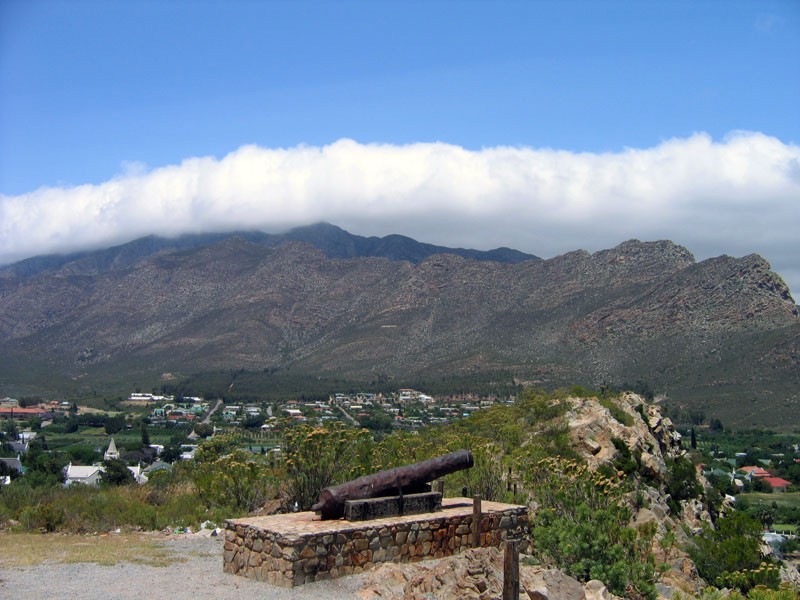
What is the story of Montagu Hospital?
November 2022 has already seen the 100th anniversary celebration of Montagu Hospital. We think back with pride and gratitude to: THE BEGINNINGS OF MONTAGU’S HOSPITAL.
Montagu’s Hospital was established in 1922. It was a small beginning, as there were additions and improvements at various times. But the story of its creation is fascinating.
As is so often the case with a facility that affects the entire community, the drive of an individual plays a decisive role. In the case of the hospital, that individual was Rachel (Ray) Euvrard (b. Van Zyl). She was an aunt of Mr Piet van Zyl, formerly of Le Roux Street and now of Avalon Place. Ray grew up on Montagu as the daughter of Jan van Zyl of Langstraat (Long Street). She married Mr. George Barry, a wealthy businessman, in 1917.
She came to Montagu after her wedding to him shortly after the devastating influenza epidemic of 1918 broke out. They lived in the house which is today Kingna Lodge, and the whole tract of land west of House Refuge to Barry Street, including where the St Mildred’s church now stands, belonged to Mr. Barry. The so-called Spanish Flu has devastated almost 2.6 million people in South Africa, of whom about 140,000 have died.
The suffering and misery that Ray Barry witnessed in the village as a result of the flu, especially among poor people, moved her. Having a soft heart for the sick and less fortunate, she immediately became involved in nursing the sick. It was especially in the Old Dam, as Montagu West was known at the time, that she did her labor of love. There were many sick people there who could not afford a doctor or a hospital.
As a result of these experiences, Ray began to dream of a small hospital that she would like to establish in town one day. The story goes that one day she and George Barry were walking through the field when she picked up a stone and threw it in front of her. “Look, Barry,” she would have said, “where the stone has fallen now, I want us to build the hospital.” That place was on the site of the present hospital.
George Barry, even a wealthy man, involved several friends in the plan. After the wheel was set in motion, the little hospital opened its doors in 1922. The only access from the old town to the hospital was over the Lady de Waal Bridge at the lower end of Kohler Street, which opened in 1915, and which currently serves only as a pedestrian bridge. Drs. Joseph Castles and C. A. Wessels were the first physicians. Dr. Charlie Muller and his wife Isabel, also a medical doctor, were also involved. The hospital was a private hospital until 1945, when the Provincial Administration took over.
After George Barry’s death, Ray remarried Mr A. P. Euvrard. Eventually, she moved as a widow to Huis Uitvlucht, where she was much loved by the locals. Later, she went to an institution in Cape Town, where she died at the age of 90.
At the suggestion of Rev. Japie Weideman, Ray donated her stinkwood dining room table with its eight chairs to the Dutch Reformed Church. It is still used as a Communion table.
Ray Euvrard can be considered the “Florence Nightingale of Montagu.” At a time of name changes in South Africa, it is certainly not unheard of for the local hospital to be named after Ray Euvrard, or at least in the lobby, or somewhere else, her unselfish pioneering work is recognized.
Communications by Mr. Piet van Zyl of Montagu, a nephew of Ray Euvrard.
Update March 18, 2025, from Facebook.


Aasvoëls Krans directly translates from Afrikaans to “Vultures’ Cliff” or “Vultures’ Crag.” The area likely got its name because it was (or still is) a nesting or roosting site for Cape vultures or other scavenger birds common to the region. The cliffs of the Montagu area, part of the Langeberg mountain range in the Cape Province, would have provided the perfect natural habitat for these birds, which prefer high, inaccessible cliffs for nesting and spotting food.
As for Montagu, the town and surrounding mountains are named after John Montagu, the Colonial Secretary of the Cape Colony in the 1840s. He played a key role in improving the colony’s road infrastructure, including overseeing the construction of passes like Cogmanskloof Pass, which connects Montagu to the nearby towns.
Update April 25, 2025, from Facebook.