
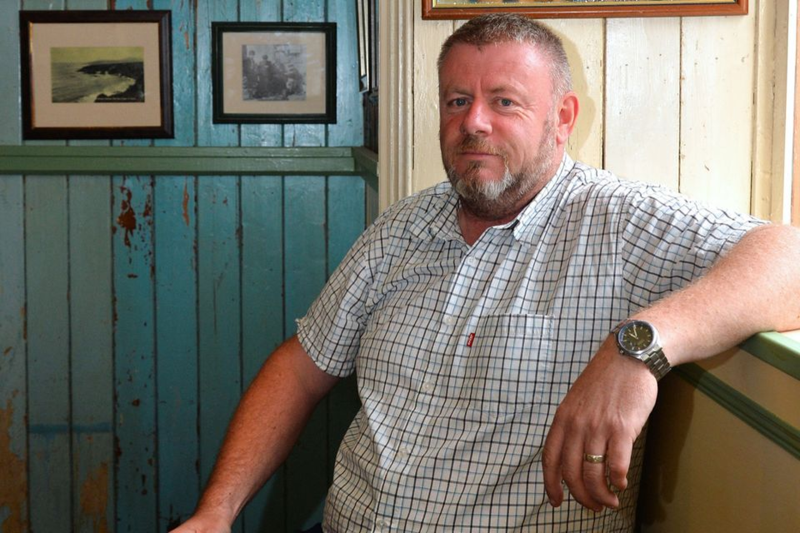
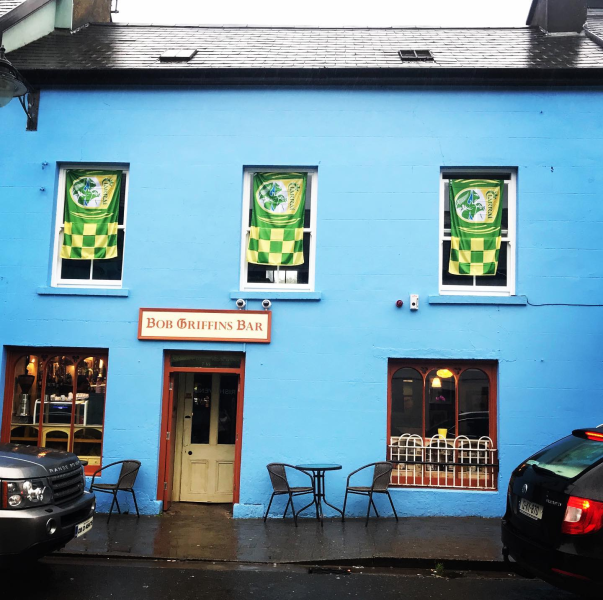
On September 7, 2025, while on a Rick Steve’s tour of Ireland, we visited Bob Griffin’s Bar in Dingle. Normán Ó Conchúir gave us a fascinating presentation on Irish Whiskey and provided samples for tasting. I recorded his amusing presentation on my iPhone, and when I got home, disaster!
I was unable to get the Voice Memos to transcribe fully into a Word document. During the Thanksgiving holidays, November 27, 2025, while visiting my son, Sean, who has a computer engineering degree and heads a team of software developers creating a software suite based on Artificial Intelligence (AI), I asked him to please help me. In a few minutes, Sean accomplished the task, and AI obliged with a transcript and summary as well. You can read Normán’s fascinating information below. I lightly edited the transcript.
You can read the details of our wonderful tour of Ireland here. Or click here: https://johncbarry.com/travel-to-ireland-september-2025/


Audio Transcript & Summary: Dingle Whiskey Tasting
Part 1: Summary
The Venue: Bob Griffin’s Bar
- The tasting takes place in a historic pub at Strand Street, Dingle, County Kerry, Ireland V92 A091. The pub was originally owned by a woman named Hannah, nicknamed “Bob” because she gave children “Bob” haircuts.
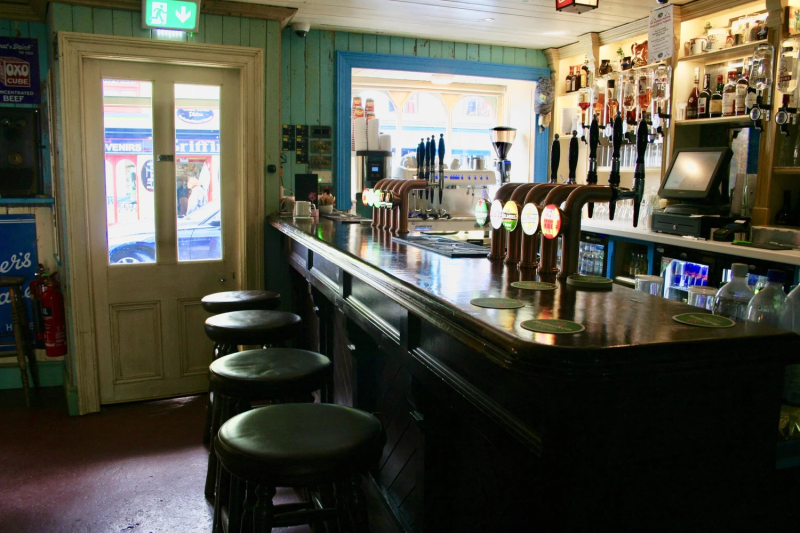
- The pub was closed for 30 years before being reopened approximately six years ago by the current owners. They have maintained the original layout, including the lack of indoor toilets in the original design (the men used the garden, women used the kitchen).
History of Irish Whiskey
- Norman O Conchuir explains that Irish monks, known as the “Island of Saints and Scholars,” are credited with starting whiskey production. Originally, they learned distillation for perfumes in the Middle East but adapted it to create alcohol.
- Uisce Beatha: The Irish term for whiskey, translating to “Water of Life” (Latin: Aqua Vitae).
- Distillation Style: Irish whiskey is traditionally triple-distilled (unlike Scottish whisky, which is usually double-distilled). This creates a smoother, higher alcohol spirit before aging. Copper pot stills are used to remove impurities.
The Aging Process
- The Angel’s Share: The roughly 2% of alcohol volume lost to evaporation every year.
- The Devil’s Cut: The whiskey that soaks into the wood of the cask.
- Casks: Irish whiskey is aged in various casks, often American Bourbon barrels (giving vanilla/caramel notes) or Spanish Sherry butts.
- Legal Requirement: In Ireland, spirits must be aged in a cask for at least three years and one day to be legally called whiskey.
Tasting Notes
- Sample 1: Powers Gold Label: Described as the “stronger” of the traditional Irish whiskeys. It is a triple-distilled blend.
- Sample 2: Dingle Single Malt: A newer whiskey from the local Dingle Distillery. This is 46.3% ABV (Alcohol by Volume).
Dingle Distillery & The Revival
- Historically, Irish whiskey collapsed due to trade wars and prohibition, consolidating into the “IDL” (Irish Distillers Ltd) monopoly (Powers, Jameson, Midleton).
- Dingle Distillery opened in 2012, marking the first purpose-built independent distillery in decades.
- Founding Fathers: To fund the distillery while waiting for the whiskey to age, they sold 500 casks to “Founding Fathers” (investors).
- Poitín: Norman O Conchuir mentions Irish moonshine (Poitín), traditionally made from potatoes, which was illegal and very potent.

Part 2: Full Transcript
Norman O Conchuir: Bob Griffin bought it. Bob Griffin was a woman.
Audience: Oh!
Norman O Conchuir: Like all pubs in Dingle, they were run by women because the husbands were fishermen or farmers or whatever. Bob got her nickname—her name was Hannah—because she used to give the kids a haircut, and she always gave them a “Bob” haircut. So that’s how she got her name.
This establishment was bought from the Griffins about ten years ago. When we arrived at the building, it had been closed for 30 years and reopened six years ago. That’s why it’s so old, and downstairs was never pulled apart. A lot of the pubs in Dingle, the older ones that you see, were closed for years. They survived the 80s, I suppose, when everyone was ripping everything apart and doing them up, and they’re not the same. Now they’re trying to make them look old, but they can’t succeed.
When we came in here, there was a wall here—I just took that out last year. Kelly (Malone, the Rick Steve’s tour guide) probably remembers this place a few years ago. The ceiling and everything were falling. When we came in here originally, there was a bath, a fireplace, a toilet, a sink, and a bed in that room.
Before Bob came into the place, there was no toilet in the house. Everything was outside. So, as I said, Bob was a woman and her husband was a fisherman. She used to sell fish and vegetables. The bar was only a secondary business; people used to come in to buy fish and vegetables, and they might have a drink. Hannah had a massive garden out back and sold her own vegetables. She had potatoes, cabbage, turnips, and all the vegetables out there.
When the women came in to buy a bit of fish or buy some vegetables, they went into the kitchen and had their drink in the kitchen. The men, when they wanted to go to the toilet, came up here. The men used to go out the back all the time. They’d always say, “Jesus, Bob has lovely cabbage, but you couldn’t eat it!”
[Laughter]
Anyway, I’ll give you a little bit of history. I don’t tell you how to make it; I’ll give you the history of whiskey. We believe that this is the beginning of it. The Irish monks were known as the Island of Saints and Scholars. The monks went all over, and they spread their word. I don’t know what they were spreading, but they were spreading the word.
They were making beer in Ireland for years. It came from England. I suppose it also came from the Nordic Vikings’ beer. They were in the Middle East, in Iran and Iraq—Macedonia, I think, was the name of it at the time. They saw that they were distilling essential oils and perfumes. Being Irish decided, “Jeez, we could make something that we could drink out of that!”
When they came home, they started distilling it, and they came up with this white liquid, which they called Uisce Beatha, the Irish word for “Water of Life.” The Latin name for it is Aqua Vitae.
Every time I do a whiskey tasting here, someone will give me a little bit more information. I heard it was a Roman word. Someone else told me it was a Nordic word. I was in Sweden in November, and they were telling me the truth because you can get plenty of Aqua Vitae up in the Nordic countries. We will stick with Uisce Beatha.
They made so much of it that they couldn’t drink any more of it. One guy said, “Jeez, we can store that,” and they put it into barrels. Away they went on their journeys again, jumped in the boat, and away they went. They came back years later. They had no Aqua Vitae or Uisce Beatha. They said, “Jeez, remember we made some, and we stored it?” They came to it, and he opened the barrel and said, “Who stole my Aqua Vitae or my Uisce Beatha, and who changed the color of it?”
What happens is when you put this into a keg, or into a cask, or a barrel, the first year 3% will disappear into the timber and out into the atmosphere. Every year after that, 2% will go. What saturates the timber is called the “Devil’s Cut.” What goes into the atmosphere is called the “Angel’s Share.”
In Ireland, we have a law that this white liquid must be inside a cask for three years and one day before you can call it a whiskey. That one day can be one second after midnight; once it goes into the next day, that’s when it is whiskey.
When it changed to this color, the monks started calling it, instead of Uisce Beatha, call it Uisce. That’s where the word “Whiskey” comes from. So Uisce Beatha, Uisce, Whiskey. Okay?
This is Powers. This is the first taste I will be giving you. This is 40%. It is triple distilled, and it’s made from molten barley. Now this white liquid is also 40%. It is triple distilled, and it’s made from molten barley. I will be having a, what do they call it, a test at the end of this. Questions?
[Laughter]
No. What is the difference between this and this?
Audience: The cask.
Norman O Conchuir: The cask, and the color. It’s the cask that gives the color. That’s the only difference between them. There is a different taste. This doesn’t have a taste; this does. This does have a taste. But it’s not the same as this. Okay?
[Norman O Conchuir explains maturation and different casks like sherry and bourbon.]
Norman O Conchuir: Storing it in different casks renders a different flavor.
Audience: It creates…
Norman O Conchuir: Yeah, a very good question. Every time you put it in different casks, different taste, different flavors. They also mature them in one cask, and then they change them and finish them in another cask. That’s the new type of distilling. The newer age distilleries are doing that.
When I was growing up, we were brought up in a bar back west. When you go into an Irish bar, you see these bottles turned upside down, and they have an optic underneath them. So that is the shot, 35.5 mil. If you ask me for three of them in one glass, I can’t sell you three of them in one glass; it’s against the law. I can give you two, and then I can give you another glass with one, and you can do whatever you like with it! But it’s not against the law for you to mix them.
When we were brought up behind the bar, there were very few whiskeys on sale. Don’t forget, now, this was Powers. It was the only whiskey that they had. This was their signature, only whiskey that they were selling at the time. Jameson would have been the same, Powers would have been the same. They all had one whiskey.
When someone comes in, they’ll ask you for a “half-one.” A half is half a whiskey. They’d ask you for a “medium.” A medium is half a Guinness, a half pint. They’d sip their whiskey, and they’d sip their Guinness, and that’s how they drank. They wouldn’t drink all night like that because they’d fall out the door! They’d have maybe one or two, and then they’d have another couple of pints maybe, and then finish off with a whiskey and Red Lemonade. Red Lemonade is the same as White Lemonade, except it has a dye and a sugary taste. It was what they drank.
Powers was the stronger of the Irish whiskeys. Everyone, all Irish people practically drink Powers. One of the reasons for it is that it is softer and sweeter. Now all our whiskeys are triple distilled. What that means is that it goes through first distilled, second, and third before it goes into the cask. The copper heads have a natural ability to take impurities out of the whiskeys. That’s why you have a smoother taste.
In Scotland, they only use once or twice—single distilled or double at the most. It is why their whiskys are sharper, not as sweet as the Irish whiskeys. They also have a smoky, earthy taste, and they get that from when they’re cooking or boiling the malt. They use turf, which is peat, that’s where the earthy smoky taste comes from. We use anthracite, which is coal or gas, and now they’re using waste recycled cooking oil.
[Laughter]
If you do get a taste of fish and chips from your whiskey, that’s the reason for it!
I’ll just hand this one around to you. Remember, 40% have a sniff and then take a little taste. If you’re not used to whiskey, you’ll get the old “Ooh!” You get that. Yeah. When you take a second taste of it, you shouldn’t get that. Your body will react to the whiskey. It’s like anything, if you kick the table, you’re going to be lame. If you taste something that isn’t nice, your mouth will make more saliva. The second taste will be watered down a little bit. That’s why if a person is really drunk, then they’re spitting at you, it’s not their fault!
[Norman O Conchuir moves on to discuss the history of IDL and Dingle Distillery]
Norman O Conchuir: Has anyone got any questions about what we’ve had so far?
Audience: What percentages do you get?
Norman O Conchuir: 40%. Proof is different.
Audience: Did you say that all Irish whiskey, to be Irish whiskey, must be distilled three times?
Norman O Conchuir: They distilled it three times. I also said that three years and a day before it’s whiskey. They’re left for six to eight years. Most of them are eight years old. The longer it’s there, the better the flavor is. If you take it out after three years, a lot of the newer distilleries have proven, it’s not as good. It’s not there long enough. The sweet spot between whiskeys, I think personally, is between 12 and 16 years. After that, it gets over-matured, a bit woody. The longer they’re in the cask, the less you have in them, the more expensive it is.
[Discussion on watering down whiskey]
Norman O Conchuir: How they bring these down, like if you have eight years inside a cask, you’re losing that 2% per year and 3% for the first year. Now they’re not exactly, but roughly around that figure. How they bring it down to 40% is that they add distilled water into the cask. So, what goes, they replace, and it brings up the volume of liquid. That’s why you have 40%. If you have more expensive whiskeys, and they don’t, they’re higher percentages, then they’re not adding as much distilled water into this.
[Norman O Conchuir pours the next sample]
Norman O Conchuir: I have one here, it’s 57.5%. That’s a cask is a ten-year-old brought out by Dingle. It is a single malt release, single cask. There are only 305 bottles of it.
[Discussion about the price of the shot]
Norman O Conchuir: This is 26 euros a shot.
Audience: A shot?
Norman O Conchuir: A shot, 35.5 mil.
Audience: Now, is this a shot?
Norman O Conchuir: No. That is a teaspoon. That is a tasting measure. Because most people who come to do whiskey tasting don’t really drink whiskey. If you put too much in, I’m throwing too much away. And there are too many people dying of thirst in the world! We don’t overfill the glasses for that reason.
[Norman O Conchuir introduces the next sample: Dingle Single Malt]
Norman O Conchuir: What I do here is I give you Powers, which is my favorite cheaper whiskey. We use it in Irish coffees, and we use it in hot whiskeys; we use it for anything. It’s a very nice Irish whiskey. The next one I give you is 40%, so stronger, smell it, because the next one you will smell, and it is a stronger drink. It just shows you the comparison between the two.
Norman O Conchuir: Prohibition in America was a massive cause of Irish distilleries closing in the early part of the century. Joe Kennedy, who was John F. Kennedy’s father, came to Ireland, and he asked John Powers and Sons to sell their whiskey in America through Canada. And they refused. He went to Jameson, and they also refused. He went to Scotland, and he asked Cutty Sark, they would do it? And they did. They were sending their whiskies through Canada as Irish whiskey into America. But it was Scotch.
And ever since, we have had an “E” in our whiskey. W-H-I-S-K-E-Y. All other whiskeys are W-H-I-S-K-Y. That “E” stands for Éire. It’s the Irish word for Ireland. Now I don’t know if that is true or not, but I’ve been saying it for the last two years, and it will be true!
After that, Powers, Jameson, and Midleton came together. And they formed a company called IDL. Irish Distillers. We had a lot of “bonders” in the country at the time. Bonders were guys who aged whiskey. They had the tasted whiskeys, you know, the ones that had different flavors or whatever. They did not have their own distilleries. What they were doing was buying from the likes of Powers, Jameson, Great Northern, Teeling, Kilbeggan, and anyone who would sell them whiskey. They would take it, or the white liquid, and they would put it into the cask, and they would age it.
They were using bonded warehouses. Every distillery must have a bonded warehouse. When you take that white liquid out of your still and put it into a cask, it must be there for three years and a day. As I said, eight years is kind of our time limit. If you had to pay the duty on it from start to finish, then it would be very expensive. The duty is not paid until the whiskey comes out of the cask, into the bottle with the labels on it, ready to be sold. That’s why they were bonded warehouses.
Bonders, like Egans, Shamrock, Mitchells, Dunville, and others. These guys decided to stop selling them when they came together. And started aging their own blends and flavors. You have John Lanes, Three Swallows, and Ryes have a lot of flavors now, whereas they didn’t before. It was just this gold label. Then you had the red label Jameson, and they have a lot of flavors as well.
In the 80s, a company called Pernod Ricard bought IDL, Redbreast, Green Spots, and the Mitchell company, which was a bonder. They looked and saw that Powers was doing well in Ireland, and they saw that Jameson wasn’t doing so well. So that’s why you see Jameson all over the world. That’s the one that they promoted. It wouldn’t be the most favored of the Irish drinking person. There are so many different flavors now that people are just going for everything.
Some people ask me, “What’s my favorite whiskey?” I don’t know because I probably haven’t tasted it yet! There are so many out there.
We go from this era into the new era of whiskeys. We will just talk about Dingle because we are in Dingle. Dingle Distillery opened in 2012. Have you been back around Slea Head? You pass the distillery on your way back to the bridge. They put their first white liquid, Uisce Beatha, into a cask on the 1st of December 2012.
They made money as a new distillery when they sold casks to the “Founding Fathers.” You could buy a cask, and you’d be a Founding Father of the distillery. And every year they have a big party; however, it was only this weekend, and the weekend before, consequently, we had a Founding Fathers party in Dingle.
In the meantime, while they were waiting for their whiskeys to come through and had all their Founding Fathers’ money, they had nothing to do but wait, so they started making gin and vodka. Their gin was really good; it was so good that it won the best gin in the world in 2019. They had massive cash flow. I believe that Batch 5 would be the start of their whiskeys being good.
They brought out a Single Malt about three years ago, and it was really good. This is their signature drink until the 23rd of this month, when they’re launching a new signature drink. It will be in the same price range as Powers. Now, a Single Malt, for instance, Powers and Jameson are 6 euros for a shot in this bar. Dingle is 8 euros. A Single Malt, if you’re buying a Single Malt anywhere, you would be paying anywhere between 10 and 16 euros for a Single Malt. It’s really good value because it’s their signature one. It will probably go up when they bring out their new signature in because they can’t keep going with that price.
This one is 46.3%. When you are drinking it, when you smell it, you will smell it. You will taste it. But it should be a lot better. Single Malt is a way better whiskey than just ordinary whiskey. Single Malt means that, start to finish, Dingle was actually the first distillery in about 30 years that came a Single Malt of the newer distilleries because every part of it must be done in the one distillery, start to finish. You cannot buy whiskey, age it, and call it Single Malt. It is start to finish in one distillery.
They also brought out this range a few years ago. There are nine of these bottles in the range. Another thing that came out of America was that your bourbon can only be aged in virgin wood. That made it a reason to keep the Coopers, the guys who make the barrels.
Audience: Coopers.
Norman O Conchuir: I knew it was one of the two! The Cobblers are the shoe guys.
Norman O Conchuir: And American White Oak is the best one to age whiskey. It made these bourbon barrels very available for Ireland and for whoever wanted to buy them. All these nine were aged, they were matured in bourbon casks, and then they were all finished in Tawny Port. They were done in Shiraz, Cab Savs, Rums, in anything. They’re all finished.
The other good thing they did about them was that they only made between two and four thousand bottles of each. They’re very collectible. When they’re gone, they’re gone. Dingle has done that with all their whiskeys except for this one. They have made them all; they’re all very collectible. If you have a full collection of Dingle whiskeys, they’re worth a lot of money, more than market value. But if you’re missing one, they’re only worth market value. You have to keep collecting.
You can buy loads of these; these are no problem to buy. We are out of two of them downstairs now; we have two that we don’t have any more of this collection. I personally would have them, but they won’t be for sale because they’re part of a collection.
If you collect like some people, come to me afterwards, and they will say to me, “I collect whiskey, I’ll show you a photograph.” They have a lovely bar in their house, and there are bottles that are like this, bottles that are full, and bottles that are empty. I say, “You’re not a collector, you’re an alcoholic!”
[Laughter]
When I collect, I collect bottles like this. And the box, everything has to be in perfect condition for collection. Even this one here now, when I open and close it as a show to people, that’s damaged. You don’t keep opening and closing stuff. You have your bottle in there. What I do is get my case, put plastic around it, seal it, and it’s put it away.
And Luke, my son, will probably end up with them all, or my daughters, Sarah and Anna! They’ll end up with them. But that’s the way you should collect. And if you like drinking whiskey, buy a second one. And drink the second one.
I’ll hand this one out to you guys.
[Distributes the Dingle Single Malt sample.]
Norman O Conchuir: Problem of the world, because it’s like any other drink, the more use to it you get, the easier it is. It’s always the first one that is the most difficult.
Audience: And you never mix anything in a whiskey?
Norman O Conchuir: Oh yeah. You can mix anything you want. I used to be very upset sometimes when people came in and asked you for a very expensive whiskey and then asked you for something to mix in it. Now I don’t care.
[Anecdote about the guy mixing Red Bull with Midleton.]
Norman O Conchuir: He asked me for a can of Red Bull. I just didn’t care. I bit my tongue, and I said, “Here.” I took 30 euros off him, and I said “Bye.”
Audience: Did he mix it?
Norman O Conchuir: Yeah. Now you can put Red Bull into anything, and it makes it taste sugary. He could have gotten anything. Red Bull and vodka.
Audience: I think my grandfather used to drink whiskey and soda.
Norman O Conchuir: And soda, yeah. But that’s like what I was saying at the start there, they used to—long ago—not that long ago, I’m very young! But they used to drink a little drop of Guinness with it. And then they put the lemonade in with it afterwards. But if I were drinking Powers, I would have drunk Powers, as you know, we just got a shot and threw it. Straight in, gone. And then you continue drinking.
If I were drinking something like Single Malts or anything more expensive, I would put a small bit of ice in it. Not a full lump. I get it, break a bit of ice, and I throw it in. Usually, you’d ask them for the ice, and you’d break it and throw a bit or a little bit of water. And it just releases more flavors. And it saves you from spitting at people because you won’t have so much saliva!
Audience: Any other questions about that?
Audience: Which one was the one with the Dingle Single Malt?
Norman O Conchuir: That’s the Single Malt that you have there, Dingle Single Malt.
Norman O Conchuir: Another very interesting thing about whiskey guys. You get a bottle of whiskey, a ten-year-old whiskey. And your great-grandmother gave it to you. And it belonged to her great-grandfather. And you go around the place telling everyone that you have a bottle of whiskey that’s 150 years old. Is that true or false?
Audience: Probably false.
Norman O Conchuir: It’s false. How old is it?
Audience: 10-year-old whiskey.
Norman O Conchuir: You have a 150-year-old bottle. But what’s in it is 10 years old. It doesn’t age. The minute it comes out of the cask, it doesn’t age anymore. Does whiskey go off? If you have a bottle of whiskey that goes off, you shouldn’t have it; you should have had it drunk well before it goes off!
Audience: Okay, so how long does it take for it to go off?
Norman O Conchuir: It doesn’t go off. It evaporates. That Scotch I bought when I was in Scotland ten years ago, maybe I opened the bottle and moved on. If it’s sealed, once you have a sealed bottle, I call the more expensive whiskeys, now Powers does, I don’t know why they do it, but all of the cheaper whiskeys have a screw top. Because we put them on the optics and turn them upside down, they’re sealed. But these bottles have a cork on them. And the cork is a seal. And if I leave that open like that, the angel will be at it all day and all night, and it will disappear. And all you’ll have down at the bottom of it is a sugary syrup. It’s the same as if you spill whiskey or alcohol on a table. I have it there sometimes because at this table I use, you feel it is sticky, after a few days, because the alcohol has gone out of it. That’s all you’ll have left. It doesn’t go off. Once it’s sealed. It will evaporate.
Norman O Conchuir: Do you have any other questions or anything to add? Do you have anything to tell me? Because I love hearing new things, I can tell in the future!
Audience: I vote for the expensive one.
Norman O Conchuir: You like the expensive one. Expensive taste!
Norman O Conchuir: But you should. That’s what I said. That drink is smoother than the other one. It’s stronger, it’s everything, but it should be a lot better. And that’s why I give you the comparison between the two of them. I can taste the difference even though I’m tasting very slowly.
Audience: And where are you from? You’re English, are you?
John Barry: South African originally. Yes. American now. Also known as (a white) African American!
[Laughter]
Norman O Conchuir: Aimee, my wife is American. She came here 26 years ago.
[Laughter]
Audience: Good question. Have you ever heard of “Sheep Dip”?
Norman O Conchuir: Yes. That’s Scottish, you’ve heard of it?
Audience: Yeah.
Norman O Conchuir: We have a “Sheep Dog” here. It’s made in Tennessee. It’s whiskey with peanut butter.
Audience: Oh my gosh.
Audience: No.
Norman O Conchuir: It’s lovely. Isn’t it?
Audience: Yeah.
Norman O Conchuir: It’s absolutely fabulous. I think the original one, the guy who made the original one of them, was here a few months ago. I have a tasting bottle downstairs. He gave it to me. But they bought him out. And Sheep Dog, and we sell a lot of it here. It’s one of the only pubs in Dingle that has it. But we put it into Espresso Martinis instead of the vodka. And people go mad for it. It’s lovely. Oh my goodness.
Audience: You’ve tried it, haven’t you?
Audience: Oh, but the Sheep Dip, that’s Scottish?
Norman O Conchuir: That’s Scottish. You have a lot of distilleries in Scotland, smaller distilleries. I’m going to Scotland now in November, we’re going there for a couple of weeks, and we’re going touring around. I don’t sell Scottish whisky in this bar. And the reason for it is not because I have anything against Scottish whiskies, when I go to Scotland, I’ll try their whiskies. I think that when people come to an area, they always like to try what you have. Yeah. It’s like whenever I go anywhere, I don’t go for what I drink here. I go for what’s local or whatever. That’s the one reason that I don’t sell Scotch whisky here. Some of the Scotch whiskies are very nice. Some of them are not so nice. Same with Irish whiskeys. You know, it all depends on your taste. Every single person here has a different taste. And there’s such a variety of them there now. Like people come in and they’ll ask you for Sheep Dip or they’ll ask you for Teelings. Teelings is an Irish one. I think that what I have sells. And I just keep those sales there. It’s the same with the beers. Like if I go into a restaurant and someone hands me a menu and I have to turn the pages in it. And you go, “Jesus, this couldn’t be good.” You know you can’t, if you get a menu with four or five things on it, you go, “This is bound to be good because it’s fresh.” I think it’s the same with alcohol, any type of alcohol, the smaller the amount of stuff that you have, the fresher it will be.
Norman O Conchuir: I think you want to go to Dingle Distillery, or Dingle Crystal? I’ll have to leave you because they will be closed at 5 o’clock. But if anyone isn’t going there, they’re more than welcome to stay and do the test!
Audience: Thank you!
Norman O Conchuir: Thank you!
Update December 29, 2025. One of the national TV stations in the United States is CBS. Every Sunday night, they have a program called 60 Minutes. Last night, they rebroadcast a story from April 7, 2025. I thought this might be of relevant interest. It is 13 minutes long with two annoying upfront advertisements.
When it comes to wine and whiskey – especially bourbon – the oak barrel reigns, not just as a container, but also for the magic that the wood gives to the whiskey.
Update December 31, 2025. We dined at Matty’s Bar and Grill in New Berlin, Wisconsin. https://www.mattysbar.com/ They feature a “Spirit Society” where you can taste whiskey or bourbon. The variety on offer is amazing. I did learn the following: Bourbon is a specific type of whiskey, an American spirit with strict rules: it must be made in the U.S., use at least 51% corn in its grain mix (mash bill), and be aged in new, charred oak barrels, resulting in a sweeter, vanilla-noted profile. Whiskey, on the other hand, is the broad category for distilled grain spirits (Scotch, Irish, Japanese, etc.), using various grains, aging processes (often used barrels), and origins, offering diverse flavors from spicy rye to smoky peat.